Control Transformer Behavior in Industrial Control Systems
By Howard Williams, Associate Editor
By Howard Williams, Associate Editor
Our customized live online or in‑person group training can be delivered to your staff at your location.
Request for Quotation Service

Buyers Submit Free RFQs to top suppliers, no obligation.
Suppliers Browse real project RFQs directly from buyers.
Trust Electricity Forum 40 years connection buyers and suppliers.
Control circuits almost never announce their problems clearly. Instead of hard failures, they drift into instability—contactors that chatter, relays that hesitate, control logic that behaves differently depending on what else is running. When that happens, attention usually goes to the devices being controlled. In practice, the fault is often upstream, at the point where control voltage is created and held steady.
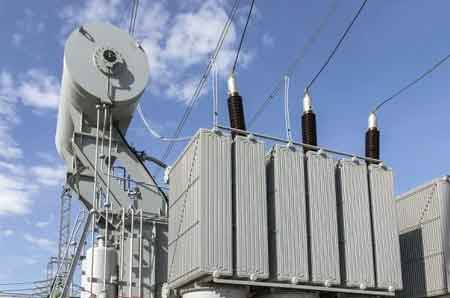
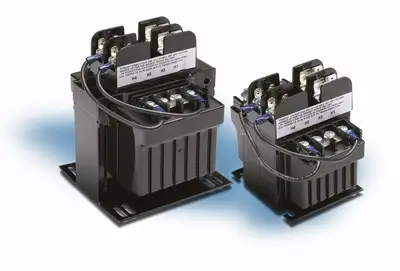
A control transformer sits at that boundary, acting less like a simple voltage reducer and more like a buffer between unpredictable supply conditions and equipment that depends on consistency.
What makes these transformers important is not their ability to step voltage down, but their ability to do so without wavering when conditions change. In industrial panels, control voltage is exposed to inrush currents, uneven loading, temperature rise, and long duty cycles. If the transformer cannot absorb those stresses, the effects surface downstream, far removed from the source.
Control transformers are usually installed in crowded enclosures, motor control centers, and industrial cabinets, where heat and vibration are routine. Primary voltage can fluctuate with plant demand, while the secondary side must remain stable enough to keep coils fully energized. Even small drops can push relays toward dropout or cause solenoids to release prematurely.
This is why control transformers are evaluated differently from general-purpose devices. They are expected to maintain tighter regulation under varying loads, especially when several control elements are energized simultaneously. Their role within the broader transformer landscape becomes clearer when viewed alongside other designs discussed in the electrical transformers section, where function is tied directly to system behavior rather than nameplate labels.
Download our FREE Electrical Training Catalog and explore a full range of expert-led electrical training courses.

Control circuits are dynamic by nature. A relay or solenoid may draw modest current once energized, but its pickup can demand several times that amount for a brief instant. When multiple devices operate together, those surges stack. A transformer sized only for steady-state load may satisfy calculations yet still allow voltage sag at the exact moment reliable operation is needed.
This is one reason control transformers should never be treated like measurement devices. A current transformer is designed to accurately reproduce current for monitoring or protection, not to supply power under stress. Confusing the roles leads to misapplied equipment and difficult-to-diagnose control issues.
Most control transformers use laminated steel cores with insulated copper windings, but the environment around them determines how forgiving that construction will be. In facilities where oil-filled equipment is undesirable, control circuits are often supplied using dry type transformers, which simplify installation and reduce fire risk while placing greater emphasis on ventilation and thermal management.
Over time, enclosure temperature, mounting orientation, and expansion of control loads all influence reliability. These factors are rarely revisited once a panel is commissioned, yet they explain why a transformer that appeared adequate initially begins running hot years later.
Control transformers are frequently mistaken for isolation devices. While both may reduce voltage, an isolation transformer prioritizes electrical separation and noise reduction over tight voltage regulation under changing load conditions. In control applications, regulation matters more than isolation alone.
This distinction becomes critical in systems where voltage sag or coil dropout can halt production or create unsafe operating conditions. Treating all small transformers as interchangeable obscures those differences and shifts problems downstream.
Choosing a control transformer is less about nominal voltage and more about understanding how the control circuit behaves in real operation. Inrush tolerance, regulation under load, and thermal headroom determine whether the transformer remains invisible or becomes a recurring source of instability.
Losses that seem negligible on paper still convert directly to heat inside a sealed enclosure. Over time, that heat accelerates insulation aging and narrows safety margins. Engineers weighing options often benefit from considering transformer behavior in terms of stress and loss, rather than just ratings, as discussed in transformer-losses.
When a control transformer is undersized or poorly matched to its environment, failures rarely point directly to it. Relays are replaced. Wiring is re-terminated. Control logic is questioned. Only after repeated interventions does the underlying voltage source come under scrutiny.
Understanding where the control voltage is generated, how it responds to stress, and why it drifts over time often resolves these issues faster than repeatedly replacing downstream components.
Think you know Electrical Transformers? Take our quick, interactive quiz and test your knowledge in minutes.
Explore 50+ live, expert-led electrical training courses –