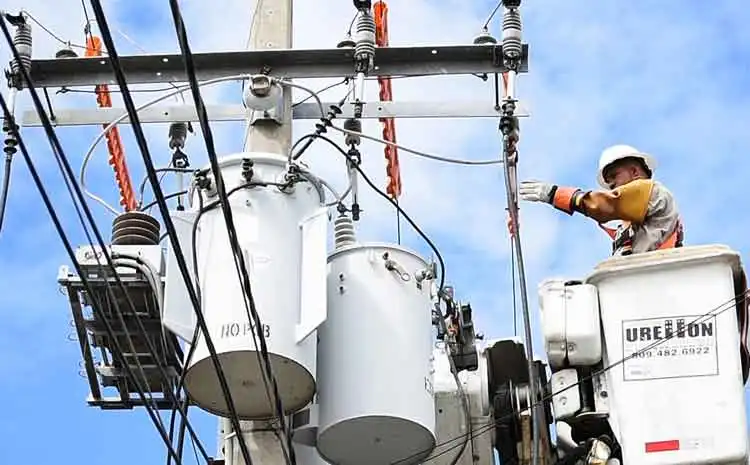
Transmission & Distribution
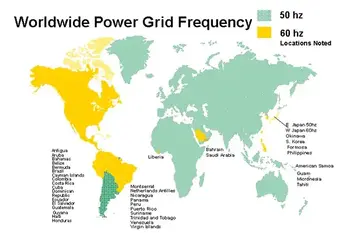
Why Electrical Frequency Supply is 50 Hz or 60 Hz?
Electrical frequency supply ensures 50/60 Hz AC power, grid stability, frequency regulation, power quality, and synchronized operation across generation, transmission, and distribution networks, supporting loads, inverters, and synchronous machines reliably.
Why Electrical Frequency Supply Matters in Power Distribution
Many many years ago we did not have integrated power system as we have now. There were multiple standards and load items which weresuitable for their power system. Operating electrical frequency ranges were between 16.75 Hz to 133.33 Hz.When people think about large power generation system, they puzzled with the standard that to be adopted by them. Finally it reveals about…
View more
Test Your Knowledge About Dielectric Fluids!
Think you know Dielectric Fluids? Take our quick, interactive quiz and test your knowledge in minutes.
- Instantly see your results and score
- Identify strengths and areas for improvement
- Challenge yourself on real-world electrical topics
Latest T&D Content
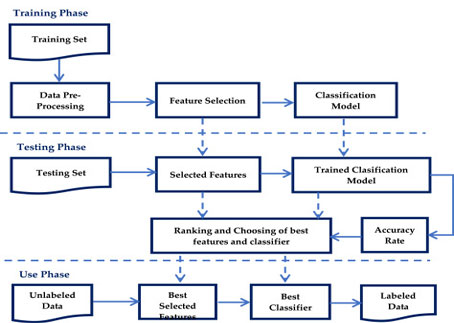
Feature Selection For Effective Health Index Diagnoses Of Power Transformers
Feature selection for effective health index diagnoses of power transformers drives predictive maintenance, DGA analytics, machine learning classification, and condition monitoring, improving asset management, failure risk assessment, and lifecycle reliability across utility fleets.
Feature Selection for Effective Health Index Diagnosis of Power Transformers Explained for Electrical Professionals
Feature selection for effective health index diagnoses of power transformers is a critical process in ensuring the reliability and longevity of these essential utility assets. By identifying and analyzing the most relevant parameters—such as temperature, dissolved gas analysis, insulation condition, and load variations—feature selection enhances predictive maintenance and fault detection. This data-driven…
View more

Dielectric Fluid Performance in HV Equipment
Dielectric fluid governs how electrical insulation and heat dissipation behave under load and fault stress. When its condition degrades, transformer cooling margins shrink, insulation aging accelerates, and failures develop long before external measurements indicate risk.
In practice, dielectric fluid determines far more than whether insulation survives a laboratory test. It shapes transformer loading limits, cooling effectiveness, aging rates, and the way faults emerge when electrical stress concentrates unevenly inside the insulation system. Long before alarms trip or temperatures rise, changes in fluid behavior can quietly redefine how the system responds to stress.
In transformer and capacitor applications, dielectric fluid serves…
View more
Dissolved Gas Analysis Methods for Transformer Diagnostics
Dissolved gas analysis methods interpret transformer fault gases using structured ratio, graphical, and standards-based frameworks to classify internal electrical and thermal faults for reliable transformer condition assessment.
Dissolved gas analysis methods provide the structured logic that transforms raw gas measurements into meaningful transformer fault classifications. Without interpretation frameworks, DGA remains a list of gas concentrations rather than a diagnostic system.
These methods do not replace engineering judgment. Instead, they provide disciplined tools that allow consistent interpretation of transformer fault behavior across operating conditions, designs, and asset populations.
Why Dissolved Gas Analysis Methods Matter
Transformers generate multiple gases simultaneously during…
View more
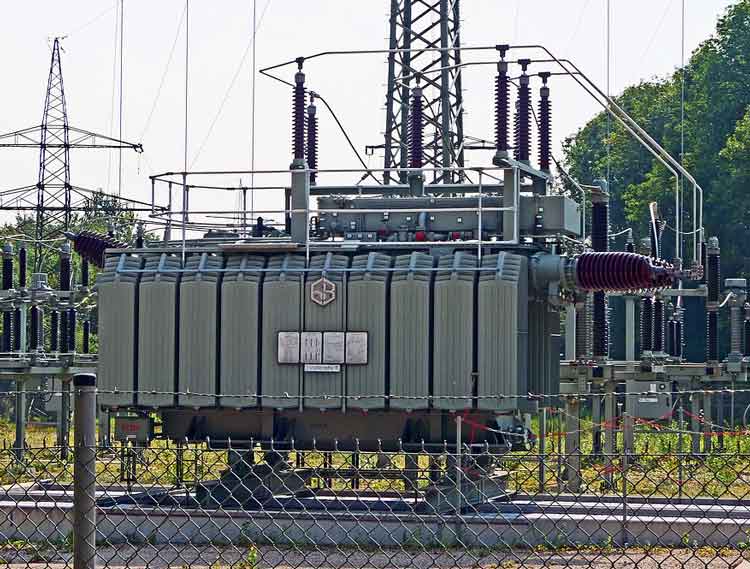
How Much Electricity Does a High-Voltage Transformer Use Explained
A high-voltage transformer does not directly use electricity in the same way as devices plugged into a wall outlet. Instead, it facilitates the transfer of electrical power while experiencing power losses.
These losses, primarily core and copper losses, are caused by electromagnetic induction and the flow of current through the windings. Although transformers are highly efficient, typically ranging from 95% to 99%, some energy is still wasted. In large-scale power distribution systems across North America, these losses accumulate, affecting overall energy consumption.
Electrical Transformer Maintenance Training
Substation Maintenance Training
Request a Free Training Quotation
How Much Power Does a High-Voltage…
View more
Transformer Design Principles
Transformer design ensures efficient voltage regulation, insulation, cooling, and magnetic flux control. By optimizing windings and core materials, engineers improve energy efficiency, reliability, and safety in electrical power systems.
Principles of Transformer Design
By addressing these aspects and answering key questions, engineers can design devices that effectively transmit and distribute electrical power, ensuring the efficient operation of various systems and technologies. A solid grasp of design begins with understanding the broader utility transformers category, which covers applications from power distribution to industrial systems.
Electrical Transformer Maintenance Training
Substation Maintenance Training
Request a Free Training Quotation
Core Architectures and Materials
At…
View more
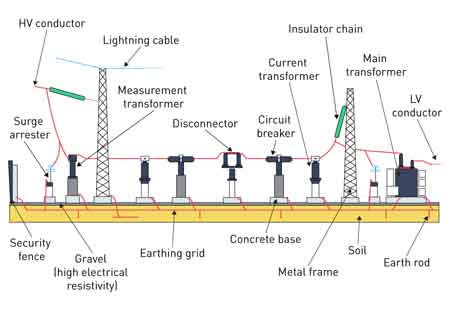
Ground Grid Testing of Substation Cost Sheet
Ground grid testing of the substation cost sheet helps utilities estimate testing budgets for grounding resistance, soil resistivity, and compliance with step and touch voltage requirements. It supports safer substations, informed planning, and alignment with IEEE grounding standards.
Key Concepts: Ground Grid Testing of Substation Cost Sheet
A dependable substation grounding system is one of the most important safety controls in a power facility. When a fault occurs, the ground grid must safely disperse high current into the earth without exposing personnel or equipment to dangerous voltage gradients. If the grounding system underperforms, step and touch voltages can quickly…
View more
Lineman Safety Standards
Lineman safety standards set OSHA-based rules, protective equipment requirements, and training practices to reduce electrical hazards, prevent falls, and keep utility and power line workers safe in transmission and distribution environments.
Lineman Safety Standards Explained: What You Need to Know
Understanding Lineman Safety Standards
Lineman safety standards represent the backbone of workplace safety in the electrical distribution industry. These standards encapsulate strict procedures, the use of specialized electrical lineman safety equipment, and up-to-date training. The overarching goal is to prevent workplace injuries and fatalities, given the high-risk environment linemen operate in daily.
Why Are Safety Standards Crucial?
Lineman…
View more
T&D News
T&D Media

T&D Articles From ET Magazine

The Mentoring Gap: How the Loss of Informal Knowledge Is Affecting Safety
For much of the trade’s history, the most important safety lessons in line work were never written down. They were learned by proximity. New linemen watched how experienced hands approached a pole, handled a tool, or reacted when conditions changed. They learned when to slow down, when to stop talking, and when something simply did not feel right. These lessons were rarely formalized, yet they shaped judgment in ways no procedure ever could.
That informal transfer of knowledge is fading, and its absence is beginning to show.
The structure of the trade has changed rapidly. Accelerated retirements have removed decades…
View more

Grounding Assumptions: Where Line Crews Still Get Hurt Despite “Doing It Right”
Why Grounding Remains a Source of Serious Injury
Grounding is one of the most emphasized safety practices in line work, yet serious incidents continue to occur during grounded operations. These events rarely result from a lack of training or awareness. Instead, they stem from assumptions about how grounding behaves under real-world conditions that are more complex than any classroom scenario.
The Difference Between Training Scenarios and Field Reality
Training often presents grounding in controlled, idealized conditions. In the field, soil resistivity varies, access is limited, and system configurations change without warning. Temporary grounds are installed under time pressure, sometimes…
View more
The Near-Miss Problem: Why Utilities Collect Data but Crews Do Not Trust It
The Promise of Learning Before Someone Gets Hurt
Near-miss reporting is widely promoted as a cornerstone of modern safety management. In theory, it allows organizations to identify hazards, weak signals, and system failures before they result in injury or death. A near miss is a warning shot, an opportunity to learn without paying the highest price. Yet in many utilities, near-miss systems collect far less information than they could, not because incidents are rare, but because crews choose not to report them.
Why Silence Feels Safer Than Speaking Up
Linemen rarely avoid reporting near misses out of indifference. More often,…
View more
Human Factors on the Line: Fatigue, Complacency, and Decision Making at Height
How Real Incidents Actually Take Shape
Most serious line incidents do not begin with a dramatic failure or an obvious violation of rules. They begin quietly, through a sequence of small decisions made under ordinary pressure. A grip adjusted instead of reset. A stance accepted instead of corrected. A task continued rather than paused. None of these choices feel unsafe in the moment. In fact, they often feel efficient, reasonable, and consistent with experience. Yet when work is performed at height, these small decisions compound quickly, narrowing margins that cannot be recovered once something goes wrong.
Understanding how those decisions…
View more
FREE EF Electrical Training Catalog
Download our FREE Electrical Training Catalog and explore a full range of expert-led electrical training courses.

- Live online and in-person courses available
- Real-time instruction with Q&A from industry experts
- Flexible scheduling for your convenience
Sign Up for Electricity Forum’s Dielectric Fluids Newsletter
Stay informed with our FREE Dielectric Fluids Newsletter — get the latest news, breakthrough technologies, and expert insights, delivered straight to your inbox.