
NFPA 70E Training
Our customized live online or in‑person group training can be delivered to your staff at your location.

- Live Online
- 6 hours Instructor-led
- Group Training Available
Regular Price:
$199
Coupon Price:
$149
NEW YORK
—
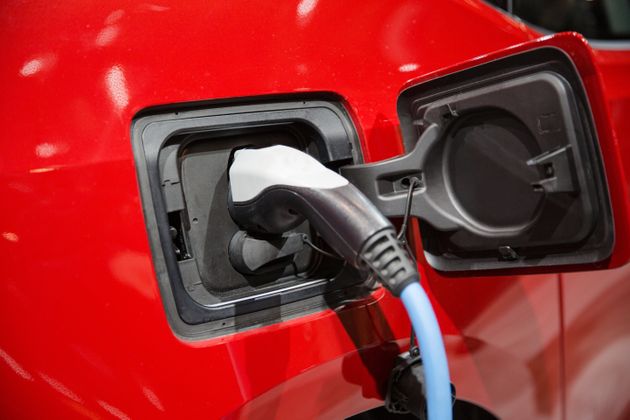
Electric Vehicle Charging Costs and Times explain kWh usage, electricity rates, Level 2 vs DC fast charging, per-mile expense, and tax credits, with examples by region and battery size to estimate home and public charging.
What's Behind the News
They measure EV charging price and duration based on kWh rates, charger level, efficiency, and location.
Costs vary by kWh price, region, and charger type.
Efficiency (mi/kWh) sets per-mile cost and range.
Tax credits and utility rates impact total ownership.
More and more car manufacturing companies dip their toes in the world of electric vehicles every year, making it a good time to buy an EV for many shoppers, and the U.S. government is also offering incentives to turn the tides on car purchasing. Electric vehicles bought between 2010 and 2022 may be eligible for a tax credit of up to $7,500.
And according to the Consumer Reports analysis on long-term ownership, the cost of charging an electric vehicle is almost always cheaper than fueling a gas-powered car – sometimes by hundreds of dollars.
But that depends on the type of car and where in the country you live, in a market many expect to be mainstream within a decade across the U.S. Here's everything you need to know.
How much does it cost to charge an electric car?
An electric vehicle’s fuel efficiency can be measured in kilowatt-hours per 100 miles, and common charging-efficiency myths have been fact-checked to correct math errors.
For example, if electricity costs 10.7 cents per kilowatt-hour, charging a 200-mile range 54-kWh battery would cost about $6. Charging a vehicle that consumes 27 kWh to travel 100 miles would cost three cents a mile.
The national average cost of electricity is 10 cents per kWh and 11.7 cents per kWh for residential use. Idaho National Laboratory’s Advanced Vehicle Testing compares the energy cost per mile for electric-powered and gasoline-fueled vehicles.
For example, at 10 cents per kWh, an electric vehicle with an efficiency of 3 miles per kWh would cost about 3.3 cents per mile. The gasoline equivalent cost for this electricity cost would be just under $2.60 per gallon.
Prices vary by location as well. For example, Consumer Report found that West Coast electric vehicles tend to be less expensive to operate than gas-powered or hybrid cars, and are often better for the planet depending on local energy mix, but gas prices are often lower than electricity in New England.
Public charging networks in California cost about 30 cents per kWh for Level 2 and 40 cents per kWh for DCFC. Here’s an example of the cost breakdown using a Nissan LEAF with a 150-mile range and 40-kWh battery:
Level 2, empty to full charge: $12
DCFC, empty to full charge: $16
Many cars also offer complimentary charging for the first few years of ownership or provide credits to use for free charging. You can check the full estimated cost using the Department of Energy’s Vehicle Cost Calculator as the grid prepares for an American EV boom in the years ahead.
How long does it take to charge an electric car?
This depends on the type of charger you're using. Charging with a Level 1 charger takes much longer to reach full battery than a level 2 charger or a DCFC, or Direct Current Fast Charger. Here's how much time you can expect to spend charging your electric vehicle:
Related News

New investment opportunities open up as Lithuania seeks energy independence
Lithuania Wind Power Investment accelerates renewable energy expansion with utility-scale wind farms, solar power synergies,…
View more

Cost is the main reason stopping Canadians from buying an electric car: Survey
Canada EV Incentives drive adoption toward the 2035 zero-emission target, with rebates, federal and provincial…
View more

Unprecedented Growth in Solar and Storage Anticipated with Record Installations and Investments
U.S. Clean Energy Transition accelerates with IRA and BIL, boosting renewable energy, solar PV, battery…
View more

American wind power congratulates President-elect Biden on his victory.
American Wind Power Statement on Biden highlights collaboration on renewable energy policy, clean energy jobs,…
View more
US Electric Vehicle Momentum Slows as Globe Surges
US electric vehicle momentum is slowing as tax credits expire, tariffs increase costs, and interest…
View more

World Bank helps developing countries wind spurt
World Bank Offshore Wind Investment drives renewables and clean energy in developing countries, funding floating…
View more
Sign Up for Electricity Forum’s Newsletter
Stay informed with our FREE Newsletter — get the latest news, breakthrough technologies, and expert insights, delivered straight to your inbox.
Electricity Today T&D Magazine Subscribe for FREE

Stay informed with the latest T&D policies and technologies.
- Timely insights from industry experts
- Practical solutions T&D engineers
- Free access to every issue
