
Electrical Safety Training


Electrical Safety Training - Click Here for Your FREE On-Site Course Quotation

Electrical Safety Training Course Schedule

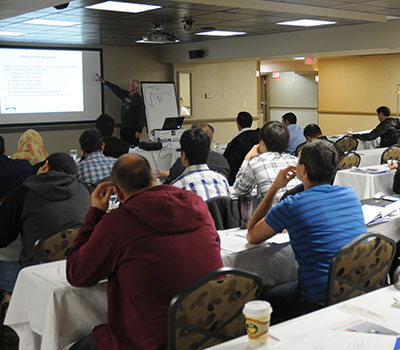
Electrical safety training starts with your's company's commitment to your well being. Our Electrical safety training course is designed to train your electrical staff on the proper care, maintenance, inspection and utilization of the electrical systems in industrial, commerical and institutional locations. It is also designed to ensure that arc flash program delegates are instructed to work within the guidelines of current Federal (CSA), provincial, Electrical Utility Safety Association (EUSA) and OSHA (Canada) safety regulations. Our arc flash protection program will help employees and companies reduce the risk of personal injury and equipment damage due to operator error. The course is also designed to ensure that, under emergency conditions, the proper steps are taken to restore power in an efficient and safe manner.

Arc Flash Protection
Understand the hazards of electricity at the power system supply level. Material includes the review of electrical blast, electrocution, short circuits, overloads, ground faults, fires, lifting and pinching injuries.

Important Definitions
Review the principles, governmental regulations, work practices and specialized equipment relating to personal protection. A documented safe practice system is now required by OSHA 29CFR1910 Subpart R and Subpart S, which will be covered in this course.

Personal Protective Equipment
Develop a familiarity with the different types of "Personal Protective Equipment" through demonstrations of locking and tagging devices, protective clothing and specialized equipment.

Isolation and Lockout Practices
Learn proper procedures for the lockout and isolation of electrical equipment and compare them to existing site regulations and policies.

Who Should Attend our Electrical safety training:
Utility, industrial and commercial electrical personnel involved in hands-on roles or maintenance planning. This including engineers, technicians, electricians, linemen, supervisors, and other personnel who work on or near energized and de-energized electrical equipment and systems.

Here is a sample Electrical safety training program for you to consider. We can modify this general program to suit your exact personal protection instruction needs.


Electrical Safety Training

Our NFPA 70e/OSHA Electrical Safety Training Course Covers:

OVERVIEW
  • Electrical Hazards
  • Existing and Proposed Standards
  • Preparing to Work Safely
  • Determining Safe Approach Distance
  • Determining Arc Hazard Category
  • Fault Current Calculations
  • Determination of Arcing Fault Clearing Time
  • Boundary Calculations
  • Determining Arc Flash Hazard Risk Category
  • Incident Energy Exposure Calculations
  • Hazard Analysis

INCIDENT CAUSES
  • Unsafe Switching Acts
  • Not following Operating Procedure
  • Unsafe Working Conditions
  • Not following Maintenance procedures

ELECTRICAL HAZARDS
  • 5 Main Factors in Electrical Accidents
  • Electrical Shock
  • Arc Flash Defined
  • Incident Energy Defined
  • Arc Flash Burn Injuries
  • Arc Blast Pressure
  • Inhalation Injuries

EXISTING AND PROPOSED STANDARDS AND IMPORTANT DATE
  • OSHA 1910.269
  • NFPA 70E-2004 and 2009 editions
  • NESC Rule 410A3

DEFINITIONS
  • Essential to the application of this standard

PREPARING TO WORK SAFELY (Dead Work)
  • Safety Training
  • Emergency Procedures
  • Detailed Description of a "Job Briefing"
  • Use of Equipment
  • Establishing an electrically safe work condition
  • Lockout / Tagout
  • Isolation and Grounding

SHOCK HAZARD PROTECTION (LIVE WORK)
  • Understanding and Applying NFPA 70E Tables
  • Shock Protection Boundaries
  • Limits of Approach
  • Energized Work Permit
  • Limited Approach Boundary
  • Restricted Approach Boundary
  • Prohibited Approach Boundary

DETERMINING ARC HAZARD RISK CATEGORY (LIVE WORK)
  • Using NFPA 70E Table 130.7

FAULT CURRENT CALCULATIONS
  • Power System Short Circuits
  • Bolted Faults
  • Calculating Prospective Short-Circuit Current
  • Calculating Bolted Faults
  • Arcing Faults
  • Calculating Arcing Fault Current

DETERMINATION OF ARCING FAULT CLEARING TIME
  • Time Current Curves
  • Coordination studies

BOUNDARY CALCULATIONS
  • Detailed Examples and Exercises

DETERMINING ARC FLASH HAZARD RISK CATEGORY
  • Detailed Examples and Exercises
  • Simplified Table Approach
  • Matrix Table Approach
  • Single Line Diagram
  • Short Circuit Study
  • Coordination Study
  • NFPA 70E Table 130.7 – Protective Clothing and PPE Matrix

INCIDENT ENERGY EXPOSURE CALCULATIONS
  • Selecting the Correct Level of PPE
  • NFPA 70E Calculation Method
  • Calculating Arc in a Cubic Box
  • Comparison of "Arc in Open Air" to "Arc in a Box"
  • IEEE 1584 Method

HAZARD ANALYSIS
  • Demonstration of Software Packages
  • Arc Flash Labels

NFPA 70E AND PPE
  • Head Face Neck Chin
  • Eyes
  • Body
  • Hand and Arm
  • Foot and Leg
  • Tools and measuring instruments

Safety Policies, Codes and Procedures For Electrical Power Systems

Electrical Safety for Industrial Facilities
This course meets OSHA mandated training requirements under 29 CFR 1910.332 for safety-related work practices and 29 CFR 1910.269 for medium-voltage distribution systems.

OSHA mandated personal protection requirements:

  • OSHA 29 CFR 1910.303
  • OSHA 29 CFR 1910.331-.335
  • OSHA 29 CFR 1910.137
  • OSHA 29 CFR 1910.269
  • OSHA 29 CFR 1910.147

Electrical safety training students will learn the OSHA mandated special precautionary techniques and the use of electrical protective equipment. The course will also cover the use of arc protective equipment, insulated hand tools, and protective and substation grounding. Each student receives a copy of the course text that includes the OSHA regulations.

Power System Hazards
Power System Faults

Facts and Figures:

  • Major Causes: Act of God, Human or Operator Error, Equipment Breakdown
  • Short Circuits
  • Overloads
  • Fires
  • Electrocution
  • Important Definitions

Personal Protective Equipment

  • Introduction
  • Personal Body Protective Equipment
  • Testingand Grounding
  • Live Line Tools

Temporary Grounding

  • Introduction
  • Purpose
  • Work Methods

Hazards of Isolated Equipment

  • Induction
  • Accidental Energization
  • Wind
  • Lightning
  • Grounding Equipment for Overhead Lines - General
  • Adequate Capacitance Clamps
  • Adequate Capacity Cables
  • Overhead Grounding Sets
  • Installation of Temporary Grounds

Potential Indicating Devices

  • Introducton
  • Purpose
  • Potential Indicators:
    • Volt Meters
    • Clip-on Ammeter
    • Clip-on Watt Meter
    • Phase Rotator
    • Preparation of Temporary Grounding

    Isolation and Switching Procedures

    • Introduction
    • Self-Protection
    • Red Tag
    Work Protection Guarantees
    Work Permit
    Work and Test Permit
    Station Guarantee

    Switching Practices

    Lockout Procedures

    • Individual Lockout
    • Lock Box Method
    • Sign In Method
    • Removal of a Personal Safety Lock

    Safe Limits of Approach: Authorized Person

    Safe Limits of Approach: Competent Person

    Safe Operation and Maintenance Procedures
    Electrical Power Systems

    Safety Practices and Equipment Review
    Safety Equipment Review
    Safety Practices Review
    Lockout policies vs. procedures
    Importance of accurate drawings
    Commissioning vs. Maintenance Safety Guidelines

    Transformer Operation and Maintenance Safety
    Maintenance Testing Safety practices
    Oil sampling, Tapchangers, Testing

    Switchgear Operation and Maintenance Safety
    Grounding Practices and Principals
    Safety in Maintenance Testing
    Operating HV and MV Breakers and Switches

    Electrical System Safety
    Control systems, CTs and PTs
    Capacitors and Reactors
    Power Cables


    About The Electricity Forum

    The Electricity Forum has established its role as one of the nation's leading electrical safety training expoerts. We conduct training on subjects of policy and technical common interest to electric power generators and large power consuming companies. With headquarters in Pickering, Ontario and Geneva NY, The Electricity Forum is dedicated to providing cost-effective, highly specialized information in the format of forums, electrical training tutorials, and industry-wide events. Since 1986, more than 25,000 delegates from leading companies have attended our forums and seminars.


e-Store
 SHIPPING ON ALL ELECTRICITY FORUM HANDBOOK ORDERS!!
 

Power Quality, Protection & UPS Handbook Volume 11

$19.99 $9.99
 

Electrical Safety and Arc Flash Handbook Volume 6

$9.99
 

Electrical Transformer Testing Handbook Volume 6

$19.99 $9.99
 

Green Electricity Technologies Handbook Volume 1

$9.99
 
 
Affiliates
 
Featured Product

TripSaver™ Dropout Recloser

S&C Electric USA
S&C's new TripSaver Dropout Recloser, offered in system class voltage ratings of 15 and 27 kV, is ideally suited for lateral circuits that frequently experience momentary faults.
more...
 
Advertisement
 
Latest Buyer's Guide Companies
Sign Up Today and Receive Our FREE E- Newsletter
E-newsletter service - Exciting industry trends, technical developments, product information, forums and electrical training courses.