
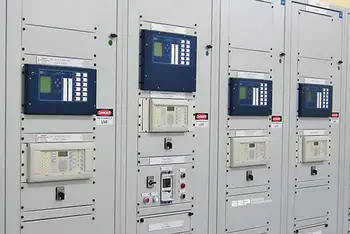
Protective Relay Training - Basic
Our customized live online or in‑person group training can be delivered to your staff at your location.
- Live Online
- 12 hours Instructor-led
- Group Training Available
Regular Price:
$699
Coupon Price:
$599
LONDON
—
UK EV Affordability pressures electric car demand as EV prices outpace petrol models; subsidies, battery electric vehicles, plug-in hybrids, and charging infrastructure investment shape uptake, CO2 targets, and total cost of ownership.
The Important Points
UK EV Affordability captures pricing, policy, and infrastructure factors driving electric car demand and adoption.
EVs priced above petrol models are depressing near-term UK demand.
SMMT seeks broader subsidies incl. PHEVs and fairer vehicle taxation.
Brexit tariffs and CO2 targets may raise costs and steer product plans.
Charging rollout must accelerate - about 500 new points daily for 15 years.
TCO favors EVs via lower running costs, but high upfront prices deter.
Expensive prices for electric cars could hold back the UK’s transition from fossil fuel vehicles, the industry has warned, amid signs that demand for electric vehicles (EVs) is waning, despite a recent surge in inquiries during a fuel supply crisis.
The premium paid for electric cars is a concern for more than half of UK consumers, according to a poll conducted on behalf of the Society of Motor Manufacturers and Traders (SMMT), the UK car industry lobby group, and Brexit-related tariffs risk higher costs for new models.
Despite government subsidies, battery electric cars are still more expensive than those burning petrol or diesel, but carmakers are scrambling to ramp up production and sales as the age of electric cars accelerates across markets in order to meet the new restrictions on emissions that came in this year.
Sales of new battery electric cars have almost tripled to 39,000 in the year to July, but there are signs that demand is falling back even as some analysts predict that drivers will go electric within a decade in the UK. Data from online marketplace Auto Trader show that the average asking price for electric cars fell 5.2% in the year to August.
Ian Plummer, Auto Trader’s commercial director, said the higher “upfront retail price of EVs is somewhat off-putting” for consumers, despite the potential savings from their cheaper running costs.
Mike Hawes, the SMMT’s chief executive, said: “Until these vehicles are as affordable to buy and as easy to own and operate as conventional cars, we risk the UK being in the slow lane, undermining industry investment and holding back progress.”
The SMMT has been calling for the UK government to broaden the subsidies offered to buyers of new electric cars to include plug-in hybrid vehicles, while fairer vehicle taxes are being demanded by EV drivers to support adoption. The withdrawal of subsidies from plug-in hybrids last year prompted a furious reaction from the industry, which argues the controversial technology, which combines an internal combustion engine with a battery, is a crucial stepping stone for consumers.
However, environmental groups argue that the best way to accelerate consumer take-up of electric cars is to bring forward bans on internal combustion engines. The government is committed to banning polluting carbon dioxide-emitting engines by 2040, but is considering moving that forward to 2035 or even as early as 2032.
Both the industry and environmental groups are united in calling for a dramatic increase in investment in charging points to make it more attractive for consumers around the country to switch to electric cars, with industry figures saying the UK must be ready for a surge in EV uptake.
The UK will require as many as 1.7m on-street electric car charging points by the end of the decade, and a further 1.1m by 2035, in order to allow for a zero-emissions car fleet, while experts ask whether the grid can cope with rising demand, according to analysis by the SMMT and consultancy Frost and Sullivan. That would equate to more than 500 new charge points per day over 15 years.
Related News
BC Hydro electric vehicle fast charging site operational in Lillooet
BC Hydro Lillooet EV fast charging launches a pull-through, DC fast charger hub for electric…
View more
U.S. Electric Vehicle Sales Soar Into 2024
U.S. EV Sales Growth reflects rising consumer demand, expanding market share, new tax credits, and…
View more

Feds announce $500M contract with Edmonton company for green electricity
Canada Renewable Energy Partnerships advance wind power and clean electricity in Alberta and Saskatchewan, cutting…
View more
Ford Motor Co. details plans to spend $1.8B to produce EVs
Ford Oakville Electric Vehicle Complex will anchor EV production in Ontario, adding a battery plant,…
View more

New legislation will make it easier for strata owners to install EV charging stations
BC Strata EV Charging Reforms streamline approvals under the Strata Property Act, lowering the voting…
View more

NREL’s Electric Vehicle Infrastructure Projection Tool Helps Utilities, Agencies, and Researchers Predict Hour-by-Hour Impact of Charging on the Grid
EVI-Pro Lite EV Load Forecasting helps utilities model EV charging infrastructure, grid load shapes, and…
View more
Sign Up for Electricity Forum’s Newsletter
Stay informed with our FREE Newsletter — get the latest news, breakthrough technologies, and expert insights, delivered straight to your inbox.
Electricity Today T&D Magazine Subscribe for FREE

Stay informed with the latest T&D policies and technologies.
- Timely insights from industry experts
- Practical solutions T&D engineers
- Free access to every issue
