CSA Z463 Electrical Maintenance -
Our customized live online or in‑person group training can be delivered to your staff at your location.

- Live Online
- 6 hours Instructor-led
- Group Training Available
Regular Price:
$249
Coupon Price:
$199
The potential of renewable energy in Russia may become the answer to experts' warnings about future depletion of country's energy resources.
Currently, Russia is the world's largest gas producer with rich oil and coal reserves as well as subsidized domestic gas and electricity prices. However, the traditional oil and gas resource bases of Volga-Urals and West Siberian regions approach depletion and could face a rapid production decline.
While initial steps have been taken for developing the renewable energy sector, reaching its full potential will require a large amount of investment, as well as government support.
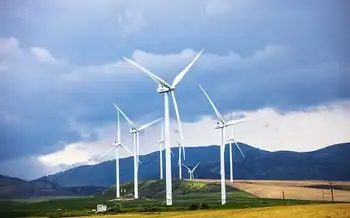
Different regions within Russia offer unique renewable energy resources. The South-West region, Southern Siberia, and the Far East boast significant solar energy potential, while the coastal areas in the north, low and middle Volga regions and the Urals offer wind energy.
Hydro energy potential is mostly found in Central and Eastern Siberia and the Far East. Biomass is linked to Siberia as well as the Far East. Finally, geothermal energy prospects are promising in the Far East, Northern Caucasus and the Far East.
"If ranked based on the economic potential, geothermal energy would come first accounting for about 40% of overall renewable energy potential, small hydro is second reaching 24% and biomass accounts for 13%," notes Frost & Sullivan's Research Manager Alina Bakhareva. "These three leading sources account for nearly 80% of the total potential. Overall, the early nineties' estimate of the renewable energy potential in Russia was in a range of 260-300 million tons of coal equivalent each year. This could be enough to supply as much as a third of Russia's energy needs. This potential is largely underutilized with less than 1% of "green" electricity and less than 5% of "green" heat in total annual power and heat output."
As mentioned earlier, although Russia holds about 32% of the world's proven natural gas reserves and about 12% of the proven oil reserves, the traditional oil and gas production regions could face a rapid production decline. Developing new resources is necessary for Russia and will soon become an imperative. Green energy could well become a perfect alternative to bringing new often remotely-located oil and gas fields into production.
However, there are some impediments to the green energy growth. First of all, the sector hasn't had much support from the government so far and favourable legislation is a paramount need for the sector to pick up. In 2003, Russia's Energy Policy only asked for 1% of electricity to be generated by renewable energy sources by the year 2020. Furthermore, since the draft of the Renewable Energy Law has not yet been ratified into law the renewable energy sector is left unregulated.
Despite these set backs, RusHydro, a newly-formed hydro generation company, is paving the way for renewable energy. Recently inheriting 49 hydropower stations with a total installed capacity of over 25 GW, RusHydro is turning into the largest power generation company in Russia and, what's most important for the green energy, RusHydro is driving renewable energy development in Russia. The sector receiving the most investment so far is small hydro, concentrated in vast territory of Siberia. RusHydro has created a New Energy Fund whose major objective is to develop a National Programme for Small Hydro Sector Development as well as implement projects.
The potential for Russian development of renewable energy is great and becoming recognised. With more robust government support in terms of renewable energy targets and Russian and foreign investors expected to actively explore the hidden potential of green energy in Russia, the green industry will be able to develop and to grow generating interesting opportunities.
Related News
IVECO BUS Achieves Success with New Hydrogen and Electric Bus Contracts in France
IVECO BUS hydrogen and electric buses in France accelerate clean mobility, zero-emission public transport, fleet…
View more
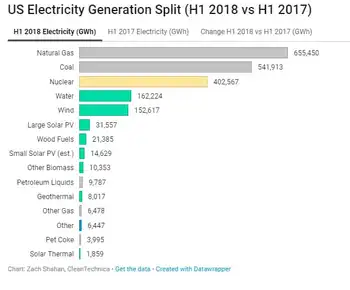
Solar + Wind = 10% of US Electricity Generation in 1st Half of 2018
US Electricity Generation H1 2018 saw wind and solar gains but hydro declines, as natural…
View more

U.S. Department of Energy Announces $110M for Carbon Capture, Utilization, and Storage
DOE CCUS Funding advances carbon capture, utilization, and storage with FEED studies, regional deployment, and…
View more
5,000 homes would be switched to geothermal energy free of charge
Manitoba NDP Geothermal Conversion Program offers full-cost heat pump installation for 5,000 homes, lowering electricity…
View more
US Approves Rule to Boost Renewable Transmission
FERC Transmission Rule accelerates grid modernization and interregional high-voltage lines, enabling renewable energy integration, load…
View more
DOE Announces $28M Award for Wind Energy
DOE Wind Energy Funding backs 13 R&D projects advancing offshore wind, distributed energy, and utility-scale…
View more
Sign Up for Electricity Forum’s Newsletter
Stay informed with our FREE Newsletter — get the latest news, breakthrough technologies, and expert insights, delivered straight to your inbox.
Electricity Today T&D Magazine Subscribe for FREE

Stay informed with the latest T&D policies and technologies.
- Timely insights from industry experts
- Practical solutions T&D engineers
- Free access to every issue

