NFPA 70E Training
Our customized live online or in‑person group training can be delivered to your staff at your location.

- Live Online
- 6 hours Instructor-led
- Group Training Available
Regular Price:
$199
Coupon Price:
$149
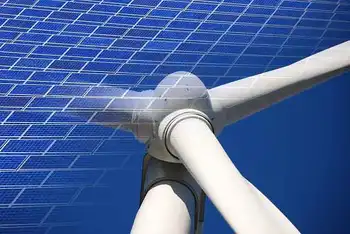
If you're laying solar panels on your roof or building a wind turbine in the backyard, soon you will know how much utility companies will pay for the electricity you generate.
You might, however, need a Ph.D in mathematics to figure out the financial benefits. The S.C. Public Service Commission held a hearing where the state's three power companies explained how much they plan to pay customers who produce electricity and then sell it back to the grid.
The process for selling energy back to the grid was established by the federal Energy Policy Act of 2005, the same bill that gave tax credits to homeowners and businesses who buy energy-efficient vehicles and appliances. Under the government program, a homeowner can install a solar energy system, for instance, use electricity to run things in the home and then sell the leftover energy back to utility companies.
Thus far, no one in South Carolina is participating, said Dukes Scott, executive director the S.C. Office of Regulatory Staff. However, "just because no one is using it now, it's not a reason to not have the program in place."
Utility regulators hope people will participate once rates are set and consumers know the economic advantages. Plus, technology for solar energy production is rapidly changing, which makes it more affordable and more productive in places like South Carolina.
"Right now, the costs of the technology are fairly high," said Randy Watts, electric regulatory manager at the Office of Regulatory Staff.
Even if the financial benefits are small, some might participate for environmental reasons. Today, the three energy companies operating in South Carolina will explain how much they will pay homeowners and businesses for the extra electricity.
The calculations are not simple. The written proposals from SCANA, Progress Energy Carolinas and Duke Energy Corp. are lengthy. None are the same. Each company will set rates based on whether the electricity was produced during peak or off-peak hours, and those times vary by company. Also, rules will dictate when homeowners can receive checks from the utilities or when they get credit for the energy their systems produced, Watts said.
Watts and other utility regulators admit the formulas are complicated.
"They're going to have to study and see if they want to put in a system at their residence or business," he said. One solar advocate in the state said the financial benefits for consumers will be minimal under the companies' proposals.
David Odell, president of Sun Store Solar in the Upstate, said customers would receive about 2 cents of financial credit for generating electricity and then pay 8 cents for what they buy from the utility companies. While South Carolina debates these rates, other states are gaining ground by putting together sensible plans, Odell said.
Eventually, solar energy will help relieve the U.S. dependence on fossil fuels and carbon emissions, he said. "It's not a part of the solution today. But it will be part of the solution so let's start knocking down these roadblocks."
Related News

Ford announces an all-electric Transit cargo van
Ford Electric Transit is an all electric cargo van for US and Canada, launching 2021,…
View more

Electrification Of Vehicles Prompts BC Hydro's First Call For Power In 15 Years
BC Hydro Clean Power Call 2024 seeks utility-scale renewable energy, including wind and solar, to…
View more

Bruce Power cranking out more electricity after upgrade
Bruce Power Capacity Uprate boosts nuclear output through generator stator upgrades, turbine and transformer enhancements,…
View more
Data Center Boom Poses a Power Challenge for U.S. Utilities
U.S. Data Center Power Demand is straining electric utilities and grid reliability as AI, cloud…
View more

Britons could save on soaring bills as ministers plan to end link between gas and electricity prices
UK Electricity-Gas Price Decoupling aims to reform wholesale electricity pricing under the Energy Security Bill,…
View more

UK EV Drivers Demand Fairer Vehicle Taxes
UK EV Per-Mile Taxes are reshaping road pricing and vehicle taxation for electric cars, raising…
View more
Sign Up for Electricity Forum’s Newsletter
Stay informed with our FREE Newsletter — get the latest news, breakthrough technologies, and expert insights, delivered straight to your inbox.
Electricity Today T&D Magazine Subscribe for FREE

Stay informed with the latest T&D policies and technologies.
- Timely insights from industry experts
- Practical solutions T&D engineers
- Free access to every issue

