Publication Date: April, 2006
Discount Price: $24.50 (Cdn)

Discount Price: $20.50 (U.S.)
|
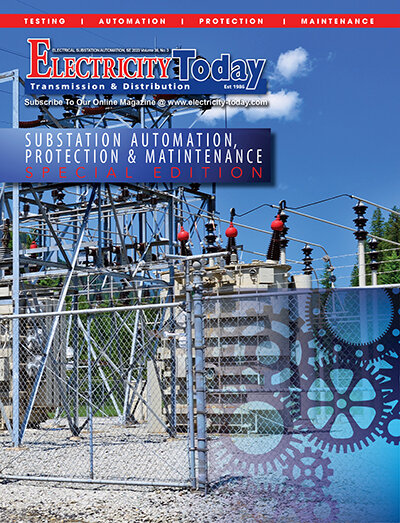
ELECTRIC SWITCHGEAR HANDBOOK VOLUME 2
Electric Switchgear Handbook covers the most important aspects of design, applications, safety, and maintenance -- giving electrical engineers and contractors the vital information they need to select and specify circuit breaker and control equipment. A more detailed section on circuit breakers, including proper maintenance and testing techniques is included. This 100+ page handbook discusses the details of this critical and timely issue.
CONTENT:
- Specifications and Standards for circuit breakers and Supplementary Protectors
- A Novel Continuous On-Line PD Monitor for Motors, Circuit Breakers and Dry-type Transformers
- The Dirty Dozen: The 12 Most Common Mistakes of Specifying Protection for Equipment
- Innovation to Reality: Introducing State-of-the-Art Protection and Monitoring to Existing Low-Voltage Circuit Breakers
- Inspection, Maintenance, and Rebuilding Options for Older Switchers
- Protection, Control, Reliability and Diagnostic Improvements via Single-Processor Controls of Low Voltage Circuit Breakers
- Arc Resistant circuit breaker Retrofits
- Checking Electrical Rooms
- Protection Methods: Differentiating Between Supplementary Protection, Branch Protection and Self-Protected Devices
- Experience Using the boundary Element Method in Electrostatic Computations as a Fundamental Tool in High Voltage Circuit Breaker Design
- Future Trends in Development of Low-Voltage Vacuum Circuit Breakers
- Novel Approach for Insulating Medium Voltage Reclosers
- Experience with Infrared leak Detection on FPL Circuit Breakers
- Is Your Circuit Breakers Safe?
- The Environmental Benefits of Remanufacturing Beyond SF6 Emission Remediation
- The Magnetically Actuated CB Reality
- Rack Powering Options for High Density Power Systems
- Primary-Side Transformer Protection
- -- 108 Pages
Product Description: A device that is an automatically-operated switch which is designed to protect an electrical branch from damage caused by overload or short. Unlike a fuse which operates once and then has to be replaced, a can be reset (either manually or automatically) to resume normal operation. They are made in varying sizes, from small devices which protect an individual household appliance up to large circuit breaker designed to protect high voltage branches feeding an entire city.
Some types are implemented using a solenoid (electromagnet) whose pulling force increases as the current increases. The contacts are held closed by a latch and, as the current in the solenoid increases, the solenoid's pull releases the latch which then allows the contacts to open by spring action. Another method of sensing current is with a bimetallic strip, which heats and bends with increased current, and is similarly arranged to release the latch. Some types incorporate both techniques, with the electromagnet responding to short, large surges in current and the bimetallic strip responding to less extreme but longer-term overcurrent conditions. For larger currents, some types are usually arranged with pilot devices to sense a fault current and to operate the trip opening mechanism. - Wikipedia |