Power Transformer Handbook Publication Date: July, 2005
Discount Price: $12.50 (Cdn)

Discount Price: $10.99 (U.S.)
|
Power Transformer Handbook - Volume 1
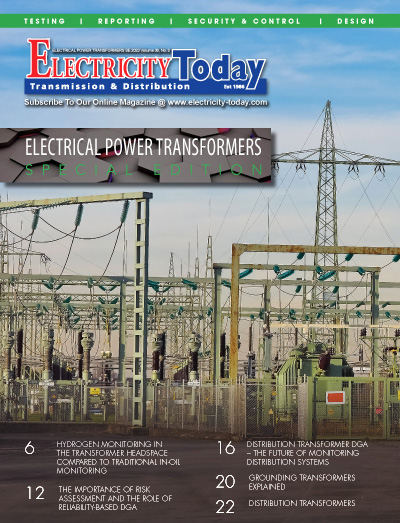
Power Transformer Handbook is dedicated to providing current information on techniques and technologies available to assist in extending the life of transformers. Our handbook will discuss testing, monitoring, design, commissioning, retrofitting and other elements involved in keeping electrical equipment up and running, safely and efficiently.
This practical handbook shows how it can be put to use, common problems which an owner will face, and which is the most appropriate in a particular situation. Anyone working with these devices will find this a valuable user guide. Theory and mathematics are kept to a minimum, and instead the everyday working of these devices is described. Our Transformer Handbook covers transformers, control techniques, testing and maintenance procedures, and other useful information.
A wide range of general issues are discussed in this handbook, which is intended for electrical engineering and maintenance personnel, electrical contractors, electrical consulting engineers, and electrical engineering students.
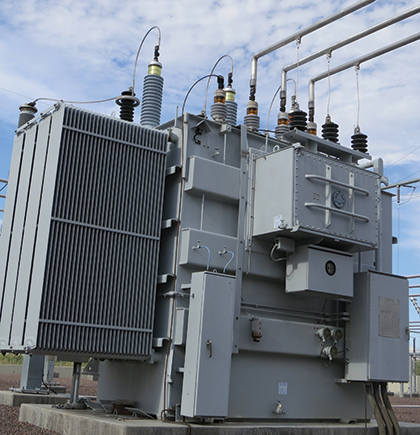
They are used to "transform" voltage from one level to another, usually from a higher voltage to a lower voltage. They do this by applying the principle of magnetic induction between coils to convert voltage and/or current levels.
In this way, they are a passive device which changes alternating current (otherwise known as "AC") electric energy from one circuit into another through electromagnetic induction. This device normally consists of a ferromagnetic core and two or more coils called "windings". A changing current in the primary winding creates an alternating magnetic field in the core. In turn, the core multiplies this field and couples the most of the flux through the secondary windings. This in turn induces alternating voltage (or emf) in each of the secondary coils.
This is a device that transfers electric energy from one alternating-current circuit to one or more other circuits, either increasing (stepping up) or reducing (stepping down) the voltage. Uses for transformers include reducing the line voltage to operate low-voltage devices (doorbells or toy electric trains) and raising the voltage from electric generators so that electric can be transmitted over long distances.
HANDBOOK CONTENT:
- Back to Basics - Economic Diagnostic Maintenance
- DRY TYPE - The Better Alternative to Liquid Filled
- Extending Life through Continuous On-line Oil Conditioning
- Overcurrent Protection - Traditional and New Fusing Philosophies for Small and Large equipment
- Turnkey Solution Helps Entergy Reduce Downtime and Lost Revenue due to Failure of a Key Device
- Electrostatic Filtration Extends Life of Oil
- Using Remote Visual Inspection Technology to Inspect Oil-Filled Devices
- Analysis of Dissolved Gas Data Before And After a Critical device Repair
- Managing the Inventory and Maintenance Costs of Spare equipment
- Proven Methodology Speeds Repair of Oil, Nitrogen or SF6 Leak1
- Cooling System Retrofit Increases Capacity and Extends Life of Manitoba Hydro equipment
- Diagnostic Software Plays An Essential Part of An HV Equipment Maintenance Program
- DISTRIBUTION HAZARDS: Ensuring Lineworkers Understand Potential Hazards and Take Appropriate Precautions
- The Specification and Application of High Voltage Metering equipment
- Application of On-line Dry-out Process
- Maintenance
- Moisture Measurement Gains Status as Transformers Age
- The ^NEW^ and a ^REVIEW^ in Power Control System Developments
- High Efficiency can Prevent Pollution, Improve Power Quality and Save Money
- The Key to Condition-Based Asset Strategies for Power equipment
- Aging equipment Risk More Blackouts
- Also: Directory of Manufacturers and Suppliers
- 108 Pages
|