NFPA 70E PPE Requirements Explained
By R.W. Hurst, Editor
By R.W. Hurst, Editor
Our customized live online or in‑person group training can be delivered to your staff at your location.
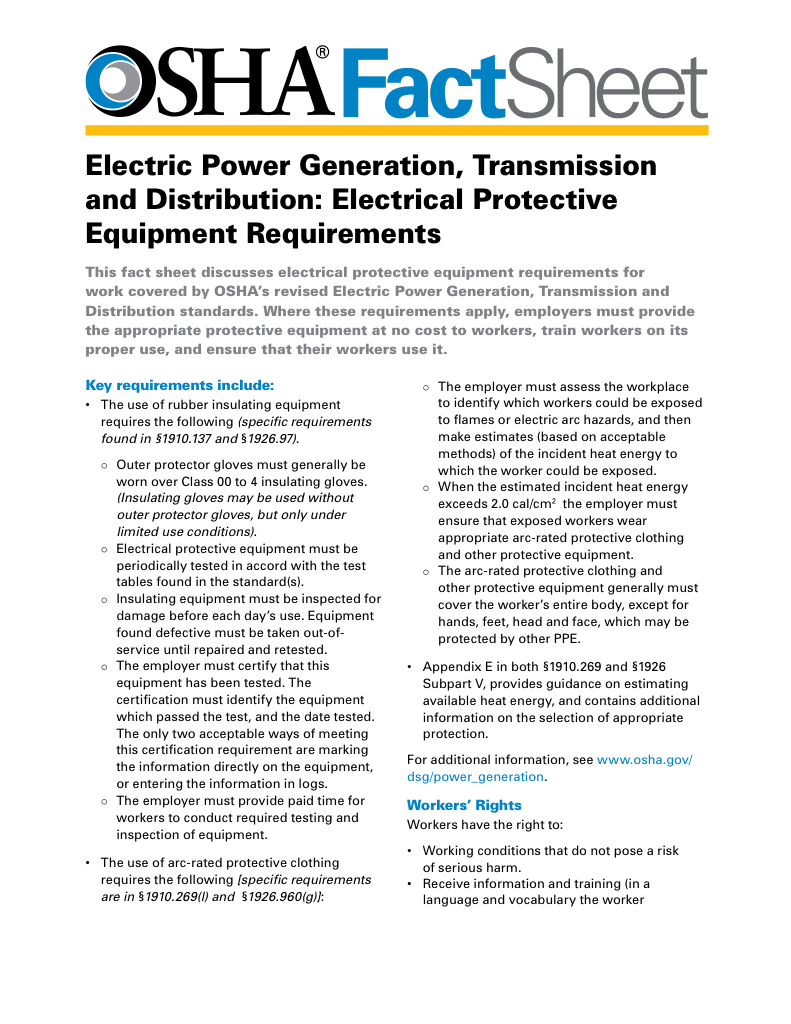
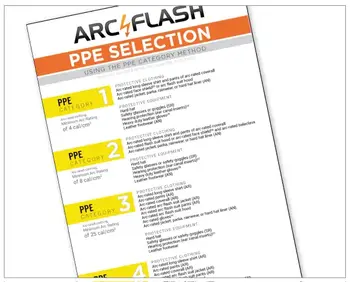
NFPA 70E PPE requirements guide using arc-rated gear to protect workers from electrical hazards. PPE selection is based on incident energy or task-based methods to ensure safety and compliance with NFPA 70E standards.
Request a Free Training Quotation
NFPA 70E PPE requirements define the minimum standards for personal protective equipment that must be worn when workers are exposed to arc flash and electrical shock hazards. These guidelines, outlined in the NFPA 70E Standard for Electrical Safety in the Workplace, are designed to reduce injury risk and ensure compliance with federal workplace safety laws. Employers must perform a proper arc flash hazard assessment and select appropriate PPE based on either incident energy analysis or task-based PPE categories. This page explains what NFPA 70E mandates for arc-rated clothing, head and face protection, insulated gloves, and other critical components of electrical safety programs.
| Category | Minimum Arc Rating (cal/cm²) | Required PPE |
|---|---|---|
| Category 1 | 4 cal/cm² | Arc-rated shirt and pants (or coverall), arc-rated face shield with wrap-around protection, safety glasses, hearing protection, leather gloves |
| Category 2 | 8 cal/cm² | Category 1 PPE, plus arc-rated balaclava or arc flash hood, arc-rated gloves, voltage-rated tools, rubber-insulating gloves |
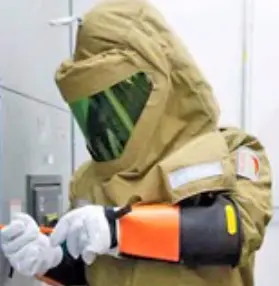
| Category 3 | 25 cal/cm² | Full arc flash suit (hood, gloves, coverall, boots) rated for ≥25 cal/cm² |
| Category 4 | 40 cal/cm² | Category 4 arc flash suit system with complete body protection, insulated tools, voltage-rated gloves, head/face protection system |
Under Section 130.7(C) of NFPA 70E, employers must ensure that employees wear appropriate PPE when exposed to electrical hazards. PPE must be arc-rated (AR) and meet or exceed the potential incident energy level determined by a formal assessment.
NFPA 70E allows two methods to determine what PPE is required:
PPE Category Method: Based on task types and predefined tables. Table 130.7(C)(15)(c) outlines PPE requirements by task, and Table 130.5(C) helps estimate the likelihood of an arc flash event.
Both methods are valid under the standard, but employers must use one consistently and document the process.
Think you know Arc Flash? Take our quick, interactive quiz and test your knowledge in minutes.
NFPA 70E breaks down electrical tasks into four categories of PPE, each aligned with specific arc ratings and equipment combinations. These are outlined in Table 130.7(C)(15)(c) and matched to typical job types.
Before selecting PPE, NFPA 70E requires employers to establish the arc flash boundary — the distance from an exposed energized part within which a person could receive a second-degree burn. This boundary defines when arc-rated clothing and protective gear are required. Depending on the arc flash boundary, workers must wear the appropriate PPE category level for the risk.
Gain clarity on PPE categories by referring to our detailed Arc Flash PPE Category guide.
NFPA 70E divides electrical tasks into four distinct PPE categories. Each category corresponds to a minimum arc rating and required PPE combination:
According to Table 130.7(C)(15)(c), Category 1 applies to tasks such as operating circuit breakers under normal conditions. Required PPE includes:
Arc-rated shirt and pants (or coverall)
Arc-rated face shield with wrap-around protection
Safety glasses, hearing protection, and leather gloves
Tasks like panelboard maintenance up to 240V often fall into this category. Required PPE includes:
Category 1 PPE, plus arc-rated balaclava or arc flash hood
Arc-rated gloves
Voltage-rated tools and rubber-insulating gloves
Applies to work on larger electrical distribution equipment, such as switchgear. Requires:
Full arc flash suit (hood, gloves, coverall, and boots)
Rated for ≥25 cal/cm²
For high-energy work on transformers or large service panels. Requires:
Category 4 arc flash suit system with complete body protection
Insulated tools, voltage-rated gloves, and head/face protection system
To ensure proper PPE selection for specific tasks, use our visual Arc Flash PPE Requirements Chart.
PPE is very important, if optional. Electrical workers must be properly trained to safely use and apply appropriate personal protective equipment for the possible electrical hazard they may face. They must wear this equipment if they want to be adequately protected. Such equipment could include a hard hat, face shield, flame-resistant neck protection, ear protectors, flame-retardant material, insulated rubber gloves with leather protectors, and insulated leather footwear. Understand detailed garment performance standards by visiting our PPE Performance resource.
All ppe must meet the requirements shown in the latest NFPA 70E. PPE, sufficient for protection against the potential electrical flash, is required for every body part. The required thermal-rated PPE selection depends on the incident energy level at the point of work. Check the following chart.
130.5 – Arc Flash Risk Assessment
130.7(C) – PPE Use and Selection
130.7(C)(1) – PPE shall cover the body and resist ignition
130.7(C)(10) – Head and face protection
130.7(C)(14) – Rubber and leather glove maintenance
130.7(D) – Training requirements
To comply with PPE-related sections of NFPA 70E, employers must:
Conduct a documented arc flash risk assessment (130.5)
Choose PPE using either the incident energy or category method
Ensure all PPE is arc-rated and appropriate to the exposure
Provide training on PPE use and limitations (130.7(D))
Inspect, maintain, and replace PPE regularly per manufacturer specs
Enforce PPE use on all energized or potentially energized tasks
Conduct a documented arc flash study (130.5)
Provide arc flash training on PPE use and limitations (130.7(D))
For additional protective equipment essentials, review our guide to Arc Flash Safety Gear.

Advantages To Instructor-Led Training – Instructor-Led Course, Customized Training, Multiple Locations, Economical, CEU Credits, Course Discounts.
Request For QuotationWhether you would prefer Live Online or In-Person instruction, our electrical training courses can be tailored to meet your company's specific requirements and delivered to your employees in one location or at various locations.