Electric Motor Protection Explained
By William Conklin, Associate Editor
By William Conklin, Associate Editor
Our customized live online or in‑person group training can be delivered to your staff at your location.
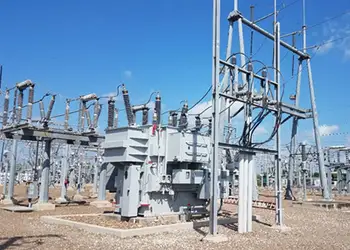
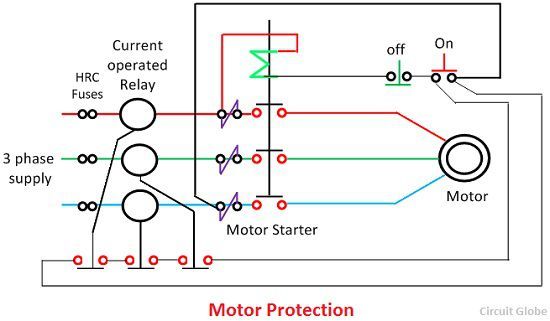
Electric motor protection defines how motors are safeguarded against abnormal electrical, thermal, and mechanical conditions that lead to failure. It relies on coordinated protection layers to control fault energy, heat buildup, and unstable operating conditions before damage becomes permanent.
Motors rarely fail suddenly. What appears to be an unexpected breakdown is usually the final outcome of stress that has accumulated quietly over time. Slight overloads, voltage instability, phase imbalance, or repeated abnormal starts can continue for weeks while insulation and mechanical components degrade internally.
This is why electric motor protection must be treated as a system rather than a single device. Different protection functions exist because motors fail in different ways. Some act instantly to interrupt dangerous faults, while others monitor operating conditions that cause long-term damage. Effective protection depends on how these functions are coordinated across the electrical system, not on any individual component acting alone.
Motors rarely fail without warning. What appears to be a sudden breakdown is usually the end stage of prolonged stress. Excess load, unstable voltage, phase imbalance, or repeated abnormal starts gradually push a motor beyond its design limits. By the time symptoms are obvious, insulation damage or mechanical wear has often progressed too far to reverse.
Motor protection exists to interrupt that progression early. In practice, this means combining multiple protective layers that address specific risks. Some functions respond instantly to high-energy faults, while others track thermal behavior or supply stability over time. The effectiveness of the system depends less on any single protective device and more on how those devices are coordinated within the broader electrical protection framework.
Download our FREE Electrical Training Catalog and explore a full range of expert-led electrical training courses.

In most industrial environments, motors are supplied from distribution systems designed to clear severe faults quickly. Short-circuit and ground-fault protection operate upstream, isolating high-energy events before they propagate into feeders, motor control centers, or connected equipment. These functions align closely with established short-circuit protection practices used throughout power systems.
Closer to the motor, protection shifts from fault interruption to damage prevention. Sustained overload conditions generate heat that degrades winding insulation long before a catastrophic failure occurs. Overload protection addresses this risk by limiting prolonged thermal stress and is treated as a distinct discipline, explored in depth on the dedicated motor overload protection page rather than duplicated here.
Beyond current magnitude, modern protective schemes increasingly incorporate condition-based inputs. Phase loss, phase imbalance, and unstable voltage can cause motors to overheat even when the average current appears acceptable. These conditions are typically detected through relay logic integrated into broader schemes rather than isolated mechanical devices.
Effective motor protection begins with understanding how motors actually fail in the field. A conveyor motor running slightly overloaded, a pump operating against a restricted flow, or a loose connection creating phase imbalance can all operate for extended periods without triggering obvious alarms. During that time, internal temperatures rise, and insulation life is quietly consumed.
This is why motor protection cannot rely on a single trigger. Monitoring functions must complement interruption devices, and protective equipment must be coordinated rather than stacked arbitrarily. These same coordination principles underpin relay-based systems used throughout industrial power networks and are central to power system protection.
As motor control technology has evolved, control functions have increasingly migrated into integrated platforms. Variable-frequency drives reduce mechanical stress during startup, smooth load transitions, and provide visibility into abnormal operating trends. At the same time, upstream coordination remains essential to ensure that protective actions are selective rather than disruptive.
This coordination challenge mirrors what engineers address when aligning protective devices across feeders and panels, where timing and pickup settings determine whether a fault is isolated locally or unnecessarily interrupts adjacent equipment. The same principles apply when coordinating motor protection with upstream protective relays and breakers, a topic expanded in discussions of protective relay behavior and system interaction.
When motors are supplied from complex distribution assemblies, such as metal-clad switchgear, protection decisions must also account for available fault current and arc energy exposure. In these cases, motor protection becomes inseparable from equipment-level considerations addressed in metal-clad switchgear design and application.
The value of a protective scheme is not measured solely by the number of failures avoided. It is measured by stability. Well-protected motors operate closer to their intended design envelope, experience fewer emergency shutdowns, and allow maintenance to be planned rather than reactive.
From a safety standpoint, decisive fault clearing and early abnormal-condition detection reduce the likelihood of fires, electric shock, and arc flash incidents. These outcomes depend on proper device coordination, accurate settings, and a clear understanding of how protective elements interact across the system, not just at the motor terminals.
Facilities that treat motor protection as part of an integrated protection philosophy tend to see fewer nuisance trips and clearer diagnostic information when faults do occur.
Protection systems are not static. Operating conditions change, motors are repurposed, and settings drift. Periodic verification through testing and inspection ensures that protection remains aligned with actual system behavior rather than historical assumptions. When relay-based systems are involved, structured learning, such as basic protective relay training, helps maintenance and engineering teams correctly interpret protection events and respond with confidence.
Think you know Electrical Protection? Take our quick, interactive quiz and test your knowledge in minutes.
Electric motor protection ultimately functions as a form of risk management. When applied deliberately, it limits damage, protects personnel, and preserves operational continuity. When treated as a collection of disconnected devices, it quietly degrades until failure forces attention back to fundamentals that should never have been ignored.
Explore 50+ live, expert-led electrical training courses –