
Electrical Commissioning In Industrial Power Systems
Our customized live online or in‑person group training can be delivered to your staff at your location.

- Live Online
- 12 hours Instructor-led
- Group Training Available
Regular Price:
$599
Coupon Price:
$499
ST. JOHNS
—
Nalcor Energy Pandemic Loss underscores Muskrat Falls delays, hydroelectric risks, oil price shocks, and COVID-19 impacts, affecting ratepayers, provincial debt, timelines, and software commissioning for the Churchill River project and Atlantic Canada subsea transmission.
Context and Background
A $171M Q1 2020 downturn linked to COVID-19, oil price collapse, and Muskrat Falls delays impacting schedules and costs.
Q1 2020 swung to $171M loss from $92M profit year earlier
Oil price crash and lower power sales cut revenues
COVID-19 halted remote site work, slowed restart
Muskrat Falls cost now est. $13.1B incl. financing
Software for Labrador-Island Link still delaying grid reliability
Newfoundland and Labrador's Crown energy corporation reported a pandemic-related profit loss from the first quarter of 2020 on Tuesday, along with further complications to the beleaguered Muskrat Falls hydroelectric project.
Nalcor Energy recorded a profit loss of $171 million in the first quarter of 2020, down from a $92 million profit in the same period last year, due in part to falling oil prices during the COVID-19 pandemic.
The company released its financial statements for 2019 and the first quarter of 2020 on Tuesday, and officials discussed the numbers in a livestreamed presentation that detailed the impact of the global health crisis on the company's operations.
The loss in the first quarter was caused by lower profits from electricity sales and a drop in oil prices due to the pandemic and other global events, company officials said.
The novel coronavirus also added to the troubles plaguing the Muskrat Falls hydroelectric dam on Labrador's Churchill River, amid Quebec-N.L. energy tensions that long predate the pandemic.
Work at the remote site stopped in March over concerns about spreading the virus. Operations have been resuming slowly, with a reduced workforce tackling the remaining jobs.
Officials with Nalcor said it will likely be another year before the megaproject is complete.
CEO Stan Marshall estimates the months of delays could bring the total cost to $13.1 billion including financing, up from the previous estimate of $12.7 billion -- though the total impact of the coronavirus on the project's price tag has yet to be determined.
"If we're going to shut down again, all of that's wrong," Marshall said. "But otherwise, we can just carry on and we'll have a good idea of the productivity level. I'm hoping that by September we'll have a more definitive number here."
The 824 megawatt hydroelectric dam will eventually send power to Newfoundland, and later Nova Scotia, through subsea cables, even as Nova Scotia boosts wind and solar in its energy mix.
It has seen costs essentially double since it was approved in 2012, and faced significant delays even before pandemic-forced shutdowns in North America and around the world this spring.
Cost and schedule overruns were the subject of a sweeping inquiry that held hearings last year, while broader generation choices like biomass use have drawn scrutiny as well.
The commissioner's report faulted previous governments for failing to protect residents by proceeding with the project no matter what, and for placing trust in Nalcor executives who "frequently" concealed information about schedule, cost and related risks.
Some of the latest delays have come from challenges with the development of software required to run the transmission link between Labrador and Newfoundland, where winter reliability issues have been flagged in reports.
The software is still being worked out, Marshall said Tuesday, and the four units at the dam will come online gradually over the next year.
"It's not an all or nothing thing," Marshall said of the final work stages.
Nalcor's financial snapshot follows a bleak fiscal update from the province this month. The Liberal government reported a net debt of $14.2 billion and a deficit of more than $1.1 billion, even as a recent Churchill Falls deal promised new revenues for the province, citing challenges from pandemic-related closures and oil production shutdowns.
Finance Minister Tom Osborne said at the time that help from Ottawa will be necessary to get the province's finances back on track.
Muskrat Falls represents about one-third of the province's debt, and is set to produce more power than the province of about half a million people requires. Anticipated rate increases due to the ballooning costs and questions about Muskrat Falls benefits have posed a significant political challenge for the provincial government.
Ottawa has agreed to work with Newfoundland and Labrador on a rewrite of the project's financial structure, scrapping the format agreed upon in past federal-provincial loan agreements in order to ease the burden on ratepayers, while some argue independent planning would better safeguard ratepayers.
Marshall, a former Fortis CEO who was brought in to lead Nalcor in 2016, has called the project a "boondoggle" and committed to seeing it completed within four years. Though that plan has been disrupted by the pandemic, Marshall said the end is in sight.




"I'm looking forward to a year from now. And I hope to be gone," Marshall said.
Related News
Related News

California electricity pricing changes pose an existential threat to residential rooftop solar
California Rooftop Solar Rate Reforms propose shifting net metering to fixed access fees, peak-demand charges,…
View more
Surging electricity demand is putting power systems under strain around the world
Global Electricity Demand Surge strains power markets, fuels price volatility, and boosts coal and gas…
View more

Funding Approved for Bruce C Project Exploration
Bruce C Project advances Ontario clean energy with NRCan funding for nuclear reactors, impact assessment,…
View more
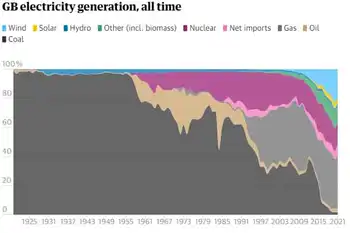
Energy dashboard: how is electricity generated in Great Britain?
Great Britain electricity generation spans renewables and baseload: wind, solar, nuclear, gas, and biomass, supported…
View more
Typical Ontario electricity bill set to increase nearly 2% as fixed pricing ends
Ontario Electricity Rates update: OEB sets time-of-use and tiered pricing for residential customers, with kWh…
View more

Is Ontario embracing clean power?
Ontario Clean Energy Expansion signals IESO-backed renewables, energy storage, and low-CO2 power to meet EV-driven…
View more
Sign Up for Electricity Forum’s Newsletter
Stay informed with our FREE Newsletter — get the latest news, breakthrough technologies, and expert insights, delivered straight to your inbox.
Electricity Today T&D Magazine Subscribe for FREE

Stay informed with the latest T&D policies and technologies.
- Timely insights from industry experts
- Practical solutions T&D engineers
- Free access to every issue

