



Requests for Proposal launched for purchase of clean electricity in Alberta

alberta Renewable Energy

NFPA 70e Training - Arc Flash

Our customized live online or in‑person group training can be delivered to your staff at your location.

  • Live Online
  • 6 hours Instructor-led
  • Group Training Available
Regular Price:
$199
Coupon Price:
$149
Reserve Your Seat Today

Canada Clean Electricity Procurement advances federal operations with renewable energy in Alberta, leveraging RECs, competitive sourcing, Indigenous participation, and grid decarbonization to cut greenhouse gas emissions and stimulate new clean power infrastructure.


Key Points

A plan to procure clean power and RECs, cutting emissions in Alberta and attributing use where renewables are absent.

✅ RFPs to source new clean electricity in Alberta

✅ RECs from net new Canadian renewable generation

✅ Mandatory Indigenous participation via equity or set-asides


Public Services and Procurement Canada (PSPC) is taking concrete steps to meet the Government of Canada's commitment in the Greening Government Strategy to reduce greenhouse gas emissions from federal government buildings, vehicle fleets and other operations, aligning with broader vehicle electrification trends across Canada.

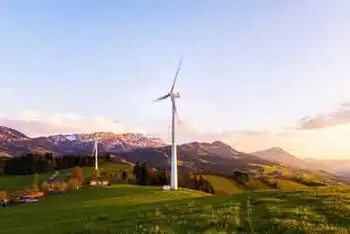
The Honourable Anita Anand, Minister of Public Services and Procurement, announced the Government of Canada has launched Requests for Proposal to buy new clean electricity in the province of Alberta, which is moving ahead with the retirement of coal power to clean its grid, to power federal operations there.

As well, Canada will purchase Renewable Energy Certificates (REC) from new clean energy generation in Canada. This will enable Canada to attribute its energy consumption as clean in regions where new clean renewable sources are not yet available. The Government of Canada is excited about this opportunity to stimulate net new Canadian clean electricity generation through the procurement of RECs and complementary power purchase agreements that secure long-term supply for federal demand.

Together, these contracts will help to ensure Canada is reducing its greenhouse gas footprint by approximately 133 kilotonnes or 56% of total real property emissions in Alberta. Additionally, the contracts will displace approximately 41 kilotonnes of greenhouse gas emissions from electricity use in the rest of Canada, supporting progress toward 2035 clean electricity goals even as challenges remain.

Through these open, fair and transparent competitive procurement processes, PSPC will be a key purchaser of clean electricity and will support the growth of new clean electricity and renewable power infrastructure, such as recent turbine investments in Manitoba that expand capacity.

The Government of Canada's Clean Electricity Initiative plans to use 100% clean electricity by 2022, where available, in alignment with evolving net-zero electricity regulations that shape supply choices, to reduce greenhouse gas emissions and stimulate growth in clean renewable power infrastructure. PSPC has applied the goals of the Government of Canada's Clean Electricity Initiative to its specific requirement for net new clean electricity generation to power federal operations in Alberta.  

These procurements will support economic opportunities for Indigenous businesses by encouraging participation in the move towards clean energy, seen in provincial shifts toward clean power in Ontario that broaden markets. Each Request for Proposal incorporates mandatory requirements for Indigenous participation through equity holdings or set-asides under the Procurement Strategy for Aboriginal Business.
 

Related News

Related News

Renewables Projected to Soon Be One-Fourth of US Electricity Generation

U.S. Renewable Energy Forecast 2024 will see wind and solar power surpass one-fourth of electricity generation, EIA projects, as coal declines, natural gas dips, and clean energy capacity, grid integration, and policy incentives expand.


Key Points

EIA outlook: renewables at 26% of U.S. power in 2024, led by wind and solar as coal declines and gas share dips.

✅ Wind and solar hit 18% combined, surpassing coal's 17%.

✅ Natural gas dips to 37% as demand rebounds modestly.

✅ Coal plant closures accelerate amid costs, emissions, and age.


Renewable energy is poised to reach a milestone, after a record 28% in April this year, as a new government report projects that wind, solar and other renewable sources will exceed one-fourth of the country’s electricity generation for the first time, in 2024.

This is one of the many takeaways from the federal government’s Short Term Energy Outlook, a monthly report whose new edition is the first to include a forecast for 2024. The report’s authors in the Energy Information Administration are expecting renewables to increase in market share, while natural gas and coal would both decrease.

From 2023 to 2024, renewables would rise from 24 percent to 26 percent of U.S. electricity generation; coal’s share would drop from 18 percent to 17 percent; gas would remain the leader but drop from 38 percent to 37 percent; and nuclear would be unchanged at 19 percent.

It was a big deal in 2020 when generation from renewables passed coal for the first time in 130 years over a full year. Coal made a comeback in 2021 and then retreated again in 2022 as renewables surpassed coal in generation. The ups and downs were largely the result of fluctuations in electricity demand during and then after the Covid-19 pandemic.

The new report indicates that coal doesn’t have another comeback in the works. This fuel, which was the country’s leading electricity source less than a decade ago, is declining as many coal-fired power plants are old and economically uncompetitive. Coal plants continue to close, and developers aren’t building new ones because of concerns about high costs and emissions, a trend underscored when renewables became the second-most prevalent source in 2020 across the U.S.

The growth in renewable energy is coming from wind and solar power, with wind responsible for about one-third of the growth and solar accounting for two-thirds, the report says, and combined output from wind and solar has already exceeded nuclear for the first time in the U.S. Other renewable sources, like hydropower and biomass, would be flat.

In fact, the growth of wind and solar is projected to be so swift that the combination of just those two sources would be 18 percent of the U.S. total by 2024, which would surpass coal’s 17 percent.

A key variable is overall electricity consumption. EIA is projecting that this will fall 1 percent in 2023 compared to 2022, due a mild summer. Then, consumption will increase 1 percent in 2024.

If demand was rising more, then natural gas power would likely gain market share because of gas power plants’ ability to vary their output as needed to respond to changes in demand.

I asked Eric Gimon, a senior fellow at the think tank Energy Innovation, what he thinks of these latest numbers.

He said wind and solar have gotten so big that it almost makes sense to track them as their own categories as opposed to lumping them into the larger category of renewables. He expects that the government will do this sometime soon.

Also, he thinks the projected increases for wind and solar, while substantial, are still smaller than those resources are likely to grow.

“My experience over the last 10 years is that the EIA tends to have flattish forecasts,” he said, meaning the federal office has underestimated the actual growth.

Some energy analysts have criticized EIA for being slow to recognize the growth of renewables. But much of the criticism is about the Annual Energy Outlook, which has numbers going out to mid-century, even as the U.S. is moving toward 30% from wind and solar by the end of the decade. The Short Term Energy Outlook, with numbers going one year into the future, has been more reliable.

Gimon said EIA is “kind of like your conservative uncle” in its forecasts, so it’s notable that the office expects to see a significant uptick in wind and solar.

Even so, he thinks the latest Short Term Energy Outlook should be read as the lower end of the range of potential increase for wind and solar.

For him to be right, the wind and solar industries will need to figure out solutions to the challenges they’ve been having in obtaining parts; they will need to make progress in dealing with local opposition to many projects and in having enough interstate power lines to deliver the electricity. And, new policies like the Inflation Reduction Act will need to have their desired effect of encouraging projects through the use of tax incentives.

It’s not much of a stretch to imagine that clean energy industries will make some progress on all of those fronts.


Related News

View more

Wind is main source of UK electricity for first time

UK Renewable Energy Milestones: wind outpacing gas, record solar output, offshore wind growth, National Grid data, and a net-zero grid by 2035, despite planning reforms, connection queues, and grid capacity constraints.


Key Points

Key UK advances where wind beat gas, solar set records, and policies target a 2035 net-zero electricity grid.

✅ Wind generated one-third of electricity, outpacing gas

✅ Record solar output reported by National Grid in April

✅ Onshore wind easing via planning reforms; grid delays persist


In the first three months of this year a third of the country's electricity came from wind farms, with the UK leading the G20 for wind power according to research from Imperial College London has shown.

National Grid has also confirmed that April saw a record period of solar energy generation, and wind generation set new records earlier in the year.

By 2035 the UK aims for all of its electricity to have net zero emissions, though progress stalled in 2019 in some areas.

"There are still many hurdles to reaching a completely fossil fuel-free grid, but wind out-supplying gas for the first time, a sign of wind leading the power mix, is a genuine milestone event," said Iain Staffell, energy researcher at Imperial College and lead author of the report.

The research was commissioned by Drax Electrical Insights, which is funded by Drax energy company.

The majority of the UK's wind power has come from offshore wind farms, and wind generated more electricity than coal in 2016 marking an early shift. Installing new onshore wind turbines has effectively been banned since 2015 in England.

Under current planning rules, companies can only apply to build onshore wind turbines on land specifically identified for development in the land-use plans drawn up by local councils. Prime Minister Rishi Sunak agreed in December to relax these planning restrictions to speed up development.

Scientists say switching to renewable power is crucial to curb the impacts of climate change, with milestones like wind and solar topping nuclear underscoring the shift, which are already being felt, including in the UK, which last year recorded its hottest year since records began.

Solar and wind have seen significant growth in the UK. In the first quarter of 2023, 42% of the UK's electricity came from renewable energy, with 33% coming from fossil fuels like gas and record-low coal shares.

Some new solar and wind sites are waiting up to 10 to 15 years to be connected because of a lack of capacity in the electricity system.

And electricity only accounts for 18% of the UK's total power needs. There are many demands for energy which electricity is not meeting, such as heating our homes, manufacturing and transport.

Currently the majority of UK homes use gas for their heating - the government is seeking to move households away from gas boilers and on to heat pumps which use electricity.


Related News

View more

US Electric Vehicle Momentum Slows as Globe Surges

US electric vehicle momentum is slowing as tax credits expire, tariffs increase costs, and interest rates rise, while Europe and China accelerate EV adoption through stronger incentives, enhanced charging infrastructure, and growth in battery manufacturing.


Why has US Electric Vehicle Momentum Slowed as Globe Surges?

US electric vehicle momentum has slowed due to expiring subsidies, rising costs, and global competition from faster-moving markets.

✅ End of federal tax credits weakened buyer demand

✅ Tariffs and high interest rates raised EV prices

✅ Europe and China expanded incentives and infrastructure


You could be forgiven for thinking that electric cars might finally be gaining momentum in the United States. Last year, battery-powered vehicle sales topped 1.2 million—more than five times the number sold just four years earlier, amid an early-2024 EV surge in deliveries. Hybrid sales tripled over the same period, and in August, battery cars accounted for 10 percent of all new vehicle sales, a record high according to S&P Global Mobility.

Major automakers, including General Motors, Ford, and Tesla, reported record electric-vehicle deliveries this quarter, a rare bright spot in an industry still contending with high interest rates, inflation, and tariffs, and a sign the age of electric cars is arriving.

Yet analysts warn the apparent boom may be short-lived, noting a market share dip in early 2024 that could foreshadow slower growth. Much of the recent surge was driven by buyers rushing to take advantage of a federal subsidy worth up to $7,500 per vehicle—a credit that expired at the end of September. Without it, automakers expect demand to dip sharply.

"It's going to be a vibrant industry, but it's going to be smaller, way smaller than we thought," Ford CEO Jim Farley said Tuesday. General Motors’ CFO Paul Jacobson echoed that concern: "I expect that EV demand is going to drop off pretty precipitously," he told a conference last month.

Even with those gains, the US—still the world’s second-largest car market—remains a laggard compared with global peers, where global EV adoption has accelerated rapidly. Electric and hybrid vehicles accounted for nearly 30 percent of new sales in the UK last year and approximately one in five across Europe. In China, electric models accounted for almost half of all car sales in 2023 and are expected to become the majority this year, according to the International Energy Agency.

Analysts say policy differences largely explain the gap. Other regions have offered stronger incentives, stricter emissions rules, and more aggressive trade-in programs. President Joe Biden tried to close the gap, tightening emissions standards, offering loans for EV investments, and spending billions on charging networks while expanding the $7,500 credit. His goal was to have half of all US vehicle sales be electric by 2030.

Supporters argue that such measures are crucial to keeping American carmakers competitive with Chinese and European manufacturers. But former President Donald Trump, who recently dismissed climate change as a "con job," has vowed to roll back many of those initiatives, echoing arguments that the EV revolution is overstated by proponents. "We're saying ... you're not going to be forced to make all of those cars," Trump said this summer, while signing a bill to strike down California’s plan to phase out gasoline-only car sales by 2035. "You can make them, but it'll be by the market, judged by the market."

Although EVs have become cheaper, they still cost more than comparable gasoline models, and sales remain behind gas cars in most segments. The average US electric car sold for approximately $57,000 in August, which is roughly 16 percent higher than the overall average, according to Kelley Blue Book.

Chinese EV giants such as BYD have been blocked from the US market by tariffs supported by both Biden and Trump, further limiting price competition. Automakers now face the twin challenges of rising tariffs and disappearing subsidies.

"It would have been difficult enough if all you had to deal with were new tariffs, but with new tariffs and the incentive going away, there are two impacts," said Stephanie Brinley of S&P Global Mobility.

Researchers warn that the policy shift could further reduce EV investment. "It's a big hit to the EV industry—there's no tiptoeing around it," said Katherine Yusko of the American Security Project. "The subsidies were initially a way to level the playing field, and now that they're gone, the US has a lot of ground to make up."

Still, Brinley urged caution before declaring the race lost, even as some argue EVs have hit an inflection point in adoption. "Is [electric] really the right thing?" she asked. "Saying that we're behind assumes that this is the only and best solution, and I think it's a little early to say that."


Related Articles


View more

Wind and solar power generated more electricity in the EU last year than gas. Here's how

EU Renewable Energy Transition accelerates as solar and wind overtake gas, cutting coal reliance and boosting REPowerEU goals; falling electricity demand, hydro and nuclear recovery, and grid upgrades drive a cleaner, secure power mix.


Key Points

It is the EU's shift to solar and wind, surpassing gas and curbing coal to meet REPowerEU targets.

✅ Solar and wind supplied 22% of EU electricity in 2022.

✅ Gas fell behind; coal stayed near 16% with no major rebound.

✅ Demand fell; hydro and nuclear expected to recover in 2023.


European countries were forced to accelerate their renewable energy capacity after Russia's invasion of Ukraine sparked a global energy crisis amid a surge in global power demand that exceeded pre-pandemic levels. The EU’s REPowerEU plan aims to increase the share of renewables in final energy consumption overall to 45 percent by the end of the decade.

However, a new report by energy think tank Ember shows that the EU’s green energy transition is already making a significant difference. Solar and wind power generated more than a fifth (22 percent) of its electricity in 2022, pulling ahead of fossil gas (20 percent) for the first time, according to the European Electricity Review 2023.

Europe also managed to avoid resorting to emissions-intensive coal power for electricity generation as a consequence of the energy crisis, even as renewables to eclipse coal globally by mid-decade. Coal generated just 16 percent of the EU’s electricity last year, an increase of just 1.5 percentage points.

“Europe has avoided the worst of the energy crisis,” says Ember’s Head of Data Insights, Dave Jones. “The shocks of 2022 only caused a minor ripple in coal power and a huge wave of support for renewables. Any fears of a coal rebound are now dead.”

Ember’s analysis reveals that the EU faced a "triple crisis" in the electricity sector in 2022, as stunted hydro and nuclear output compounded the shock. "Just as Europe scrambled to cut ties with its biggest supplier of fossil gas, it faced the lowest levels of hydro and nuclear (power) in at least two decades, which created a deficit equal to 7 percent of Europe’s total electricity demand in 2022," the report says. A severe drought across Europe, French nuclear outages as well as the closure of German nuclear outlets were responsible for the drop.


Solar power shines through
However, the record surge in solar and wind power generation helped compensate for the nuclear and hydropower deficit. Solar power rose the fastest, growing by a record 24 percent last year which almost doubled its previous record, with wind growing by 8.6 percent.

Forty-one gigawatts of solar power capacity was added in 2022, almost 50 percent more than the year before. Ember says that 20 EU countries achieved solar records in 2022, with Germany, Spain, Poland, the Netherlands and France adding the most solar capacity.

The Netherlands and Greece generated more power from solar than coal for the first time. Greece is also predicted to reach its 2030 solar capacity target by the end of this year.


EU electricity demand falls
A significant drop in electricity use in 2022 also helped lessen the impact of Europe’s energy crisis. Demand fell by 7.9 percent in the last quarter of the year, despite the continent heading into winter. This was close to the 9.6 percent fall experienced when Europe was in Covid-19 lockdown in mid-2020.

"Mild weather was a deciding factor, but affordability pressures likely played a role, alongside energy efficiency improvements and citizens acting in solidarity to cut energy demand in a time of crisis," the report says.

A ‘coal comeback’ fails to materialize
The almost 8 percent fall in electricity demand in the last three months of 2022 was the main factor in the 9 percent fall in gas and coal generation during that time. However, Ember says that had France’s nuclear plants been operating at the same capacity as 2021, the EU’s fossil fuel generation would have fallen twice as fast in the last quarter of 2022.

The report says: "Coal power in the EU fell in all four of the final months of 2022, down 6 percent year-on-year. The 26 coal units placed on emergency standby for winter ran at an average of just 18 percent capacity. Despite importing 22 million tonnes of extra coal throughout 2022, the EU only used a third of it."

Gas generation was very similar compared to 2021, up just 0.8 percent. It made up 20 percent of the EU electricity mix in 2022, up from 19 percent the year before.


Fossil fuel generation set to fall in 2023
Ember says low-emissions sources like solar and wind power will continue to accelerate in 2023 and hydropower and French nuclear capacity will also recover. With electricity demand likely to continue to fall, it estimates that fossil fuel-generation "could plummet" by 20 percent in 2023.

Gas generation will fall the fastest, Ember predicts, as it will remain more expensive than coal over the next few years. "The large fall in gas generation means the power sector is likely to be the fastest falling segment of gas demand during 2023, helping to bring calm to European gas markets as Europe adjusts to life without Russian gas."

In order to stick to the 2015 Paris Agreement target of limiting global warming to no more than 1.5 degrees Celsius compared to pre-industrial levels, Ember says Europe must fully decarbonize its power system by the mid-2030s. Its modeling shows that this is possible without compromising the security of supply.

However, the report says "making this vision a reality will require investment above and beyond existing plans, as well as immediate action to address barriers to the expansion of clean energy infrastructure. Such a mobilization would boost the European economy, cement the EU’s position as a climate leader and send a vital international message that these challenges can be overcome."


Related News

View more

Local study to look at how e-trucks might supply future electricity

Electrified Trucking Grid Integration explores vehicle-to-grid (V2G) strategies where rolling batteries backfeed power during peak demand, optimizing charging infrastructure, time-of-use pricing, and IESO market operations for Ontario shippers like Nature Fresh Farms.


Key Points

An approach using V2G-enabled electric trucks to support the grid, cut peak costs, and add revenue streams.

✅ Models charging sites, timing, and local grid impacts.

✅ Evaluates V2G backfeed economics and IESO pricing.

✅ Uses Nature Fresh Farms data for logistics and energy.


A University of Windsor project will study whether an electrified trucking industry might not only deliver the goods, but help keep the lights on with the timely off-loading of excess electrons from their powerful batteries via vehicle-to-grid approaches now emerging.

The two-year study is being overseen by Environmental Energy Institute director Rupp Carriveau and associate professor Hanna Moah of the Cross-Border Institute in conjunction with the Leamington-based greenhouse grower Nature Fresh Farms.

“The study will look at what happens if we electrified the transport truck fleet in Ontario to different degrees, considering the power demand for truck fleets that would result,” Carriveau said.

“Where trucks would be charging and how that will affect the electricity grid grid coordination in those locations at specific times. We’ll be able to identify peak times on the demand side.

“On the other side, we have to recognize these are rolling batteries. They may be able to backfeed the grid, sell electricity back to prop the grid up in locations it wasn’t able to in the past.”

The national research organization Mathematics of International Technology and Complex Systems (Mitacs) is funding the $160,000 study, and the Independent Electricity Systems Operator, a Crown corporation responsible for operating Ontario’s electricity market, amid an electricity supply crunch that is boosting storage efforts, is also offering support for the project.

Because of the varying electricity prices in the province based on usage, peak demand and even time of year, Carriveau said there could be times where draining off excess truck battery power will be cheaper than the grid, and vehicle-to-building charging models show how those savings can be realized.

“It could offer the truck owner another revenue stream from his asset, and businesses a cheaper electricity alternative in certain circumstances,” he said.

The local greenhouse industry was a natural fit for the study, said Carriveau, based on the amount of work the university does with the sector along with the fact it is both a large consumer and producer of electricity.

The study will be based on assumptions for electric truck capacity and performance because the low number of such vehicles currently on the road, though large electric bus fleets offer operational insights.

How will an electrified trucking industry affect Ontario’s electricity grid? University of Windsor engineering professor Rupp Carriveau is part of a new study on trucks being used to help deliver electricity as well as their products around Ontario. He is shown on campus on Tuesday, July 6, 2021.

How will an electrified trucking industry affect Ontario’s electricity grid? University of Windsor engineering professor Rupp Carriveau is part of a new study on trucks being used to help deliver electricity as well as their products around Ontario. He is shown on campus on Tuesday, July 6, 2021.

Nature Fresh Farms will supply all its data on power use, logistics, utility costs and shipping schedules to determine if switching to an electrified fleet makes sense for the company.

“As an innovative company, we are always thinking, ‘What is next?’, whether its developments in product varieties, technology or sustainability,” said company CEO Peter Quiring. “Green transportation is the next big focus.

“We were given the opportunity to work closely on this project and offer our operations as a case study to see how we can find feasible alternatives, not only for Nature Fresh Farms or even for companies in agriculture, but for every industry that relies on the transportation of their goods.”

Currently, Nature Fresh Farms doesn’t have any electrified trucks. Carriveau said the second phase of the study might actually involve an electric truck in a pilot project.


Related News

View more

Ontario to Reintroduce Renewable Energy Projects 5 Years After Cancellations

Ontario Renewable Energy Procurement 2024 will see the IESO secure wind, solar, and hydro power to meet rising electricity demand, support transit electrification, bolster grid reliability, and serve manufacturing growth across the province.


Key Points

A provincial IESO initiative to add 2,000 MW of clean power and plan 3,000 MW more to meet rising demand.

✅ IESO to procure 2,000 MW from wind, solar, hydro

✅ Exploring 3,000 MW via upgrades and expansions

✅ Demand growth ~2% yearly; electrification and industry


After the Ford government terminated renewable energy contracts five years ago, despite warnings about wind project cancellation costs that year, Ontario's electricity operator, the Independent Electricity System Operator (IESO), is now planning to once again incorporate wind and solar initiatives to address the province's increasing power demands.

The IESO, responsible for managing the provincial power supply, is set to secure 2,000 megawatts of electricity from clean sources, which include wind, solar, and hydro power, as wind power competitiveness increases across Canada. Additionally, the IESO is exploring the possibilities of reacquiring, upgrading, or expanding existing facilities to generate an additional 3,000 MW of electricity in the future.

These new power procurement efforts in Ontario aim to meet the rising energy demand driven by transit electrification and large-scale manufacturing projects, even as national renewable growth projections were scaled back after Ontario scrapped its clean energy program, which are expected to exert greater pressure on the provincial grid.

The IESO projects a consistent growth in demand of approximately two percent per year over the next two decades. This growth has prompted the Ford government, amid debate over Ontario's electricity future in the province, to take proactive measures to prevent potential blackouts or disruptions for both residential and commercial consumers.

This renewed commitment to renewable energy represents a significant policy shift for Premier Doug Ford, reflecting his new stance on wind power over time, who had previously voiced strong opposition to wind turbines and pledged to dismantle all windmills in the province. In 2018, shortly after taking office, the government terminated 750 renewable energy contracts that had been signed by the previous Liberal government, incurring fees of $230 million for taxpayers.

At the time, the government cited reasons such as surplus electricity supply and increased costs for ratepayers as grounds for contract cancellations. Premier Ford expressed pride in the decision, echoing a proud of cancelling contracts stance, claiming that it saved taxpayers $790 million and eliminated what he viewed as detrimental wind turbines that had negatively impacted the province's energy landscape for 15 years.

The Ontario government's new wind and solar energy procurement initiatives are scheduled to commence in 2024, following a court ruling on a Cornwall wind farm that spotlighted cancellation decisions.


Related News

View more

Sign Up for Electricity Forum’s Newsletter

Stay informed with our FREE Newsletter — get the latest news, breakthrough technologies, and expert insights, delivered straight to your inbox.

Electricity Today T&D Magazine Subscribe for FREE

Stay informed with the latest T&D policies and technologies.
  • Timely insights from industry experts
  • Practical solutions T&D engineers
  • Free access to every issue

Download the 2025 Electrical Training Catalog

Explore 50+ live, expert-led electrical training courses –

  • Interactive
  • Flexible
  • CEU-cerified