Placing your home computer on an energy diet

By New York Times


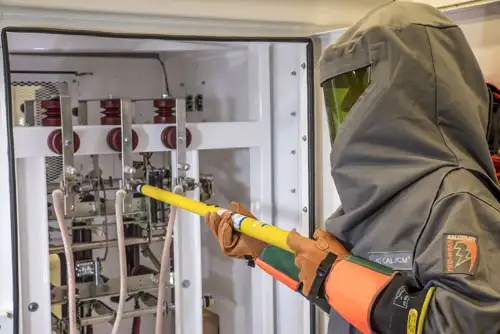
High Voltage Maintenance Training Online

Our customized live online or in‑person group training can be delivered to your staff at your location.
  • Live Online
  • 12 hours Instructor-led
  • Group Training Available
Regular Price:
$599
Coupon Price:
$499
Reserve Your Seat Today
In its drive to go green, the technology industry has so far focused mainly on big targets like corporations and especially computer data centers, the power-hungry computing engine rooms of the Internet economy.

Next come the hundreds of millions of desktop and laptop personal computers in households worldwide.

Microsoft, the nonprofit Climate Savers Computing Initiative and a start-up called Verdiem are combining to put a spotlight on the energy-saving opportunity in PCs, and distributing a free software tool to consumers to help them do it.

The potential savings in both dollars and pollution is huge, analysts say, when the estimated one billion PCs in use globally are taken into account. The research firm Gartner estimates that 40 percent of all carbon dioxide emissions resulting from information technology and telecommunications are attributable to PCs. Data center computers account for 23 percent, and the rest is attributable to printers and telecommunications equipment.

“If you are going to tackle climate change and curb energy use, you have to deal with consumer devices like PCs,” said Andrew Fanara, a product development expert in the Environmental Protection Agency’s Energy Star program, which promotes energy-efficient products and practices.

For more than a decade, the federal Energy Star program has developed voluntary power-management standards for PCs, and suppliers like Intel and Microsoft have steadily improved the energy efficiency of their chips and software. But Mr. Fanara estimated that less than half of PCs met those standards, in part because more energy-efficient hardware adds slightly to production costs.

“There are large potential savings beyond what Energy Star can do,” he said.

The free software, called Edison, is a consumer version of the PC energy-saving software sold to corporate customers by Verdiem, which is financed by Kleiner Perkins Caufield & Byers, a leading venture capital firm and an aggressive investor in green technologies, and other venture investors.

Verdiem, based in Seattle, has 180 corporate and government customers, including Hewlett-Packard, which bundles VerdiemÂ’s Surveyor program on its desktop PCs sold to corporations. Though he will not disclose sales figures, the companyÂ’s chief executive, Kevin Klustner, says revenue should triple this year.

There are other free tools for calculating and managing PC power consumption, including the E.P.A.Â’s EZ Wizard, CO2 Saver and a Google energy-saving gadget. But Edison allows the user more flexibility, especially in making the settings as stringent as they want, analysts say.

If a user sets the software to put the machine in a “deep sleep” mode after a few minutes of not hitting a keystroke, the hard drive powers down and the PC sips just 5 percent of its normal energy consumption.

That kind of energy diet is far from standard practice in homes and offices. Half of all electricity consumed by a standard PC is wasted, according to environmental and industry studies.

Household electricity bills could also be trimmed by $20 to $95 a year for each PC, depending on local power costs and the kind of PCs in use, said Mr. Klustner. “What we’re trying to do is raise the visibility of the power consumption problem on the PC desktop and really bring power management to the masses,” he said.

The Climate Savers group, which includes major technology companies and environmental groups, has set a goal of reducing carbon dioxide emissions from computers by 54 million tons by 2010. That is the equivalent of the yearly pollution from 11 million cars. The goal includes data center computers and PCs, and about half of all PCs are consumer machines.

“This kind of energy-saving technology for consumers is a key ingredient in moving toward that goal,” said Rob Bernard, chief environmental strategist for Microsoft.

The companies said that the Edison software would be available to download on August 6 from the Web sites of Verdiem (verdiem.com), Microsoft (microsoft.com/environment), and Climate Savers (climatesaverscomputing.org).

Related News
Study: US Power Grid Has More Blackouts Than ENTIRE Developed World

US Power Grid Blackouts highlight aging infrastructure, rising outages, and declining reliability per DOE and NERC data, with weather-driven failures, cyberattack risk, and underinvestment stressing utilities, transmission lines, and modernization efforts.


Key Points

US power grid blackouts are outages caused by aging grid assets, severe weather, and cyber threats reducing reliability.

✅ DOE and NERC data show rising outage frequency and duration.

✅ Weather now drives 68-73% of major failures since 2008.

✅ Modernization, hardening, and cybersecurity investments are critical.


The United States power grid has more blackouts than any other country in the developed world, according to new data and U.S. blackout warnings that spotlight the country’s aging and unreliable electric system.

The data by the Department of Energy (DOE) and the North American Electric Reliability Corporation (NERC) shows that Americans face more power grid failures lasting at least an hour than residents of other developed nations.

And it’s getting worse.

Going back three decades, the US grid loses power 285 percent more often than it did in 1984, when record keeping began, International Business Times reported. The power outages cost businesses in the United States as much as $150 billion per year, according to the Department of Energy.

Customers in Japan lose power for an average of 4 minutes per year, as compared to customers in the US upper Midwest (92 minutes) and upper Northwest (214), University of Minnesota Professor Massoud Amin told the Times. Amin is director of the Technological Leadership Institute at the school.

#google#

The grid is becoming less dependable each year, he said.

“Each one of these blackouts costs tens of hundreds of millions, up to billions, of dollars in economic losses per event,” Amin said. “… We used to have two to five major weather events per year [that knocked out power], from the ‘50s to the ‘80s. Between 2008 and 2012, major outages caused by weather, reflecting extreme weather trends, increased to 70 to 130 outages per year. Weather used to account for about 17 to 21 percent of all root causes. Now, in the last five years, it’s accounting for 68 to 73 percent of all major outages.”

As previously reported by Off The Grid News, the power grid received a “D+” grade on its power grid report card from the American Society of Civil Engineers (ASCE) in 2013. The power grid grade card rating means the energy infrastructure is in “poor to fair condition and mostly below standard, with many elements approaching the end of their service life.” It further means a “large portion of the system exhibits significant deterioration” with a “strong risk of failure.”

“America relies on an aging electrical grid and pipeline distribution systems, some of which originated in the 1880s,” the 2013 ASCE report read. “Investment in power transmission has increased since 2005, but ongoing permitting issues, weather events, and limited maintenance have contributed to an increasing number of failures and power interruptions.”

As The Times noted, the US power grid as it exists today was built shortly after World War II, with the design dating back to Thomas Edison. While Edison was a genius, he and his contemporaries could not have envisioned all the strains the modern world would place upon the grid and the multitude of tech gadgets many Americans treat as an extension of their body. While the drain on the grid has advanced substantially, the infrastructure itself has not.

There are approximately 5 million miles of electrical transmission lines throughout the United States, and thousands of power generating plants dot the landscape. The electrical grid is managed by a group of 3,300 different utilities and serve about 150 million customers, The Times said. The entire power grid system is currently valued at $876 billion.

Many believe the grid is vulnerable to an attack on substations and other threats.

Former Department of Homeland Security Secretary Janet Napolitano once said that a power grid cyber attack is a matter of “when” not “if,” as Russians hacked utilities incidents have shown.


Related News

View more

Clorox accelerates goal of achieving 100% renewable electricity in the U.S. and Canada to 2021

Clorox Enel 70 MW VPPA accelerates renewable energy, sourcing Texas solar from the Roadrunner project to support 100% renewable electricity, Scope 2 reductions, and grid decarbonization through a virtual power purchase agreement starting in 2021.


Key Points

A 12-year virtual power purchase agreement for 70 MW of Texas solar to advance Clorox's 100% renewable electricity goal.

✅ 12-year contract supporting 100% renewable electricity by 2021

✅ Supplies 70 MW from Enel's Roadrunner solar project in Texas

✅ Cuts Scope 2 emissions via grid-delivered virtual PPA


The Clorox Company and a wholly owned subsidiary of Enel Green Power North America announced today the signing of a 12-year, 70 megawatt (MW) virtual power purchase agreement (VPPA) for the purchase of renewable energy, aligned with carbon-free electricity investments across the power sector beginning in 2021. Representing about half of Clorox's 100% renewable electricity goal in its operations in the U.S. and Canada, this agreement is expected to help Clorox accelerate achieving its goal in 2021, four years ahead of the company's original plan.

"Climate change and rising greenhouse gas emissions pose a real threat to the health of our planet and ultimately the long-term well-being of people globally. That's why we've taken action for more than 10 years to measure and reduce the carbon footprint of our operations," said Benno Dorer, chair and CEO, The Clorox Company. "Our agreement with Enel helps to expand U.S. renewable energy infrastructure, reflecting our view that companies like Clorox play an important role in addressing global climate change, as landmark policies like the U.S. climate deal further accelerate the transition. We believe this agreement will significantly contribute toward Clorox achieving our goal of 100% renewable electricity in our operations in the U.S. and Canada in 2021, four years earlier than originally planned. Our commitment to climate stewardship is an important pillar of our new IGNITE strategy and part of our overall efforts to drive Good Growth – growth that's profitable, sustainable and responsible."

The 70MW VPPA between Clorox and Enel Green Power North America for the purchase of renewable energy delivered to the electricity grid is for the second phase of Enel's Roadrunner solar project to be built in Texas, and complement global clean energy collaborations such as Canada-Germany hydrogen cooperation announced recently. Roadrunner is a 497-direct current megawatt (MWdc) solar project that is being built in two phases. The first phase, currently under construction, comprises around 252 MWdc and is expected to be completed by the end of 2019, while the remaining 245 MWdc of capacity is expected to be completed by the end of 2020. Once fully operational, the solar plant could generate up to 1.2 terawatt-hours (TWh) of electricity annually, while avoiding an estimated 800,000 metric tons of carbon dioxide emissions per year.

Based on the U.S. Environmental Protection Agency Greenhouse Gas Equivalencies Calculator[i], this VPPA is estimated to avoid approximately 140,000 metric tons of CO2 emissions each year. This is equivalent to the annual impact that 165,000 acres of U.S. forest can have in removing CO2 from the atmosphere, and illustrates why cleaning up Canada's electricity is central to emissions reductions in the power sector, or the carbon impact of the electricity needed to power more than 24,000 U.S. homes annually.

"We are proud to support Clorox on their path towards 100% renewable electricity in its operations in the U.S. and Canada by helping them achieve about half their goal through this agreement," said Georgios Papadimitriou, head of Enel Green Power North America. "This agreement with Clorox reinforces the continued significance of renewable energy as a fundamental part of any company's sustainability strategy."

Schneider Electric Energy & Sustainability Services advised Clorox on this power purchase agreement and, amid heightened investor attention exemplified by the Duke Energy climate report, supported the company in its project selection, analysis, negotiations and deal execution.


Clorox Commits to Scope 1, 2 and 3 Science-Based Targets

For more than 10 years, Clorox has consistently achieved its goals to reduce greenhouse gas emissions in its operations. Clorox is focused on setting emissions reduction targets in line with climate science. As a participant in the Science Based Targets Initiative, Clorox has committed to setting and achieving science-based greenhouse gas emissions reduction targets in its operations (Scopes 1 and 2) and across its value chain (Scope 3), and consistent with national pathways such as Canada's net-zero 2050 target pursued by policymakers. The targets are considered "science-based" if they are in line with what the latest climate science says is necessary to meet the goals of the 2015 Paris Agreement – a global environmental accord to address climate change and its negative impacts.

Clorox's climate stewardship goals are part of its new integrated corporate strategy called IGNITE, which includes several other environmental, social and governance (ESG) goals and reflects lessons from Canada's electricity progress in scaling clean power. More comprehensive information about Clorox's IGNITE ESG goals can be found here. Information on Clorox's 2020 ESG strategy can be found in its fiscal year 2019 annual report.


Related News

View more

As peak wildfire season nears, SDG&E completes work on microgrid in Ramona

SDG&E Ramona Microgrid delivers renewable energy and battery storage for wildfire mitigation, grid resilience, and PSPS support, powering the Cal Fire Air Attack Base with a 500 kW, 2,000 kWh lithium-ion system during outages.


Key Points

A renewable, battery-backed microgrid powering Ramona's Air Attack Base, boosting wildfire response and PSPS resilience.

✅ 500 kW, 2,000 kWh lithium-ion storage replaces diesel

✅ Keeps Cal Fire and USFS aircraft operations powered

✅ Supports PSPS continuity and rural water reliability


It figures to be another dry year — with the potential to spark wildfires in the region. But San Diego Gas & Electric just completed a renewable energy upgrade to a microgrid in Ramona that will help firefighters and reduce the effects of power shutoffs to backcountry residents.

The microgrid will provide backup power to the Ramona Air Attack Base, helping keep the lights on during outages, home to Cal Fire and the U.S. Forest Service's fleet of aircrafts that can quickly douse fires before they get out of hand.

"It gives us peace of mind to have backup power for a critical facility like the Ramona Air Attack Base, especially given the fact that fire season in California has become year-round," Cal Fire/San Diego County Fire Chief Tony Mecham said in a statement.

The air attack base serves as a hub for fixed-wing aircraft assigned to put out fires. Cal Fire staffs the base throughout the year with one two airtankers and one tactical aircraft. The base also houses the Forest Service's Bell 205 A++ helicopter and crew to protect the Cleveland National Forest. Aircraft for both CalFire and the Forest Service can also be mobilized to help fight fires throughout the state.

This summer, the Ramona microgrid won't have to rely on diesel generation. Instead, the facility next to the town's airport will be powered by a 500 kilowatt and 2,000 kilowatt-hour lithium-ion battery storage system that won't generate any greenhouse gas emissions.

"What's great about it, besides that it's a renewable resource, is that it's a permanent installation," said Jonathan Woldemariam, SDG&E's director of wildfire mitigation and vegetation management. "In other words, we don't have to roll a portable generator out there. It's something that can be leveraged right there because it's already installed and ready to go."

Microgrids have taken on a larger profile across the state because they can operate independently of the larger electric grid, where repairing California's grid is an ongoing challenge, thus allowing small areas or communities to keep the power flowing for hours at a time during emergencies.

That can be crucial in wildfire-prone areas affected by Public Safety Power Shutoffs, or PSPS, the practice in which investor-owned utilities in California de-energize electrical power lines in a defined area when conditions are dry and windy in order to reduce the risk of a power line falling and igniting a wildfire, while power grid upgrades move forward statewide.

Rural and backcountry communities are particularly hard hit when the power is pre-emptively cut off because many homes rely on water from wells powered by electricity for their homes, horses and livestock.

In addition to Ramona, SDG&E has established microgrids in three other areas in High Fire Threat Districts:

The microgrids in Butterfield Ranch and Shelter Valley run on diesel power but the utility plans to complete solar and battery storage systems for each locale by the end of next year, as other regions develop new microgrid rules to guide deployment.

SDG&E has a fifth microgrid in operation — in Borrego Springs, which in 2013 became the first utility-scale microgrid in the country. It provides grid resiliency to the roughly 2,700 residents of the desert town and serves as a model for integrated microgrid projects elsewhere in delivering local electricity. While the Borrego Springs microgrid is not located in a High Fire Threat District, "when and if any power is turned off, especially the power transmission feed that goes to Borrego, we can support the customers using the microgrid out there," Woldemariam said.

Microgrid costs can be higher than conventional energy systems, even as projected energy storage revenue grows over the next decade, and the costs of the SDG&E projects are passed on to ratepayers. As per California Public Utilities Commission rules, the financial details for each of microgrid are kept confidential for at least three years.

SDG&E's microgrids are part of the utility's larger plan to reduce wildfire risk that SDG&E files with the utilities commission. In its wildfire plan for 2020 through 2022, SDG&E expected to spend $1.89 billion on mitigation measures.


Related News

View more

Spent fuel removal at Fukushima nuclear plant delayed up to 5 years

Fukushima Daiichi decommissioning delay highlights TEPCO's revised timeline, spent fuel removal at Units 1 and 2, safety enclosures, decontamination, fuel debris extraction by robot arm, and contaminated water management under stricter radiation control.


Key Points

A government revised schedule pushing back spent fuel removal and decommissioning milestones at Fukushima Daiichi.

✅ TEPCO delays spent fuel removal at Units 1 and 2 for safety.

✅ Enclosures, decontamination, and robotics mitigate radioactive risk.

✅ Contaminated water cut target: 170 tons/day to 100 by 2025.


The Japanese government decided Friday to delay the removal of spent fuel from the Fukushima Daiichi nuclear power plant's Nos. 1 and 2 reactors by as much as five years, casting doubt on whether it can stick to its timeframe for dismantling the crippled complex.

The process of removing the spent fuel from the units' pools had previously been scheduled to begin in the year through March 2024.

In its latest decommissioning plan, the government said the plant's operator, Tokyo Electric Power Company Holdings Inc., will not begin the roughly two-year process (a timeline comparable to major reactor refurbishment programs seen worldwide) at the No. 1 unit at least until the year through March 2028 and may wait until the year through March 2029.

Work at the No. 2 unit is now slated to start between the year through March 2025 and the year through March 2027, it said.

The delay is necessary to take further safety precautions such as the construction of an enclosure around the No. 1 unit to prevent the spread of radioactive dust, and decontamination of the No. 2 unit, even as authorities have begun reopening previously off-limits towns nearby, the government said. It is the fourth time it has revised its schedule for removing the spent fuel rods.

"It's a very difficult process and it's hard to know what to expect. The most important thing is the safety of the workers and the surrounding area," industry minister Hiroshi Kajiyama told a press conference.

The government set a new goal of finishing the removal of the 4,741 spent fuel rods across all six of the plant's reactors by the year through March 2032, amid ongoing debates about the consequences of early nuclear plant closures elsewhere.

Plant operator TEPCO has started the process at the No. 3 unit and already finished at the No. 4 unit, which was off-line for regular maintenance at the time of the disaster. A schedule has yet to be set for the Nos. 5 and 6 reactors.

While the government maintained its overarching timeframe of finishing the decommissioning of the plant 30 to 40 years from the 2011 crisis triggered by a magnitude 9.0 earthquake and tsunami, there may be further delays, even as milestones at other nuclear projects are being reached worldwide.

The government said it will begin removing fuel debris from the three reactors that experienced core meltdowns in the year through March 2022, starting with the No. 2 unit as part of broader reactor decommissioning efforts.

The process, considered the most difficult part of the decommissioning plan, will involve using a robot arm, reflecting progress in advanced reactors technologies, to initially remove small amounts of debris, moving up to larger amounts.

The government also said it will aim to reduce the pace at which contaminated water at the plant increases. Water for cooling the melted cores, mixed with underground water, amounts to around 170 tons a day. That number will be brought down to 100 tons by 2025, it said.

The water is being treated to remove the most radioactive materials and stored in tanks on the plant's grounds, but already more than 1 million tons has been collected and space is expected to run out by the summer of 2022.


Related News

View more

Biden calls for 100 percent clean electricity by 2035. Here’s how far we have to go.

Biden Clean Energy Plan 2035 accelerates carbon-free electricity with renewables, nuclear, hydropower, and biomass, invests $2T in EVs, grid and energy efficiency, and tightens fuel economy standards beyond the Clean Power Plan.


Key Points

A $2T U.S. climate plan for carbon-free power by 2035, boosting renewables, nuclear, EVs, efficiency, and grid upgrades.

✅ Targets a zero-carbon electric grid nationwide by 2035

✅ Includes renewables, nuclear, hydropower, and biomass in standard

✅ Funds EVs, grid modernization, weatherization, and fuel economy rules


This month the Democratic presumptive presidential nominee, Joe Biden, outlined an ambitious plan, including Biden’s solar plan to expand clean energy, for tackling climate change that shows how far the party has shifted on the issue since it controlled the White House.

President Barack Obama’s Clean Power Plan had called for the electricity sector to cut its carbon pollution 32 percent by 2030, and did not lay out a trajectory for phasing out oil, coal or natural gas production.

This year, Democratic 2020 hopefuls such as Sen. Bernie Sanders (I-Vt.) went much further, suggesting the United States should derive all of its electricity from renewable sources by 2030, moving to 100% renewables as part of a $16.3 trillion plan to wean the nation away from fossil fuels. Many other congressional Democrats have embraced the Green New Deal — the nonbinding resolution calling for a carbon-free power sector by 2030 and more energy efficient buildings and vehicles, along with a massive investment in electric vehicles and high-speed rail.

Last year, 38 percent of U.S. electricity generated came from clean sources, according to a Washington Post analysis of data from the U.S. Energy Information Administration, and in April renewables hit a record 28% nationwide.

Biden’s new plan, which carries a price tag of $2 trillion, would eliminate carbon emissions from the electric sector by 2035, impose stricter gas mileage standards, fund investments to weatherize millions of homes and commercial buildings, and upgrade the nation’s transportation system. To reach its 2035 carbon-free electricity goal, the campaign includes wind, solar and several forms of energy, acknowledging why the grid isn’t yet 100% renewable while balancing reliability, that are not always counted in state renewable portfolio standards, such as nuclear, hydropower and biomass.

“A great appeal of the Biden proposal is that it is much closer to targeting carbon directly, which is the ultimate enemy, and plays fewer favorites with particular technologies,” said Michael Greenstone, who directs the University of Chicago’s Energy Policy Institute. “This will reduce the costs to consumers and give more carbon bang for the buck.”

But some environmentalists, such as Friends of the Earth President Erich Pica, question the idea of including more controversial carbon-free technologies. “There is no role for nuclear in a least-cost, low carbon world. Including these dinosaurs in a clean energy standard is going to incentivize industry efforts to keep aging, dangerous facilities online,” Pica said in an email.

Hydropower, which relies on a system of moving water that constantly recharges, is defined as renewable by the Environmental Protection Agency. Biomass is often considered as carbon neutral because even though it releases carbon dioxide when it is burned, the plants capture nearly the same amount of CO2 while growing.


Both forms of energy have come under fire for their environmental impacts, however. Damming streams and rivers can destroy fish habitat and make it more difficult for them to spawn, and it also seems unlikely that hydropower will expand its current 6 percent share of the nation’s electrical grid.

Many experts argue that classifying biomass energy as carbon neutral provides an incentive to cut down trees that would otherwise remain standing and sequester carbon. “If burning this wood were good for the climate, then we should not recycle paper, we should burn it,” noted Tim Searchinger, a research scholar at the Princeton School of Public and International Affairs.

Illinois lead the nation in the amount of electricity generated from nuclear power

More than half of the country — 30 states, Washington, and three territories — have adopted a renewable portfolio standard (RPS), according to the National Conference of State Legislatures, and seven states and one territory have set renewable energy goals. While 14 states, along with the District, Puerto Rico and the Virgin Islands, have established requirements of 50 percent or more carbon-free electricity, nearly as many have set theirs at 15 percent or less.

Maine Gov. Janet Mills (D), who has called for 100% renewable electricity in the state, has pushed clean electricity aggressively since taking office in 2019, lifting a wind energy moratorium imposed by her predecessor and signing bills aimed at expanding the state’s carbon-free energy sources. Biomass accounts for a quarter of the state’s electricity, more than any other state.

New York has one of the country’s most ambitious climate targets, which it scaled up last year. It aims to obtain 70 percent of its power from renewable sources within a decade, a period when renewables surpassed coal in U.S. generation, and eliminate carbon altogether by 2040, even as the state is in the process of shutting down a major nuclear plant near New York City, Indian Point, which is slated to cease operating on April 30, 2021.

... while other states are weakening theirs

Last year, Ohio weakened its renewable energy standard from a target of 12.5 percent in 2027 to 8.5 percent by 2026, even as renewables topped coal nationwide for the first time in over a century, without setting any future goals, and jettisoned its energy efficiency standard. West Virginia — which established modest renewable requirements in 2009 — repealed them altogether in 2015, the year they were set to take effect.


Related News

View more

Is Ontario embracing clean power?

Ontario Clean Energy Expansion signals IESO-backed renewables, energy storage, and low-CO2 power to meet EV-driven demand, offset Pickering nuclear retirement, and balance interim gas-fired generation while advancing grid reliability, decarbonization, and net-zero targets.


Key Points

Ontario Clean Energy Expansion plans to grow renewables and storage, manage short-term gas, and meet rising demand.

✅ IESO long-term procurements for renewables and storage

✅ Interim reliance on gas to replace Pickering capacity

✅ Targets align with net-zero grid reliability goals


After cancelling hundreds of renewable power projects four years ago, the Doug Ford government appears set to expand clean energy to meet a looming electricity shortfall across the province.

Recent announcements from Ontario Energy Minister Todd Smith and the province’s electric grid management agency suggest the province plans to expand low-CO2 electricity with new wind and solar plans in the long-term, even as it ramps up gas-fired power over the next five years.

The moves are in response to an impending electricity shortfall as climate-conscious drivers switch to electric vehicles, farmers replace field crops with greenhouses and companies like ArcelorMittal Dofasco in Hamilton switch from CO2-heavy manufacturing to electricity-based production. Forecasters predict Canada will need to double its power supply by 2050.

While Ontario has a relatively low-CO2 power system, the province’s electricity supply will be reduced in 2025 when Ontario Power Generation closes the 50-year-old Pickering nuclear station, now near the end of its operating life. This will remove 3,100 megawatts of low-CO2 generation, about eight per cent of the province’s 40,000-megawatt total.

The impending closure has created a difficult situation for the Independent Electricity System Operator (IESO), the provincial agency managing Ontario’s grid. Last year, it forecasted it would need to sharply increase CO2-polluting natural gas-fired power to avoid widespread blackouts.

This would mean drivers switching to electric vehicles or companies like Dofasco cutting CO2 through electrification would end up causing higher power system emissions.

It would also fly in the face of the federal government’s ambition to create a net-zero national electricity system by 2035, a critical part of Canada’s pledge to reduce CO2 emissions to zero by 2050.

Yet the Ford government has appeared reluctant to expand clean energy. In the 2018 election, clean electricity was a key issue as it appealed to anti-turbine voters in rural Ontario and cancelled more than 700 renewable energy contracts shortly after taking office, taking 400 megawatts out of the system.

But there are signs the government is having a change of heart. IESO recently released a list of 55 companies approved to submit bids for 3,500 megawatts of long-term electricity contracts starting between 2025 and 2027, and the energy minister has outlined a plan to address growing energy needs as well.

The companies include a variety of potential producers, ranging from Canadian and global renewable companies to local utilities and small startups. Most are renewable power or energy storage companies specializing in low- or zero-emission power. IESO plans additional long-term bid offerings in the future.

This doesn’t mean gas generation will be turned off. IESO will contract yearly production from existing gas plants until 2028 (the annual contract in 2023 will be for about 2,000 megawatts). As well, IESO has issued contracts to four gas-fired producers, a small wind company and a storage company to begin production of about 700 megawatts to boost gas plant output starting between 2024 and 2026.

While this represents an expansion of existing gas-fired generation, Smith has asked IESO to report on a gas moratorium, saying he doesn’t believe new gas plants will be needed over the long term.

The NDP and Greens criticized the government for relying on gas in the near term. But clean energy advocates greeted the long-term plans positively.

The IESO process “will contribute to a clean, reliable and affordable grid,” said the Canadian Renewable Energy Association.

Rachel Doran, director of policy and strategy at Clean Energy Canada, said in an email the potential gas generation moratorium “is an encouraging step forward,” although she criticized the “unfortunate decision to replace near-term nuclear power capacity with climate-change-causing natural gas.”

There will have to be a massive clean energy expansion to green Ontario’s grid well beyond what has been announced in recent days for Ontario to meet its future energy needs (think a doubling of Ontario’s current 40,000-megawatt capacity by 2050).

But these first steps hold promise that Ontario is at least starting on the path to that goal, rather than scrambling to keep the lights on with CO2-polluting natural gas.


Related News

View more

Sign Up for Electricity Forum’s Newsletter

Stay informed with our FREE Newsletter — get the latest news, breakthrough technologies, and expert insights, delivered straight to your inbox.

Electricity Today T&D Magazine Subscribe for FREE

Stay informed with the latest T&D policies and technologies.
  • Timely insights from industry experts
  • Practical solutions T&D engineers
  • Free access to every issue

Download the 2025 Electrical Training Catalog

Explore 50+ live, expert-led electrical training courses –

  • Interactive
  • Flexible
  • CEU-cerified