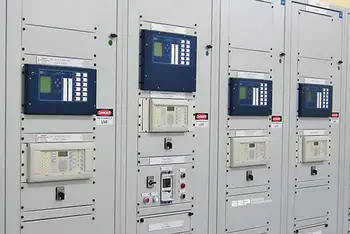
Protective Relay Training - Basic
Our customized live online or in‑person group training can be delivered to your staff at your location.
- Live Online
- 12 hours Instructor-led
- Group Training Available
Regular Price:
$699
Coupon Price:
$599
EU SET-Plan drives offshore wind expansion, smart cities, and low-carbon energy via major research funding. It prioritizes energy efficiency, electric transport, and grids, but sidelines geothermal while critics urge ditching coal and nuclear.
The Important Points
An EU roadmap to scale clean energy R&D, offshore wind, smart cities, and efficiency for a low-carbon economy.
- Targets 20% of EU electricity from wind by 2020, mainly offshore.
- Funds multi-billion euro clean energy R&D to rival US investment.
- Builds 25-30 smart cities with EVs, transit, and advanced insulation.
Europe will select 30 cities to pioneer "smart" electricity grids and space-age insulation as it seeks to lead the global race for green technology, a draft European Union document shows.
The windpower sector must shift to offshore wind and strive to provide a fifth of EU electricity by 2020, said a draft of the European Commission's long-awaited Strategic Energy Technology Plan.
The so-called SET-Plan lays out the EU's strategy for promoting hi-tech solutions to climate change to give European businesses a head start as it moves toward an all-renewable Europe by 2050 while the world switches to low-carbon energy.
Billions will have to be poured into research to avoid falling behind the United States, which is pouring $777 million into energy research, notes a draft of the plan obtained by Reuters ahead of its release next month.
"Basic research is chronically underfunded in the EU," the report says. "We need to stimulate and incentivize our best brains to push back the frontiers of science."
The project envisages 25 to 30 "smart cities" — highly insulated cities that glean energy from their waste and the solar and wind overhead and channel it down to the electric cars, trams and buses in the streets below.
"These Smart Cities will be the nuclei from which smart networks, a new generation of buildings and alternative transport means will develop into European wide realities," it added.
Billions of euros will be needed for the transition to reduce carbon emissions across the EU, but EU officials are still calculating the exact need.
Environmentalists gave the plan a mixed reception, saying it should have completely ditched coal power and nuclear.
The geothermal industry, which generates steady "baseload" power by tapping into the earth's natural heat, said it provided the perfect complement to fluctuating wind power and solar and expressed dismay it had been ignored altogether.
"A renewable energy mix can not be reached in the future without geothermal energy," said the European Geothermal Energy Council.
Boosting energy efficiency will top the agenda, an area where the European Space Agency is expected to lend a hand.
"This could be achieved by transferring advanced insulation materials and ultra-efficient energy systems to the terrestrial energy sector," said the report.
Related News
Related News
Biggest offshore windfarm to start UK supply this week
Hornsea One Offshore Wind Farm delivers first power to the UK grid, scaling renewable energy…
View more
Ontario's electricity 'recovery rate' could lead to higher hydro bills
Ontario Hydro Flat Rate sets a single electricity rate at 12.8 cents per kWh, replacing…
View more
Smaller, cheaper, safer: Next-gen nuclear power, explained
MARVEL microreactor debuts at Idaho National Laboratory as a 100 kW, liquid-metal-cooled, zero-emissions generator powering…
View more
Most Energy Will Come From Fossil Fuels, Even In 2040
2040 Energy Outlook projects a shifting energy mix as renewables scale, EV adoption accelerates, and…
View more
Thermal power plants’ PLF up on rising demand, lower hydro generation
India Coal Power PLF rose as capacity utilisation improved on rising peak demand and hydropower…
View more
Rolls-Royce expecting UK approval for mini nuclear reactor by mid-2024
Rolls-Royce SMR UK Approval underscores nuclear innovation as regulators review a 470 MW factory-built modular…
View more
Sign Up for Electricity Forum’s Newsletter
Stay informed with our FREE Newsletter — get the latest news, breakthrough technologies, and expert insights, delivered straight to your inbox.
Electricity Today T&D Magazine Subscribe for FREE

Stay informed with the latest T&D policies and technologies.
- Timely insights from industry experts
- Practical solutions T&D engineers
- Free access to every issue
