High Voltage Maintenance Training Online
Our customized live online or in‑person group training can be delivered to your staff at your location.
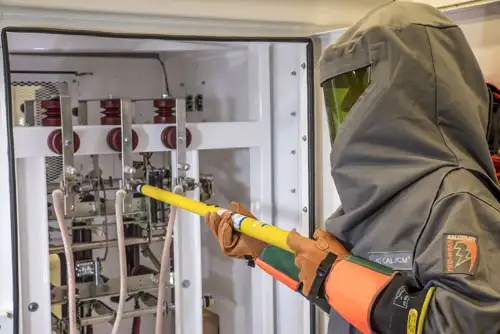
- Live Online
- 12 hours Instructor-led
- Group Training Available
Regular Price:
$599
Coupon Price:
$499
Florida Power & Light Co., which experienced widespread failures of its distribution poles during Hurricane Wilma, dismissed warnings from state regulators earlier this year that its system for inspecting poles was inadequate.
Kevin Bloom, spokesman for the Public Service Commission, which issued a report on poles in July, said the quality of the inspection program was likely to come up in hearings over the company's expected request for a surcharge to pay for hurricane repairs.
"If you're not conducting inspections on a regular basis, how do you know whether they're rotten inside or thinned out?" he asked.
The commission report criticized the company for having its outside contractor inspect only 8 percent of its poles from 1999 to 2004 and for having the contractor inspect poles only in the North Florida, West Palm Beach and Boca Raton service districts. The commission, a state board that sets service standards and rates for utilities, said this level of inspections would "allow weakened and rotten poles to remain in service."
FPL brushed aside the warning at the time, saying that the contractor-run inspection program constituted only a small part of its inspections, which are done on a less formal basis by workers in the field.
The company said pole failures accounted for only .02 percent of all interruptions. And FPL said the three hurricanes that made landfall in its territory last year forced the company to replace only 1 percent of its wood poles.
"FPL believes this speaks highly of its pole infrastructure status and existing pole inspection and maintenance processes," the company said, according to the Public Service Commission report.
Geisha Williams, the company's vice president for electrical distribution, said the hurricane damaged or toppled stands of 40 to 50 distribution poles at a time. She said pole failure was a key factor in the outages Wilma caused in South Florida. Company officials said they would study why this happened.
The hurricane put out the lights for more than 98 percent of FPL's 2.5 million customers in South Florida..
Bloom, the PSC spokesman, said the company should avoid discarding snapped poles so it could inspect them and determine whether they had internal weaknesses that could have been identified in inspections.
The report only criticized the company's inspections of distribution poles, which carry lines that link substations to customers. It did not criticize inspections of transmission poles, which carry high-voltage lines from plants to substations.
FPL has just over 1 million wooden poles. They are designed to withstand windspeeds of at least 118.6 mph, according to the commission. The hurricane produced sustained winds of up to 105 mph near its core as it passed through South Florida, according to the National Hurricane Center. Most areas, however, experienced winds ranging from 75 to 95 mph.
Tom Veenstra, an FPL spokesman, defended the company's pole inspection record, saying the company's work crews conduct routine inspections. About 5 percent result in corrective action, such as bracing, chemical treatment or replacement. Despite the report from the PSC, he said, customers are experiencing the best electricity reliability ever, excluding hurricanes.
"Since this study was done, our service reliability is at the highest level it's ever been," he said. "Since launching an aggressive campaign in 1997 to improve electric reliability, FPL has achieved outstanding results. The annual average amount of time customers are without power has been reduced by nearly 50 percent, and the frequency and duration of outages has declined as well."
While the commission focused on the inspections by an outside contractor hired for that purpose, FPL said most of its inspections are conducted by employees before climbing a pole or in conjunction with inspections of distribution equipment.
But the commission's report said these less formal, visual inspections were not as effective as those done by the company's contractor, which used soundings and borings to detect internal decay.
Related News
California faces huge power cuts as wildfires rage
California Wildfire Power Shut-Offs escalate as PG&E imposes blackouts amid high winds, Getty and Kincade…
View more
Ontario explores possibility of new, large scale nuclear plants
Ontario Nuclear Expansion aims to meet rising electricity demand and decarbonization goals, complementing renewables with…
View more
Ontario Teachers' Plan Acquires Brazilian Electricity Transmission Firm Evoltz
Ontario Teachers' Evoltz Acquisition expands electricity transmission in Brazil, adding seven grid lines across ten…
View more
Heat Exacerbates Electricity Struggles for 13,000 Families in America
Energy Poverty in Extreme Heat exposes vulnerable households to heatwaves, utility shutoffs, and unreliable grid…
View more
Iraq plans nuclear power plants to tackle electricity shortage
Iraq Nuclear Power Plan targets eight reactors and 11 GW to ease blackouts, curb emissions,…
View more
Nuclear alert investigation won't be long and drawn out, minister says
Pickering Nuclear False Alert Investigation probes Ontario's emergency alert system after a provincewide cellphone, radio,…
View more
Sign Up for Electricity Forum’s Newsletter
Stay informed with our FREE Newsletter — get the latest news, breakthrough technologies, and expert insights, delivered straight to your inbox.
Electricity Today T&D Magazine Subscribe for FREE

Stay informed with the latest T&D policies and technologies.
- Timely insights from industry experts
- Practical solutions T&D engineers
- Free access to every issue

