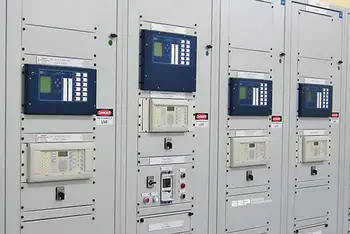
Protective Relay Training - Basic
Our customized live online or in‑person group training can be delivered to your staff at your location.
- Live Online
- 12 hours Instructor-led
- Group Training Available
Regular Price:
$699
Coupon Price:
$599
Home Wind Turbines are surging as small wind adopts direct-drive generators, rooftop mounting, and 30% tax credits; AWEA projects rapid growth, ACE Hardware sales, and better low-wind performance for urban and suburban sites.
Key Information
Home wind turbines are small systems that produce building power using direct-drive tech, rooftop mounts, and credits.
- Market share <0.002% but AWEA forecasts 1,700 MW by 2013
- 2008 small-wind installs rose 78% to 17.3 MW
- Direct-drive generators enable 2-45 mph operation
- Honeywell 2 kW rooftop turbine priced $4,500 plus install
A Michigan company named EarthTronics has developed a small-scale wind turbine that could be used to generate electricity at home in winds as low as two miles per hour. The company is calling it "the highest output, lowest cost per [kilowatt hour] installed turbine ever made."
Even with growing interest in wind power worldwide, the U.S. market for home wind turbines remains small, less than 0.002 percent of the national market. According to the American Wind Energy Association (AWEA), however, this small wind turbine market is expected to grow dramatically over the next four years — from a total of 80 installed megawatts in 2008 to 1,700 megawatts in 2013. Already, installations in 2008 — 17.3 megawatts — marked a 78 percent increase over 2007.
Small wind turbines produce 100 kilowatts or less of power, and they can help farm operations meet on-site electricity needs in rural areas.
Contributing to the trend is a provision in the federal stimulus bill, which limited the former $4,000 cap on the 30 percent tax credit that consumers or businesses could receive off of wind power installation costs.
Perhaps more significant, however, are the new technologies making home-scale wind turbines more practical, affordable and visually attractive, including eggbeater-style designs now emerging. Whether the new technologies will be enough to overcome resistance from neighbors or the still substantial startup costs, however, remains to be seen.
One of the primary challenges in producing home-scale wind turbines has been figuring out a way to generate electricity from low wind speeds. In urban and suburban settings, a high density of nearby buildings and trees tends to block the higher wind speeds needed by conventional turbines. According to EarthTronics, 90 percent of the wind resources in North America are nine miles per hour or lower.
Shaped like a giant wheel, the EarthTronics home wind turbine — marketed as the Honeywell Wind Turbine through a licensing agreement with Honeywell — is significantly lighter than a conventional turbine due to its omission of a gearbox in the center.
Traditional turbines are turned when the wind pushes against large blades around a central gearbox, which in turn generates the electricity. Because the gearbox is so heavy, however, large blades and high winds are required for it to operate. In EarthTronics' Honeywell turbine, the gearbox has been replaced by a much lighter "direct-drive generator" based on magnets. This allows the turbine to generate electricity in winds anywhere between two and 45 miles per hour. Also in contrast to other turbines — which must be mounted on the ground — the Honeywell turbine can be attached to a rooftop.
EarthTronics will begin selling the Honeywell turbines in ACE hardware stores this fall. Each turbine generates 2 kilowatts of power and sells for $4,500, with an additional installation cost of up to $1,500. Even after installation costs, the company says, the Honeywell turbine costs only one-third as much as a traditional turbine.
The company estimates that a single turbine can generate 2,000 kilowatt hours of electricity per year, depending on climate and operating conditions, and in some markets homeowners can sell home-made electricity to the grid depending on local policies.
The turbines have a six-foot diameter and weigh 95 pounds. The company has begun a program to create local jobs and train contractors and electricians in how to install the devices.
EarthTronics is not the only company taking advantage of direct-drive generators to jump on the home wind power bandwagon. According to the AWEA, a number of other companies are also planning to introduce building-mounted wind turbine systems, such as London-based Quiet Revolution. Private companies such as Mariah Power and Wind Energy have also invested in small-scale wind turbine technology, with expansions creating 200 jobs in Windsor in related manufacturing, and Siemens has begun testing turbines without gearboxes to see if they could be adapted for larger-scale electric generation while GE brings giant turbines to the U.S. market.
Related News
Related News

U.S. Announces $28 Million To Advance And Deploy Hydropower Technology
DOE Hydropower Funding advances clean energy R&D, pumped storage hydropower, retrofits for non-powered dams, and…
View more

Alberta shift from coal to cleaner energy
Alberta Coal-to-Gas Transition will retire coal units, convert plants to natural gas, boost renewables, and…
View more

Texas's new set of electricity regulators begins to take shape in wake of deep freeze, power outages
Texas PUC Appointments signal post-storm reform as Gov. Greg Abbott taps Peter Lake and advances…
View more
Duke Energy Florida to build its largest battery storage projects yet
Duke Energy Florida battery storage will add 22 MW across Trenton, Cape San Blas and…
View more
B.C. Challenges Alberta's Electricity Export Restrictions
BC-Alberta Electricity Restrictions spotlight interprovincial energy tensions, limiting power exports and affecting grid reliability, energy…
View more

Explainer: Why nuclear-powered France faces power outage risks
France Nuclear Power Outages threaten the grid as EDF reactors undergo stress corrosion inspections, maintenance…
View more
Sign Up for Electricity Forum’s Newsletter
Stay informed with our FREE Newsletter — get the latest news, breakthrough technologies, and expert insights, delivered straight to your inbox.
Electricity Today T&D Magazine Subscribe for FREE

Stay informed with the latest T&D policies and technologies.
- Timely insights from industry experts
- Practical solutions T&D engineers
- Free access to every issue
