CSA Z462 Arc Flash Training – Electrical Safety Compliance Course
Our customized live online or in‑person group training can be delivered to your staff at your location.

- Live Online
- 6 hours Instructor-led
- Group Training Available
Regular Price:
$249
Coupon Price:
$199
China Electricity Tariff Hike lifts industrial and commercial kWh rates by 5.7%, per NDRC, to offset coal costs, fund grid upgrades, curb inflation risks, and advance energy conservation across power producers.
Breaking Down the Details
A 5.7% hike lifting industrial and commercial power to 0.522 yuan/kWh, offsetting coal costs and promoting conservation.
- First hike since 2008; nonresidential +5.7%.
- Industrial and commercial tariff now 0.522 yuan/kWh.
- Rationale: rising coal costs, fuel prices, conservation.
- Tiered residential rates planned; heavy users pay more.
- Funds grid upgrades; inflation control remains a priority.
China raised electricity rates for businesses and industries, part of a long-term effort to adjust prices to reflect costs and promote energy saving as the country struggles to meet soaring demand.
The 5.7 percent increase was the first rate-hike since July 2008, when electricity tariffs for nonresidential use rose 5 percent, amid reports of China hiking electricity rates nationwide. Residential electricity rates have remained stable since a 1 percent hike in July 2006, but a residential rate increase is planned for early next year, China's main planning agency said in a notice.
The National Development and Reform Commission notice said rate hikes were delayed to prevent increases from hurting businesses already suffering from the global economic slowdown. But with the economy projected to grow more than 8 percent this year, the focus appears to have shifted to long-term planning and energy saving.
Businesses will pay 0.028 yuan (0.4 US cents) per kilowatt hour more, effectively hiking power prices for businesses for now, the NDRC said.
The increase will help cushion the impact on power producers of rising costs for coal, which China depends on for about three-quarters of its electricity generation.
The government has also been gradually raising government-set gasoline and diesel prices, which like electricity are cheaper in China than many other countries, to reflect rising global crude oil costs.
The hike raises the tariff for industrial and commercial customers to 0.522 yuan (3.4 US cents) per kilowatt hour. That compares with rates averaging about 10.4 cents in the U.S., where U.S. household electricity bills have skyrocketed in recent years, and 12 US cents in Japan, according to figures from the U.S. International Energy Agency.
Fuel price increases help alleviate pressures on refiners, who are vulnerable to huge losses when prices for imported crude oil jump, and dovetail with China's desire to limit its reliance on expensive crude oil imports.
The NDRC said the electricity rate increase would help power producers make up for a decline in demand earlier this year because of the economic crisis and help them fund needed improvements to the country's inadequate electricity grid.
Rates for residential users will be adjusted to charge more to heavy users, while keeping the costs for those who consume little more or less unchanged.
China's rates must be adjusted to reflect resource scarcity and encourage conservation, the agency said. But it also said authorities would control increases to help keep power bills down and inflation in check.
China's power consumption rose nearly 16 percent in October from a year earlier, to 313.4 billion kilowatt hours, signaling a rapid rise in energy demand across the country, the fifth straight month of increases as the economy recovered from a slowdown early this year.
Earlier, Shanghai and other major cities reported brief shortages of power and natural gas due to surging demand due to dropping temperatures, and occasional rolling blackouts in some districts.
The government is on a long-term campaign to reduce energy waste, especially by industries. While cost-conscious families tend to skimp on electricity use, overall China uses four times as much energy as the U.S. per dollar of economic output, and more than 11 times that used in Japan.
Related News
Related News

Canada to spend $2M on study to improve Atlantic region's electricity grid
Atlantic Clean Power Superhighway outlines a federally backed transmission grid upgrade for Atlantic Canada, adding…
View more
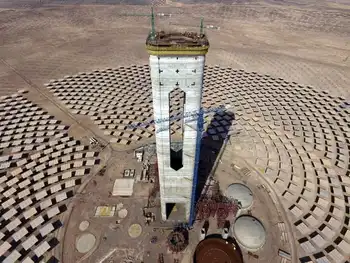
Abengoa, Acciona to start work on 110MW Cerro Dominador CSP plant in Chile
Cerro Dominador CSP Plant delivers 110MW concentrated solar power in Chile's Atacama Desert, with 10,600…
View more

Crews have restored power to more than 32,000 Gulf Power customers
Gulf Power Hurricane Michael Response details rapid power restoration, grid rebuilding, and linemen support across…
View more

USAID Delivers Mobile Gas Turbine Power Plant to Ukraine
USAID GE Mobile Power Plant Ukraine supplies 28MW of emergency power and distributed generation to…
View more

Net-zero roadmap can cut electricity costs by a third in Germany - Wartsila
Germany net-zero roadmap charts coal phase-out by 2030, rapid renewables buildout, energy storage, and hydrogen-ready…
View more
Electric Cooperatives, The Lone Shining Utility Star Of The Texas 2021 Winter Storm
Texas Electric Cooperatives outperformed during Winter Storm Uri, with higher customer satisfaction, equitable rolling blackouts,…
View more
Sign Up for Electricity Forum’s Newsletter
Stay informed with our FREE Newsletter — get the latest news, breakthrough technologies, and expert insights, delivered straight to your inbox.
Electricity Today T&D Magazine Subscribe for FREE

Stay informed with the latest T&D policies and technologies.
- Timely insights from industry experts
- Practical solutions T&D engineers
- Free access to every issue

