Substation Relay Protection Training
Our customized live online or in‑person group training can be delivered to your staff at your location.
- Live Online
- 12 hours Instructor-led
- Group Training Available
Regular Price:
$699
Coupon Price:
$599
Carbon credit trading is surging as cap-and-trade, offsets, and compliance markets expand, led by California ARB and the Western Climate Initiative, reshaping emissions policy, tariffs, and renewable projects across Canada and the U.S.
What's Going On
Markets where emitters buy offsets or allowances to meet caps, fund mitigation, and cut net greenhouse gas emissions.
- California ARB launches first U.S. cap-and-trade for 600+ emitters
- Trade value forecast at $2-$4B annually in California
- WCI links California with B.C. and other provinces/states
For the last year I’ve been on an admittedly geeky quest during my vacations. I have criss-crossed the planet, hunting down the million-dollar deals involving what many think will be a commodity as big, or bigger, than either oil or gold.
I’ve been carbon-credit hunting.
My exploration through the carbon world, which has turned into an hour-long film Carbon Hunters, took me from Mumbai to Washington, DC, from Manila to London, and a few places in between. It slowly dawned on me that this isn’t a crazy fad — it’s a multi-billion-dollar industry.
One of the revelatory moments happened right here in B.C., in Clayoquot Sound.
I was on the tiny island that is the home of Shawn Atleo, national chief of the Assembly of First Nations. As the grey sky emptied on the rain forest, Atleo told me something few people know.
A few years ago an oil company — energy companies have been some of the earliest players in the carbon credit game — approached him. They wanted the Ahousat First Nation to set aside a vast track of forestry.
The idea was this: The oil company was producing a huge carbon footprint in Alberta’s tar sands. The company wanted to be able to say it was preserving a rainforest, therefore sequestering carbon in trees, thus offsetting its carbon footprint and doing its bit to combat global warming.
Atleo refused the deal. But it was a first hint of the big business that carbon trading would become.
We got an even bigger sign that carbon trading is emerging as one of the major businesses of the 21st Century. California’s Air Resources Board, which regards carbon and other greenhouse gases as a pollutant causing global warming, unveiled a carbon cap-and-trade program, and the California/Canada market was expected to start small according to early reports. It’s the first in the United States.
It will set carbon dioxide emission caps on more than 600 refineries, utilities and other greenhouse gas emitters. Polluters who don’t reduce their greenhouse gases will have to buy carbon credits, a trade that California expects to be worth between $2 billion to $4 billion a year in the state alone.
This has major implications for Canada and British Columbia. For one thing, B.C. is part of the Western Climate Initiative with California (as well as three other provinces and four western states). California’s cap-and-trade program will be integrated into that agency, and Canada's carbon-trading market is being established, which means that B.C. and other provinces will also be drawn into the California carbon credit trade, both as sellers and buyers of carbon credits.
But that’s just the start.
California’s cap-and-trade plan is regarded as the blueprint for a national cap-and-trade plan that U.S. President Barack Obama hopes to get through Congress next year. If that happens — and the odds are high it will — that will mean carbon trading will become a crucial part of all future U.S.-Canada trade relations.
For B.C. and Canada’s energy-intensive resource sectors, that poses the likelihood, even amid emissions trading problems in Canada, they will have to start buying credits, to offset their carbon footprints, to enter the U.S. market. Under the draft regulations, for example, California will regulate the carbon footprints of electricity importers.
What this means is B.C. and Canadian negotiators better start moving fast to define Canadian-sourced carbon credits.
Will Canada’s carbon credits include trees grown to sequester carbon? Can green power from run-of-river power projects create carbon credits, even though economists say credits will not work in practice? Or the carbon saved in trees by protecting Canada’s boreal forest?
If Canada doesn’t identify a supply of home-grown carbon credits, the U.S. will force it to buy those credits from others. That will mean billions of dollars leaving the country. In short, we’re likely to be soon facing a carbon tax on polluting countries in some form, or a carbon tariff.
For Canadians, this is a bigger challenge than the softwood lumber wars, even as the emissions trading market has at times stood still. It’s as complex as the free trade deal. Probably even bigger, actually.




Richard Sandor, who runs the Chicago Climate Exchange and, like Canadian exchanges considering emissions trading, is seen as the “father of carbon trading,” predicts the global carbon credit market will soon be in the trillions of dollars annually. Bigger than gold or oil.
Related News
Related News
WEC Energy Group to buy 80% stake in Illinois wind farm for $345 million
WEC Energy Blooming Grove Investment underscores Midwest renewable energy growth, with Invenergy, GE turbines, and…
View more
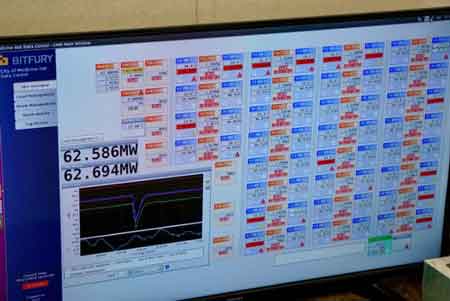
ERCOT Concerns tied to Crypto Mining
Texas’s booming data-center and crypto-mining growth threatens grid reliability as facilities frequently trip offline during…
View more
New Mexico Governor to Sign 100% Clean Electricity Bill ‘As Quickly As Possible’
New Mexico Energy Transition Act advances zero-carbon electricity, mandating public utilities deliver carbon-free electricity by…
View more
Millions at Risk of Electricity Shut-Offs Amid Summer Heat
Summer Heatwave Electricity Shut-offs strain power grids as peak demand surges, prompting load shedding, customer…
View more

Notley announces plans to move Alberta's electricity grid to net-zero by 2035 if elected
Alberta NDP Net-Zero Electricity Plan targets a 2035 clean grid, expands renewable energy, cuts emissions,…
View more
California Legislators Prepare Vote to Crack Down on Utility Spending
California Utility Spending Bill scrutinizes how ratepayer funds are used by utilities, targeting lobbying, advertising,…
View more
Sign Up for Electricity Forum’s Newsletter
Stay informed with our FREE Newsletter — get the latest news, breakthrough technologies, and expert insights, delivered straight to your inbox.
Electricity Today T&D Magazine Subscribe for FREE

Stay informed with the latest T&D policies and technologies.
- Timely insights from industry experts
- Practical solutions T&D engineers
- Free access to every issue

