NFPA 70b Training - Electrical Maintenance
Our customized live online or in‑person group training can be delivered to your staff at your location.
- Live Online
- 12 hours Instructor-led
- Group Training Available
Regular Price:
$699
Coupon Price:
$599
Top executives at the Modesto Irrigation District insist there is no hidden agenda or budgetary sleight of hand behind the utility's proposed package of electric rate increases.
"It is what it is," MID General Manager Allen Short said. "This agency has spent more money (in recent years) than it's brought in (and) you can't keep doing that."
Earlier, Tom Van Groningen, president of the MID board of directors, said he would consider reducing the proposed rate hikes - 4 per cent for residential users and as much as 15 per cent for certain industrial customers.
Should board members take that step - paring the rate-hike plan - business and residential users could face even larger rate increases next year. By the end of 2007, under policy established by the MID board, electric rates must reflect the utility's cost of buying, generating and delivering power. Additionally, the board has set a cash-reserve goal of $200 million by the end of 2011.
Projections show the utility's cash reserve will total about $155 million this year."We're beginning to refill the pot," Short said, "that we had drained down." Since 1995, Short said, the cost of natural gas had risen 200 percent. MID burns natural gas to generate electricity. During that same time, according to Short, the irrigation district raised its electric rates - when compounded - by about 63percent. "That's a pretty big gap," Short said.
Short, Lou Hampel, budget and rates administrator, Rich Smith, senior engineer for research and development and Maree Hawkins, a utility spokeswoman, sat down with The Bee just days after a barrage of criticism was fired at MID's rate-hike plan. Short and the others addressed a number of issues that had been raised in testimony at a recent public meeting, as well as in numerous letters and e-mails sent to MID.
Some believe MID is raising rates to offset the cost of providing service to Mountain House and the so-called "four cities" area: Escalon, Ripon, Oakdale and Riverbank. The decision to move into those areas, Short said, was made in 1995.
"The law says that's our service area now," he said. "It's not an expansion area." MID provides primarily residential electric service in Mountain House and industrial service to the four cities area. Combined, those communities account for about 4 percent of MID's customer base and 70 megawatts, or 10 percent of MID's maximum load capacity at any one time.
Even if those communities were not in the MID service area, Short said, the utility still would need to build another transmission line and still would be seeking electric rate increases.
Members of the MID board made the decision to move away from pay-as-you-go a number of years ago, Short said, to take advantage of favorable long- term interest rates.
That move also ensures that future ratepayers will help pay for the infrastructure from which they benefit.The electric rates charged by the district help pay down that long-term debt, as well as covering the utility's cost of buying, generating and-or delivering electric power. Hampel said MID's debt service is about $43 million a year.
Without long-term financing, Hampel said, the irrigation district would have to come up with an additional $20 million a year to pay for capital improvements. That, he said, would require the utility to double the rate it charges for electricity. Some say it's unfair to impose any electric rate increase on the poor and-or those trying to make ends meet on a fixed income. "We've tried to accommodate (low-income customers)," Short said, "where we can accommodate. "About 9,000 people - MID estimates that's less than half the eligible population - receive a monthly discount on their electric bills through the Community Alternative Rates for Electric Service or CARES program. With a 4 percent increase, the average CARES customer's bill would increase about $2.80 a month - based on usage of 715 kilowatt hours per month. Even at the higher rate, MID officials say the average CARES customer still will save $25.46 a month or $305.52 a year. Using that same amount of power, without the CARES discount, MID officials say the customer's average monthly bill would be $93.76.
Related News
Ameren, Safe Electricity urge safety near downed lines
Downed Power Line Vehicle Safety: Follow stay-in-the-car protocol, call 911, avoid live wires and utility…
View more
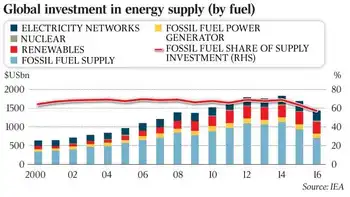
IEA warns fall in global energy investment may lead to shortages
Global Energy Investment Decline risks future oil and electricity supply, says the IEA, as spending…
View more
BC Hydro rates going up 3 per cent
BC Hydro Rate Freeze Rejection details the BCUC decision enabling a 3% rate increase, citing…
View more

Sustainable Marine now delivering electricity to Nova Scotia grid from tidal energy
Sustainable Marine tidal energy delivers in-stream power to Nova Scotia's grid from Grand Passage, proving…
View more
Ukraine Leans on Imports to Keep the Lights On
Ukraine Electricity Imports surge to record levels as EU neighbors bolster grid stability amid Russian…
View more
TVA faces federal scrutiny over climate goals, electricity rates
TVA Rates and Renewable Energy Scrutiny spotlights electricity rates, distributed energy resources, solar and wind…
View more
Sign Up for Electricity Forum’s Newsletter
Stay informed with our FREE Newsletter — get the latest news, breakthrough technologies, and expert insights, delivered straight to your inbox.
Electricity Today T&D Magazine Subscribe for FREE

Stay informed with the latest T&D policies and technologies.
- Timely insights from industry experts
- Practical solutions T&D engineers
- Free access to every issue
