Substation Relay Protection Training
Our customized live online or in‑person group training can be delivered to your staff at your location.
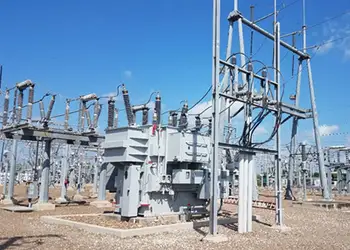
- Live Online
- 12 hours Instructor-led
- Group Training Available
Regular Price:
$699
Coupon Price:
$599
With the arrival of spring, and as the B.C. coastal mountains begin to thaw, many will be watching rivers and creeks with more than just concern for swelling banks. With the rights to hundreds of rivers ‘out to tender’, private power corporations are submitting applications for a stake in the biggest resource pillage since the 1850s’ gold rush.
But these are not the souls who put faith in one lucky strike to reward them with riches. Those applying to divert B.C.’s rivers through private electricity projects have a slam dunk promise from the B.C. Energy Plan to reap millions from the back door privatization of BC Hydro — with untold cost to the environment.
The B.C. government claims this private power gold rush is necessary to achieve electricity ‘self-sufficiency’. But British Columbia has been a net exporter of electricity for seven of the last 11 years. And power from run-of-the-river projects will only be reliable and plentiful during the spring freshet. Something other than self-sufficiency must be the real objective — something like the profit potential of private electricity exports to the U.S.
A simple Web search for Bute Inlet produces poetic language on the region’s beauty: “The remote and pristine Bute Inlet is a deep fjord located amongst the narrow tidal passages at the northern end of the Strait of Georgia. Carved deep into the mountains of mainland British Columbia’s west coast, the wilderness and mist-shrouded inlet boasts magnificent coastal scenery and abundant wildlife.” It is on Bute Inlet that Plutonic Power (along with General Electric, which will have a 60 percent controlling interest) has applied to develop a $4 billion run-of-river project — it would be the single largest private power project in Canada.
The scale of Plutonic’s proposed development are staggering — 17 dammed creeks, 265 kilometres of roads, 428 kilometres of power lines, 100 bridges, and 45,000 hectares of Crown land granted. But with an annual output of 2,980 gigawatt hours, it has been estimated Plutonic may reap as much as $350 million per year. With a 40-year contract, they stand to make $15 billion. In this same area the Integrated Land Management Bureau is considering at least seven applications to bottle water from the Bute watershed.
Granting hundreds of multi-decade contracts and 40-year water licenses to private corporations to divert rivers and run roughshod over B.C.’s pristine wilderness simply cannot be called ‘green’.
Environmental organizations such as the Western Canada Wilderness Committee have made this point repeatedly. Dozens of other outdoor enthusiast clubs, nature stewardship organizations, tourism operators, and other businesses that showcase ‘The Best Place On Earth’ have joined the call for an immediate moratorium on all private power projects until cumulative impacts can be properly assessed. Even the California senate has determined that private run-of–river power from B.C. will not qualify as “green” under the terms of their renewable energy bill.
In March, David Suzuki and Faisal Moola cautioned that, “Panic (to address climate change) shouldn’t guide policy,” and called for solid legislation and monitoring to evaluate environmental impacts in order, “…to ensure that our solutions don’t lead to the destruction of the very thing we’re trying to protect.”
Addressing climate change is of utmost importance. But the current B.C. government has prohibited BC Hydro from generating any new energy itself, including alternative energy. If weÂ’re serious about climate change, we need to free up BC Hydro so it can develop new green energy (like solar and tidal) itself directly. We must not base our electricity policy on private projects which put hundreds of rivers and streams at risk and whose profit plans assume electricity exports. Instead, we need to permit BC Hydro to work within the public realm to meet social and environmental goals and with local communities and First Nations to build and operate truly green energy alternatives.
Don’t be fooled or confused; the run-of-river projects should more aptly be called ‘ruin-of-river’. They are not green, not public, and not for us.
Related News
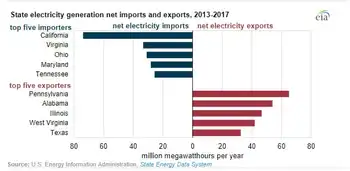
EIA: Pennsylvania exports the most electricity, California imports the most from other states
U.S. Electricity Trade by State, 2013-2017 highlights EIA grid patterns, interstate imports and exports, cross-border…
View more
Manitoba Hydro scales back rate increase next year
Manitoba Hydro 3.5 Percent Rate Increase proposes a smaller electricity rate hike under Public Utilities…
View more

Will Iraq have enough electricity for coming hot summer days?
Iraq Electricity Crisis intensifies as summer heat drives demand; households face power outages, reliance on…
View more

City of Vancouver named Clean Energy Champion for Bloedel upgrades
BC Hydro Clean Energy Champions highlights Vancouver's Bloedel Conservatory electrification with a massive heat pump,…
View more
Ireland announces package of measures to secure electricity supplies
Ireland electricity support measures include PSO levy rebates, RESS 2 renewables, CRU-directed EirGrid backup capacity,…
View more
NRC Makes Available Turkey Point Renewal Application
Turkey Point Subsequent License Renewal seeks NRC approval for FP&L to extend Units 3 and…
View more
Sign Up for Electricity Forum’s Newsletter
Stay informed with our FREE Newsletter — get the latest news, breakthrough technologies, and expert insights, delivered straight to your inbox.
Electricity Today T&D Magazine Subscribe for FREE

Stay informed with the latest T&D policies and technologies.
- Timely insights from industry experts
- Practical solutions T&D engineers
- Free access to every issue

