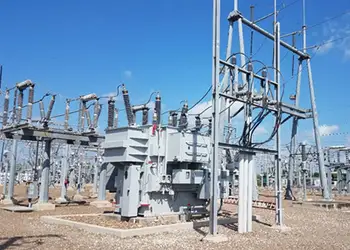
Substation Relay Protection Training
Our customized live online or in‑person group training can be delivered to your staff at your location.
- Live Online
- 12 hours Instructor-led
- Group Training Available
Regular Price:
$699
Coupon Price:
$599
Israel EV charging regulations reshape the market as IEC undercuts Better Place and rivals like Gnergy, enabling public charging, battery swap networks, and non-exclusive access, while tariffs and battery rental costs influence total ownership economics.
Main Details
Rules on EV access and pricing that enable public networks, ban home charging, and prevent supplier lock-in.
- IEC to offer public charging at household-like rates
- Better Place undercut; Gnergy to launch with Pango Charging
- Suppliers barred from exclusive network lock-in
- Battery rental reduces EV cost advantage at low mileage
The fuel bill for motorists who opt for electric cars in Israel will be much cheaper than gasoline-powered vehicles, thanks to the Electricity Authority's decision to charge the same rate for charging an electric car battery that consumers pay for their home electricity consumption.
The move will mean that the Israel Electric Corporation will greatly undercut the rates that Better Place, the electric car infrastructure company, is offering.
Better Place offers subscribers a much higher rate than the equivalent of household electricity rates expected to be offered by competitors, including Gnergy. Better Place and its founder and CEO, Shai Agassi, have been pioneers in promoting clean technologies and the concept that motorists can rid themselves entirely of the internal combustion gasoline-powered engine by making the switch to electric-powered cars that can be refueled by recharging the battery or by replacing it at a refueling station.
Yesterday Water and Energy Resources Minister Uzi Landau signed off on the change in regulations that will bar motorists from simply recharging their electric car batteries at home, but will make the service available by firms such as Better Place and Gnergy, including chargers in Jerusalem through municipal programs.
The Israel Electric Corporation will also offer public recharging facilities and fueling stations nationwide. The regulations bar a supplier such as Better Place and Gnergy from requiring that their customers use only their own company's facilities.
It should be noted that even though recharging an electric car at household electricity rates through the IEC or Gnergy will make the actual fuel bill for the car significantly less than motorists general pay in gasoline, the price advantage of operating an electric car will be reduced by the major cost of renting the electric car battery itself.
A calculation by TheMarker reveals that when shorter distances are driven, gasoline-powered cars are still cheaper to operate, but as the number of kilometers increases, the advantage of electric power gradually emerges alongside EV growth trends in the charging industry.
Better Place is offering its customers the advantage of cheaper insurance in connection with the operation of the Renault electric model, for example, compared to gasoline-powered cars, and maintenance costs are also lower on electric cars.
Better Place also provides the battery-replacement infrastructure, along with EV software tools that enable motorists to travel greater distances by popping out their old battery on the road and installing a new one.
Gnergy has not yet begun offering charging station services, but it is expected to do so shortly, in partnership with Kardan's Pango, the firm that offers payment of parking meter fees through customer's cell phone, and to pilot charging in parking lots for electric cars across cities. The electricity charging firm will be called Pango Charging.
Gasoline is heavily taxed in Israel. There was concern in the electric car industry that similar levies would be imposed on electricity for electric car batteries to compensate the state for the loss in revenues the government would incur if electric car use takes off and gasoline consumption declines.
For the moment, at least, that appears not to be the case.
Related News
Related News

EPA Policy to limit telework emerges during pandemic
EPA Telework Policy restricts remote work, balancing work-from-home guidance during the COVID-19 pandemic with flexible…
View more
Germany - A needed nuclear option for climate change
Germany Nuclear Debate Amid Energy Crisis highlights nuclear power vs coal and natural gas, renewables…
View more
Electricity alert ends after Alberta forced to rely on reserves to run grid
Alberta Power Grid Level 2 Alert signals AESO reserve power usage, load management, supply shortage…
View more
More red ink at Manitoba Hydro as need for new power generation looms
Manitoba NDP Energy Financing Strategy outlines public ownership of renewables, halts private wind farms, stabilizes…
View more

BNEF Report: Wind and Solar Will Provide 50% of Electricity in 2050
BNEF 2019 New Energy Outlook projects surging renewable energy demand, aggressive decarbonization, wind and solar…
View more

Berlin Launches Electric Flying Ferry
Berlin Flying Electric Ferry drives sustainable urban mobility with zero-emission water transit, advanced electric propulsion,…
View more
Sign Up for Electricity Forum’s Newsletter
Stay informed with our FREE Newsletter — get the latest news, breakthrough technologies, and expert insights, delivered straight to your inbox.
Electricity Today T&D Magazine Subscribe for FREE

Stay informed with the latest T&D policies and technologies.
- Timely insights from industry experts
- Practical solutions T&D engineers
- Free access to every issue

