CSA Z462 Arc Flash Training – Electrical Safety Compliance Course
Our customized live online or in‑person group training can be delivered to your staff at your location.

- Live Online
- 6 hours Instructor-led
- Group Training Available
Regular Price:
$249
Coupon Price:
$199
Canadian Nuclear Safety Review assesses external hazards after Fukushima, prioritizing seismic risk, floods, fire, extreme weather, and emergency preparedness for Ontario reactors at Darlington, Bruce, and Pickering, under CNSC oversight and regulatory hearings.
Key Information
A federal plan to apply Fukushima lessons, reassess reactor safety, and bolster emergency readiness at Canadian plants.
- Focus on seismic, flood, fire, extreme weather hazards
- Operators to file short- and long-term plans by April 29
- CNSC and Environment Canada panel proceeds on Darlington
In the wake of the nuclear crisis in Japan, the Canadian Nuclear Safety Commission has ordered all reactor operators to revisit their safety plans and report on potential improvements to be made by April’s end.
Federal Natural Resources Minister Christian Paradis wrote a letter to the Ontario energy minister saying the nuclear regulator has kept abreast of the efforts to cool the Fukushima Daiichi power plant in coastal Japan where a massive earthquake struck, saying the reactors should “review initial lessons from the Japanese earthquake and the Fukushima effect on Canadian nuclear practice and re-examine the safety cases for the reactors.”
In the letter, addressed to Ontario Energy Minister Brad Duguid, Mr. Paradis asked for a focus on external hazards, as the Canadian nuclear industry comes under scrutiny, things like seismic shifts, floods, fire and extreme weather events — all things Japan has weathered in the 10 days since the initial 9.0 quake sent a tsunami flooding over the coastline.
The Nuclear Safety Commission, which is reports to the Department of Natural Resources, also asked regulators to review emergency preparedness systems, as the Canadian nuclear sector girds for change in response to recent events, and other protocols that help the reactors steer clear of severe accidents.
“Operators are to report, by April 29, on implementation plans for short- and long-term measures to address any significant gaps,” he said in the letter, which was in reply to one sent by Mr. Duguid, which asked for the Commission to think about the Japanese crisis as it starts to look at Ontario Power Generation’s plans for construction of two reactors at the Darlington nuclear station site.
A panel created by the Commission and Environment Canada launched hearings to find out how suitable the Darlington site would be for the construction of the reactors. Ontario Power Generation needs separate licences to build and operate each reactor.
“As information becomes available on what led to the events in Japan, any new lessons learned will be applied,” Mr. Paradis said, agreeing that the panel should proceed.
Canada has five nuclear power stations, as provinces continue to back nuclear power in Canada: three in Ontario at Darlington, Bruce and Pickering Point Lepreau in New Brunswick and Quebec’s Gentilly. It also has a research reactor at Chalk River, Ont.
Related News
Related News
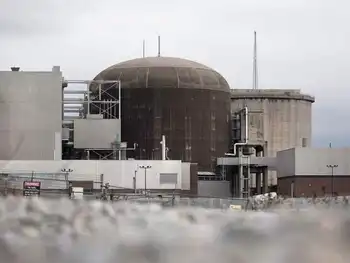
Nuclear alert investigation won't be long and drawn out, minister says
Pickering Nuclear False Alert Investigation probes Ontario's emergency alert system after a provincewide cellphone, radio,…
View more
Scotland’s Wind Farms Generate Enough Electricity to Power Nearly 4.5 Million Homes
Scotland Wind Energy delivered record renewable power as wind turbines and farms generated 9,831,320 MWh…
View more
Ukraine Resumes Electricity Exports
Ukraine Electricity Exports resume as the EU grid links stabilize; ENTSO-E caps, megawatt capacity, renewables,…
View more
Perry presses ahead on advanced nuclear reactors
Advanced Nuclear Reactors drive U.S. clean energy with small modular reactors, a new test facility…
View more

Two new electricity interconnectors planned for UK
Ofgem UK Electricity Interconnectors will channel subsea cables, linking Europe, enabling energy import/export, integrating offshore…
View more
Ontario to Rely on Battery Storage to Meet Rising Energy Demand
Ontario Battery Energy Storage anchors IESO strategy, easing peak demand and boosting grid reliability. Projects…
View more
Sign Up for Electricity Forum’s Newsletter
Stay informed with our FREE Newsletter — get the latest news, breakthrough technologies, and expert insights, delivered straight to your inbox.
Electricity Today T&D Magazine Subscribe for FREE

Stay informed with the latest T&D policies and technologies.
- Timely insights from industry experts
- Practical solutions T&D engineers
- Free access to every issue
