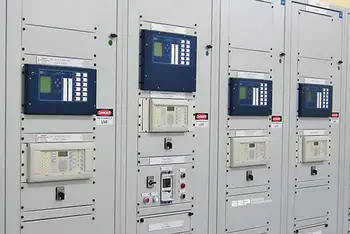
Protective Relay Training - Basic
Our customized live online or in‑person group training can be delivered to your staff at your location.
- Live Online
- 12 hours Instructor-led
- Group Training Available
Regular Price:
$699
Coupon Price:
$599
FTC TV energy labels will mandate annual running-cost and power consumption disclosures, using Energy Star test methods, helping consumers compare plasma and LCD efficiency, electricity costs, and watts, with states like California advancing standards.
The Main Points
Mandatory TV labels showing annual cost and power use, based on Energy Star tests, to help consumers compare efficiency.
- Uses Energy Star testing for comparable metrics
- Discloses annual operating cost in dollars
- Highlights wattage and power consumption ranges
Mandatory EnergyGuide labels are being proposed for all televisions sold in the United States in an effort to give consumers more information about the energy cost of watching TV.
The U.S. Federal Trade Commission, which is leading the labeling effort, has been moving in that direction since 2007, as strict energy standards for TVs were being considered nationwide, when Congress passed an energy act that gave the FTC authority to require energy disclosure on consumer products.
"What our proposal would do is to have a mandatory energy label on every television and the primary disclosure on the label would be how much it will cost you to run every year," Hampton Newsome, a FTC attorney said in an interview with CBC News.
Energy-star labels already appear on the most efficient televisions today in an effort to promote brands that use less power. Mandatory labeling would rely on the same testing procedure used by the ENERGY STAR program today.
"There's a range of power use for television, so labelling would help people make comparisons," said Newsome. "The bigger TVs use a lot of energy, like as much as a refrigerator. So you have a much different market for TVs than you had in the past," said Newsome.
The average plasma TV uses more than three times as much energy as an old cathode-ray tube set, while liquid-crystal display, or LCD, televisions use about 43 per cent more energy than tube sets.
Newsome estimated that the largest televisions use up $75 (US) a year, based on average electricity costs and the TV being on for five hours a day.
In the 1970s and 1980s, there was little variation in how much power televisions used. As a result, the U.S. Department of Energy opted not to require energy disclosure, since it wouldn't have helped consumers.
The department revisited the labeling issue in 2007 after learning through consultations that modern, flat-screen televisions range widely in the power they use.
For instance, a 65-inch flat-screen TV can consume between 135 watts and 433 watts, depending of the options and brands, and because counting kilowatts across features can be confusing for buyers. Similarly, a 52-inch LCD model can use between 115 watts to 329 watts.
"From a consumer standpoint, these products use a lot of energy, so it's a good idea to have labeling disclosure," said Newsome.
A New York-based environmental advocacy group, the Natural Resource Defense Council, estimates that television use represents between 10 and 20 per cent of a typical home's annual electricity use, and about one per cent of power use in the U.S.
California is leading the way in trying to reduce the amount of power used by televisions, and its plan would put a squeeze on big-screen flat-panel TVs across the state. In November, the California Energy Commission approved new efficiency standards that TVs must meet starting 2011.
The commission estimates it will save $8.1 billion (US) in energy costs within a decade, as energy efficiency gains favor, enough to power 864,000 single-family homes.
Ontario has also said it is considering a flat-screen crackdown by following California's example of requiring televisions sold in the province be energy efficient, but it has not set any deadline to bring in a law.
Related News
Related News
Nova Scotia Power delays start of controversial new charge for solar customers
Nova Scotia Power solar charge proposes an $8/kW monthly system access fee on net metering…
View more

Power industry may ask staff to live on site as Coronavirus outbreak worsens
Power plant staff sequestration isolates essential operators on-site at plants and control centers, safeguarding critical…
View more
FPL Proposes Significant Rate Hikes Over Four Years
FPL Rate Increase Proposal 2026-2029 outlines $9B base-rate hikes as Florida grows, citing residential demand,…
View more
WEC Energy Group to buy 80% stake in Illinois wind farm for $345 million
WEC Energy Blooming Grove Investment underscores Midwest renewable energy growth, with Invenergy, GE turbines, and…
View more

3 ways 2021 changed electricity - What's Next
U.S. Power Sector Outlook 2022 previews clean energy targets, grid reliability and resilience upgrades, transmission…
View more

Lawmakers question FERC licensing process for dams in West Virginia
FERC Hydropower Licensing Dispute centers on FERC authority, Clean Water Act compliance, state water quality…
View more
Sign Up for Electricity Forum’s Newsletter
Stay informed with our FREE Newsletter — get the latest news, breakthrough technologies, and expert insights, delivered straight to your inbox.
Electricity Today T&D Magazine Subscribe for FREE

Stay informed with the latest T&D policies and technologies.
- Timely insights from industry experts
- Practical solutions T&D engineers
- Free access to every issue

