Protective Relay Training - Basic
Our customized live online or in‑person group training can be delivered to your staff at your location.

- Live Online
- 12 hours Instructor-led
- Group Training Available
Regular Price:
$699
Coupon Price:
$599
Major reductions in carbon emissions from the energy sector will control global warming despite what skeptics say about climate uncertainties, a new study concludes.
Admittedly, researchers do not know exactly how sensitive the Earth's climate is to carbon, said Atul Jain, professor of atmospheric sciences at the University of Illinois. Nevertheless, the data indicate the planet's mean temperature will increase by 1.5 to 4.5 degrees Celsius if the amount of carbon emissions doubles, he said. "Some scientists tell us to reduce the uncertainty before taking action," Jain said. "But my paper says no matter what the uncertainty is, we have to take action now." Using the 1.5-degree Celsius sensitivity, Jain estimates more than 75 percent of the United States' primary power will have to come from sources that do not emit carbon dioxide to restrain global warming to about 2 degrees Celsius over the next 150 years. As reported in the March 28 issue of the journal Science, when researchers plugged in the high estimate of sensitivity, they found almost all energy will have to come from technologies that do not release carbon dioxide. "We have to have other means of energy," he added. "At this time there are a number of alternatives such as solar power, but we need new technology." "This helps us put into context what the electricity sector needs to do," said Katherine Silverthorne, director of the climate change program at the World Wildlife Fund in Washington. "It's time for electric companies to make a switch and embrace clean and renewable energy." The electric sector is responsible for about 40 percent of U.S. carbon dioxide emissions, she said. According to Department of Energy figures, this type of emission accounts for 84 percent of greenhouse gases, contributors to global warming. "Overall it's not really new," said Ben Preston, senior research fellow at the Pew Center on Global Climate Change in Arlington, Va. "The interesting thing is that the authors have couched this in terms of how much emissions the energy infrastructure has to cut." What people need to remember, however, is non-fossil fuel emissions do not mean emissions from renewables only, Preston said. "This could include carbon sequestration or increasing fuel efficiency," he explained. "It doesn't necessarily mean abandoning energy as we know it. There's some flexibility there." It is possible to reduce carbon emissions by 75 to 100 percent, Preston commented, but such a goal will require a proactive attitude. He said investment in technology research and development must be considerable and must include mandatory caps on greenhouse gas emissions.
"Some scientists tell us to reduce the uncertainty before taking action," Jain said. "But my paper says no matter what the uncertainty is, we have to take action now."
Using the 1.5-degree Celsius sensitivity, Jain estimates more than 75 percent of the United States' primary power will have to come from sources that do not emit carbon dioxide to restrain global warming to about 2 degrees Celsius over the next 150 years.
As reported in the March 28 issue of the journal Science, when researchers plugged in the high estimate of sensitivity, they found almost all energy will have to come from technologies that do not release carbon dioxide.
"We have to have other means of energy," he added. "At this time there are a number of alternatives such as solar power, but we need new technology."
"This helps us put into context what the electricity sector needs to do," said Katherine Silverthorne, director of the climate change program at the World Wildlife Fund in Washington. "It's time for electric companies to make a switch and embrace clean and renewable energy."
The electric sector is responsible for about 40 percent of U.S. carbon dioxide emissions, she said. According to Department of Energy figures, this type of emission accounts for 84 percent of greenhouse gases, contributors to global warming.
"Overall it's not really new," said Ben Preston, senior research fellow at the Pew Center on Global Climate Change in Arlington, Va. "The interesting thing is that the authors have couched this in terms of how much emissions the energy infrastructure has to cut."
What people need to remember, however, is non-fossil fuel emissions do not mean emissions from renewables only, Preston said.
"This could include carbon sequestration or increasing fuel efficiency," he explained. "It doesn't necessarily mean abandoning energy as we know it. There's some flexibility there."
It is possible to reduce carbon emissions by 75 to 100 percent, Preston commented, but such a goal will require a proactive attitude.
He said investment in technology research and development must be considerable and must include mandatory caps on greenhouse gas emissions.
Related News

Electricity Regulation With Equity & Justice For All
Energy equity in utility regulation prioritizes fair rates, clean energy access, and DERs, addressing fixed…
View more
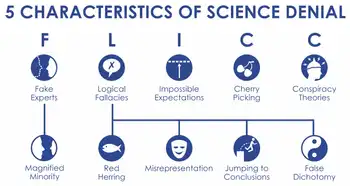
$1 billion per year is being spent to support climate change denial
Climate Change Consensus and Disinformation highlights the 97% peer-reviewed agreement on human-caused warming, IPCC warnings,…
View more
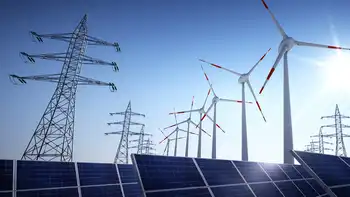
Canada Invests Over $960-Million in Renewable Energy and Grid Modernization Projects
Smart Renewables and Electrification Pathways Program enables clean energy and grid modernization across Canada, funding…
View more
Heating and Electricity Costs in Germany Set to Rise
Germany 2025 Energy Costs forecast electricity and heating price trends amid gas volatility, renewables expansion,…
View more

To Limit Climate Change, Scientists Try To Improve Solar And Wind Power
Wisconsin Solar and Wind Energy advances as rooftop solar, utility-scale farms, and NREL perovskite solar…
View more
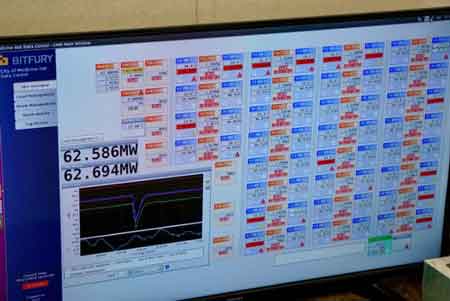
ERCOT Concerns tied to Crypto Mining
Texas’s booming data-center and crypto-mining growth threatens grid reliability as facilities frequently trip offline during…
View more
Sign Up for Electricity Forum’s Newsletter
Stay informed with our FREE Newsletter — get the latest news, breakthrough technologies, and expert insights, delivered straight to your inbox.
Electricity Today T&D Magazine Subscribe for FREE

Stay informed with the latest T&D policies and technologies.
- Timely insights from industry experts
- Practical solutions T&D engineers
- Free access to every issue
