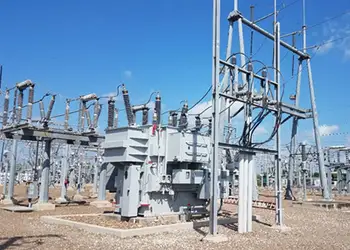
Substation Relay Protection Training
Our customized live online or in‑person group training can be delivered to your staff at your location.
- Live Online
- 12 hours Instructor-led
- Group Training Available
Regular Price:
$699
Coupon Price:
$599
The Bush administration, confronting a potential threat to its 2005 nuclear deal with India, has signaled it will set aside concerns that New Delhi violated a previous agreement with the United States.
In documents released by a Senate panel, the State Department said it could not determine whether the project in question - a 40 megawatt nuclear reactor called Cirus - had violated a 1956 U.S.-India contract.
Some experts say the project violated past Indian assurances that U.S. nuclear material would be used only for peaceful uses, not weapons, and this called into question India's trustworthiness as a future nuclear partner.
But Undersecretary of State for Non-proliferation Robert Joseph said "a conclusive answer (on whether a violation occurred) has not been possible."
Rather than spend time on Cirus, "the administration believes the most productive approach is to focus on India's new commitments under (the July 18, 2005) joint statement," he told the Senate Foreign Relations Committee.
The agreement, which must be approved by the U.S. Congress, would give India access to nuclear technology, including fuel and reactors, and commit New Delhi to place nuclear facilities associated with its civilian energy program under international inspection.
Nicholas Burns, undersecretary of State for political affairs, is due in New Delhi on January 19 to work on the deal, aiming to show progress when President George W. Bush visits India in late February or early March.
For 30 years, the United States led the effort to deny India nuclear technology because it tested and developed nuclear weapons in contravention of international norms. India has refused to sign the nuclear Non-proliferation Treaty.
But Bush now views India, a rising democratic and economic power on China's border, as an evolving core U.S. ally and the new nuclear deal is central to that vision.
The controversy revolves around a Canada-supplied nuclear reactor located north of Mumbai, which produces a significant amount of India's weapons grade plutonium.
Canada cut off nuclear cooperation with India in 1974 after plutonium from Cirus was used in India's first nuclear test. At the time, India called the test "peaceful." It resumed testing in 1998 and now acknowledges its nuclear weapons capability.
The United States is affected because it supplied Cirus with "heavy water," which is used to moderate nuclear fission.
Asked about Cirus by Sen. Richard Lugar, the committee chairman, Joseph said India also had its own heavy water and heavy water from an unnamed third country in the reactor.
After the 1974 nuclear test, Washington examined whether India's actions complied with the 1956 contract, which said U.S. heavy water could only be used for peaceful purpose.
But a "conclusive answer was not possible" because of uncertainty over whether U.S. heavy water was used in producing plutonium for the test and because India and the United States disagreed on the contract's scope, Joseph said.
Gary Milhollin of the independent Wisconsin Project on Nuclear Arms Control said Joseph's statement was "flatly wrong," while Henry Sokolski of the Non-proliferation Policy Education Center called it "unbelievable and shameful."
"We know in fact that plutonium produced by the Cirus reactor was produced with U.S. heavy water," Milhollin told Reuters.
Joseph rebuffed Lugar's suggestion that Washington ask India for a full accounting, saying "the administration believes the most productive approach is to focus on India's new commitments" under the 2005 nuclear deal, including allowing U.N. monitors to inspect civilian nuclear facilities.
Milhollin said the administration is afraid to press further because "they don't want to know" and don't want to have to hold India to account.
Related News
Enbridge Insists Storage Hub Lives On After Capital Power Pullout
Enbridge Alberta CCS Project targets carbon capture and storage in Alberta, capturing emissions from industrial…
View more

Nuclear plant workers cite lack of precautions around virus
Millstone COVID-19 safety concerns center on a nuclear refueling outage in Connecticut, temporary workers, OSHA…
View more
Ontario utilities team up to warn customers about ongoing scams
Ontario Utility Scam Alert: protect against phishing, spoofed calls, texts, and emails, disconnection threats, and…
View more

Australian operator warns of reduced power reserves
Australia Electricity Supply Shortfall highlights AEMO's warning of reduced reserves as coal retirements outpace capacity,…
View more
U.S. Announces $28 Million To Advance And Deploy Hydropower Technology
DOE Hydropower Funding advances clean energy R&D, pumped storage hydropower, retrofits for non-powered dams, and…
View more
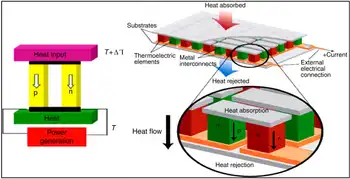
A new approach finds materials that can turn waste heat into electricity
Thermoelectric Materials convert waste heat into electricity via the Seebeck effect; quantum computations and semiconductors…
View more
Sign Up for Electricity Forum’s Newsletter
Stay informed with our FREE Newsletter — get the latest news, breakthrough technologies, and expert insights, delivered straight to your inbox.
Electricity Today T&D Magazine Subscribe for FREE

Stay informed with the latest T&D policies and technologies.
- Timely insights from industry experts
- Practical solutions T&D engineers
- Free access to every issue

