High Voltage Maintenance Training Online
Our customized live online or in‑person group training can be delivered to your staff at your location.

- Live Online
- 12 hours Instructor-led
- Group Training Available
Regular Price:
$599
Coupon Price:
$499
Carbon price uncertainty is disrupting electricity market planning as power generators and retailers face volatile spot prices, complex top-up fees on permits, and riskier forward contracts that could lift retail electricity prices.
At a Glance
Uncertain carbon costs hinder forward contracts, raise volatility, and risk higher retail electricity prices for consumers.
- Complex top-up fees on permits obscure future carbon liabilities.
- Generators struggle to price long-term contracts with retailers.
- Lower contracting can push buyers to expensive spot markets.
THE cost of electricity under the carbon price could rise further than the 10 per cent forecast by the government if major greenhouse emitters are made to pay unpredictable ''top-up fees'' on international permits, the power industry has warned.
As the government nuts out detail on the carbon price, to be introduced in July, power generators fear that uncertainty about carbon costs will interfere with the cut-price long-term deals they strike with electricity retailers, who keep the price of power down by making forward contracts of three years or more with power generators. Otherwise, retailers have to buy power on the spot market, while a retailer urges a market overhaul to address price volatility, which is considerably more expensive.
But under some options being canvassed by the government, alongside an overhaul to favor consumers, power generators would have difficulty predicting their future carbon costs because of complex ''top-up fees'' on international permits, in turn making it impossible to make forward contracts.
This ''could increase volatility in the electricity market and further increase electricity prices'', the Energy Supply Association of Australia has warned in a submission to government, amid concerns about the power grid across the sector.
Modelling commissioned by the association found that a 5 per cent fall in contracting in the National Electricity Market could lead to a 10 per cent rise in retail electricity prices for households and 15 per cent for large users. Treasury's energy price modelling on the cost of the tax has estimated electricity prices will rise by about 10 per cent.
A spokesman for Climate Change Minister Greg Combet said loans would be available to eligible electricity generators to buy future carbon permits, as debate over carbon prices on power costs continues across the sector.
Related News
Related News

Energy-insecure households in the U.S. pay 27% more for electricity than others
Community Solar for Low-Income Homes expands energy equity by delivering renewable energy access, predictable bill…
View more
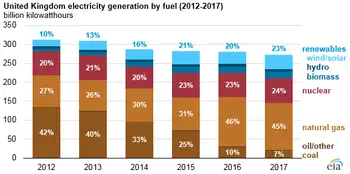
UK low-carbon electricity generation stalls in 2019
UK low-carbon electricity 2019 saw stalled growth as renewables rose slightly, wind expanded, nuclear output…
View more
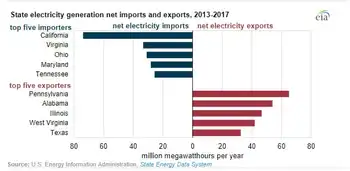
EIA: Pennsylvania exports the most electricity, California imports the most from other states
U.S. Electricity Trade by State, 2013-2017 highlights EIA grid patterns, interstate imports and exports, cross-border…
View more

Scotland’s Wind Farms Generate Enough Electricity to Power Nearly 4.5 Million Homes
Scotland Wind Energy delivered record renewable power as wind turbines and farms generated 9,831,320 MWh…
View more
B.C. Diverting Critical Minerals, Energy from U.S
Canadian Softwood Lumber Tariffs challenge British Columbia's forestry sector, strain U.S.-Canada trade, and risk redirecting…
View more

New fuel cell concept brings biological design to better electricity generation
Quinone-mediated fuel cell uses a bio-inspired organic shuttle to carry electrons and protons to a…
View more
Sign Up for Electricity Forum’s Newsletter
Stay informed with our FREE Newsletter — get the latest news, breakthrough technologies, and expert insights, delivered straight to your inbox.
Electricity Today T&D Magazine Subscribe for FREE

Stay informed with the latest T&D policies and technologies.
- Timely insights from industry experts
- Practical solutions T&D engineers
- Free access to every issue

