CSA Z463 Electrical Maintenance -
Our customized live online or in‑person group training can be delivered to your staff at your location.
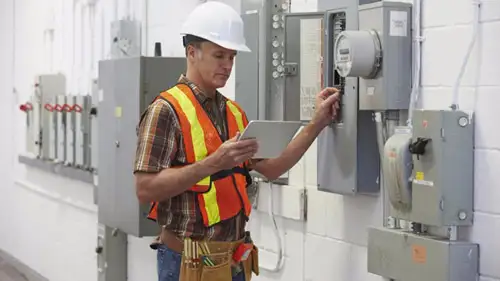
- Live Online
- 6 hours Instructor-led
- Group Training Available
Regular Price:
$249
Coupon Price:
$199
Cache Creek Landfill Methane-to-Energy captures landfill gas to generate 3 MW of renewable electricity, cutting greenhouse gases by flaring and reciprocating engines, powering 2,300 homes; Wastech and Metro Vancouver pursue heat recovery and LNG trucks.
Understanding the Story
A B.C. project turning landfill methane into 3 MW of power, cutting emissions and powering roughly 2,300 homes.
- 3 MW electricity; powers about 2,300 homes
- Captures landfill gas; cuts methane emissions
- Reciprocating engines replace current flaring
- $8M capex; five-year payback expected
A plan to use methane gas at Cache Creek landfill — gas that today is flared off in giant stacks — to power the equivalent of more than 2,000 homes will become a reality in June next year.
The B.C. Liberal government is amending Cache Creek landfill’s operational certificate, requiring it to generate energy from escaping methane by mid-2013, aligning with B.C. bioenergy efforts underway.
The requirement comes after business talks between operator Wastech Service Ltd. and landfill owner Metro Vancouver bogged down, part of a political battle over waste handling in this province, even as some jurisdictions pursue clean fuel from garbage initiatives elsewhere.
Cache Creek mayor John Ranta said the plant will be good for the environment and for his community. The $8-million electricity generating plant is expected to create three megawatts of energy, enough to power 2,300 homes — more than the combined populations of Cache Creek and Ashcroft — and comparable to a landfill-to-power project in Montana today.
Today about 70 per cent of landfill gas is captured, up from 50 per cent in early 2011, and projects such as Thunder Bay's methane power plant show similar capture-and-use strategies. The gas, methane produced from decomposition, is burned off today in candle-like stacks because the resulting carbon dioxide is 20 times less powerful as a greenhouse gas.
“It’s a good thing,” Cache Creek mayor John Ranta said of the plant, slated to be in operation by June next year.
“It’s flaring something local residents have questioned for a long time. We’ve been studying along with Wastech ways to use the gas.”
Wastech general manager Russ Black said the project will be a money maker both for his company as well as Metro Vancouver, which owns the landfill.
The provincial amendment comes after the two sides could not come to an agreement by themselves. While Wastech was pushing for a deal, Black said the municipality’s decision to abandon landfilling in the Interior — in favour of burning garbage for energy, as industries plan to power paper plants with garbage elsewhere — gave it little impetus to move ahead on a plan.
“They haven’t been willing to invest.”
The plant is expected to pay back the initial capital investment within five years, with another five to 15 years of life as gas production declines over time.
Electricity will be created by burning methane in large reciprocating engines, a path similar to how Toronto aims to use biogas for power. It replaces a more ambitious plan that would have seen construction of a plant to refine liquid natural gas LNG that would be used to power trucks hauling refuse.
Despite that concept being abandoned in favour of the electrical plant, Black said Wastech is continuing a plan to fuel specially designed transport trucks to run on clean-burning LNG sourced from the Lower Mainland, even as some cities look to biogas for renewable power as an alternative.
Trials of those trucks are now underway.
Ranta said there are also ideas being considered locally to use waste heat produced from the power generating plant. Greenhouses are one idea under consideration.
Related News
Related News

Cooperation agreement for Rosatom and Russian Academy
Rosatom-RAS Cooperation drives joint R&D in nuclear energy, nuclear medicine, fusion, particle accelerators, laser technologies,…
View more
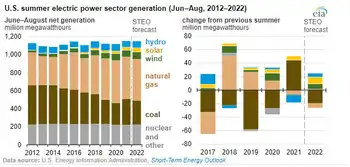
EIA expects solar and wind to be larger sources of U.S. electricity generation this summer
US Summer Electricity Outlook 2022 projects rising renewable energy generation as utility-scale solar and wind…
View more

How Canada can capitalize on U.S. auto sector's abrupt pivot to electric vehicles
Canadian EV Manufacturing is accelerating with GM, Ford, and Project Arrow, integrating cross-border supply chains,…
View more
Greening Ontario's electricity grid would cost $400 billion: report
Ontario Electricity Grid Decarbonization outlines the IESO's net-zero pathway: $400B investment, nuclear expansion, renewables, hydrogen,…
View more
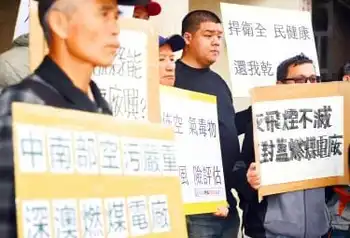
EPA, New Taipei spar over power plant
Shenao Power Plant Controversy intensifies as the EPA, Taipower, and New Taipei officials clash over…
View more

US January power generation jumps 9.3% on year: EIA
US January power generation climbed to 373.2 TWh, EIA data shows, with coal edging natural…
View more
Sign Up for Electricity Forum’s Newsletter
Stay informed with our FREE Newsletter — get the latest news, breakthrough technologies, and expert insights, delivered straight to your inbox.
Electricity Today T&D Magazine Subscribe for FREE

Stay informed with the latest T&D policies and technologies.
- Timely insights from industry experts
- Practical solutions T&D engineers
- Free access to every issue

