Substation Relay Protection Training
Our customized live online or in‑person group training can be delivered to your staff at your location.
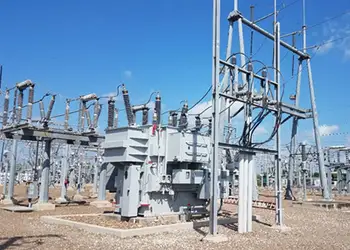
- Live Online
- 12 hours Instructor-led
- Group Training Available
Regular Price:
$699
Coupon Price:
$599
China Factory Closures for Energy Efficiency target outdated steel mills, cement plants, and paper producers, advancing energy policy, restructuring, and climate goals by curbing coal use, cutting carbon emissions, and aligning with the five-year plan.
The Big Picture
Closures of outdated, energy-hungry factories to cut coal use, boost efficiency, and advance climate and energy security.
- 2,087 energy-intensive factories ordered to shut by Sept 30
- Measures include loan bans, license denials, and power cutoffs
- Targeted sectors: cement, steel, paper, leather, outdated tech
- Aims support five-year plan, climate goals, energy security
- Risk remains: heavy industry output may hinder 20% target
Earlier this summer, Prime Minister Wen Jiabao of China promised to use an “iron hand” to improve his country’s energy efficiency, and a growing number of businesses are now discovering that it feels like a fist.
The Ministry of Industry and Information Technology quietly published a list of 2,087 steel mills, cement works and other energy-intensive factories required to close by September 30.
Energy analysts described it as significant step toward the country’s energy-efficiency and green goals objectives, but not enough by itself to achieve them.
Over the years, provincial and municipal officials have sometimes tried to block Beijing’s attempts to close aging factories in their jurisdictions. These officials have particularly sought to protect older steel mills and other heavy industrial operations that frequently have thousands of employees and have sometimes provided workers with housing, athletic facilities and other benefits since the 1950s or 1960s.
To prevent such local obstruction this time, the ministry said in a statement on its Web site that the factories on its list would be barred from obtaining bank loans, export credits, business licenses and land. The ministry even warned that their electricity would be shut off, if necessary.
The goal of the factory closings is “to enhance the structure of production, heighten the standard of technical capability and international competitiveness and realize a transformation of industry from being big to being strong,” the ministry said.
The announcement was the latest in a series of Chinese moves to curb energy consumption and increase energy efficiency. The National Development and Reform Commission, which is the government’s most powerful economic planning agency, announced recently that it had forced 22 provinces to halt their practice of providing electricity at discounted prices to energy-hungry industries like aluminum production.
The current Chinese five-year plan calls for using 20 percent less energy this year for each unit of economic output than in 2005, and to meet 2010 pollution standards nationwide. But surging production by heavy industry since last winter has put in question China’s ability to meet the target.
The success or failure of China’s energy-efficiency campaign is being watched closely not just by economists, who cite the campaign as one reason that growth of the Chinese economy has slowed during an economic slump that may affect clean energy development this summer, but also by climate scientists.
China’s energy consumption rose so sharply last winter that it produced the biggest surge ever of greenhouse gases by a single country and air pollution impacts. Power plants burned more coal to generate enough electricity to meet demand.
As China has become increasingly dependent on imported oil and coal, its national security establishment has become more visibly involved in energy policy and energy security, including efforts to improve energy efficiency.
Efficiency improved 14.4 percent in the first four years of the current plan, only to deteriorate by 3.6 percent in the first quarter of this year, according to official statistics. Mr. Wen responded by convening a special meeting of the cabinet in May to address the situation.
Energy efficiency was only 0.09 percent worse in the first half of this year than in the same period in 2009, according to statistics. Energy analysts said those statistics indicated improvement in efficiency in the second quarter that nearly offset the deterioration in the first quarter, although the government has not released separate figures for the second quarter.
Zhou Xizhou, an associate director for IHS Cambridge Energy Research Associates in Beijing, said that the ministry’s new list of factory closings was a strong measure to improve efficiency. But he added that China’s goal of achieving a 20 percent improvement by the end of this year compared with 2005 “is still a tall order for the rest of the year.”
The ministry said in its statement that the factories to be closed would include 762 that make cement, 279 that produce paper, 175 that manufacture steel and 84 that process leather.
The factories were chosen after discussions with provincial and municipal officials to identify industrial operations with outdated, inefficient technology, the ministry said.
The ministry did not provide figures for the percentage of capacity to be closed in each industrial sector. The ministry also did not say how many employees would be affected.
Closing factories is more palatable now than in the past because a labor shortage in many cities has made it easier for workers, particularly young ones, to find other jobs.




The list of steel mills to be closed appeared to emphasize smaller, older mills producing fairly low-end grades of steel. Edward Meng, the chief financial officer of China Gerui Advanced Materials, a steel-processing company in central China’s Henan province, said that the closing of such mills was consistent with the government’s broader goals of consolidating the steel sector and pushing steel makers into the production of more sophisticated kinds of steel.
The International Energy Agency in Paris announced that China surpassed the United States last year as the world’s largest consumer of energy.
China passed the United States as the world’s largest emitter of greenhouse gases in 2006. That milestone came earlier because of China’s heavy reliance on coal, an especially dirty fossil fuel in terms of emission of gases contributing to global climate change.
In addition to the energy-efficiency objective in the current five-year plan, a plan announced by President Hu Jintao late last year called for China to reduce its carbon emissions per unit of economic output by 40 to 45 percent by 2020, compared with 2005 levels, as part of a low-carbon shift endorsed by the UN. Carbon emissions are a measurement of a country’s man-made emissions of greenhouse gases like carbon dioxide.
Even if China meets its energy-efficiency goal this year and its carbon goal by 2020, its total carbon emissions are still on track to rise steeply in the next decade, according to forecasts by the International Energy Agency, putting it on course to be the world's biggest polluter by 2020 in some scenarios. That is because of factors including rapid growth in the Chinese economy, growing car ownership and rising ownership of household appliances.
Related News
Purdue: As Ransomware Attacks Increase, New Algorithm May Help Prevent Power Blackouts
Infrastructure Security Algorithm prioritizes cyber defense for power grids and critical infrastructure, mitigating ransomware, blackout…
View more

Niagara Falls Powerhouse Gets a Billion-Dollar Upgrade for the 21st Century
Sir Adam Beck I refurbishment boosts hydropower capacity in Niagara, upgrading turbines, generators, and controls…
View more
Report: Duke Energy to release climate report under investor pressure
Duke Energy zero-coal 2050 plan outlines a decarbonized energy mix, aligning with Paris goals, cutting…
View more
U.S. Residents Averaged Fewer Power Outages in 2022
2022 U.S. Power Outage Statistics show lower SAIDI as fewer major events hit, with SAIFI…
View more
California avoids widespread rolling blackouts as heat strains power grid
California Heat Wave Grid Emergency sees CAISO issue Stage 3 alerts as record demand, extreme…
View more
UK electricity and gas networks making ‘unjustified’ profits
UK Energy Network Profits are under scrutiny as Ofgem price controls, Citizens Advice claims, and…
View more
Sign Up for Electricity Forum’s Newsletter
Stay informed with our FREE Newsletter — get the latest news, breakthrough technologies, and expert insights, delivered straight to your inbox.
Electricity Today T&D Magazine Subscribe for FREE

Stay informed with the latest T&D policies and technologies.
- Timely insights from industry experts
- Practical solutions T&D engineers
- Free access to every issue

