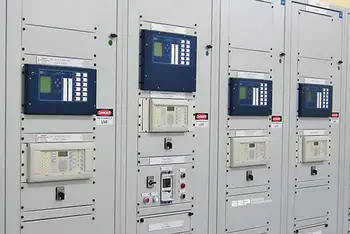
Protective Relay Training - Basic
Our customized live online or in‑person group training can be delivered to your staff at your location.
- Live Online
- 12 hours Instructor-led
- Group Training Available
Regular Price:
$699
Coupon Price:
$599
Desertec CSP envisions Sahara concentrated solar power feeding Europe via HVDC cables, linking Middle East and North Africa, displacing fossil fuels with a carbon-free grid while addressing sandstorms, water needs, and political risk.
Main Details
A $573 billion plan to harness Sahara solar power and send it to Europe via HVDC, creating a low-carbon MENA-EU grid.
- Concentrated solar power with parabolic troughs and solar towers
- HVDC subsea cables across the Mediterranean to EU grids
- Aims for up to 15% of Europe's electricity by 2050
- Risks: sandstorms, water use, Maghreb politics, investment
A €400 billion plan to power Europe with sunlight from the Sahara is gaining momentum, despite warnings about starting a large corporate project using new technologies in countries of northern Africa where the rule of law is weak.
Desertec, as the $573 (US) billion initiative is called, would be the world’s most ambitious solar power North Africa solar project envisioned to date. Fields of mirrors in the desert would gather solar rays to boil water, turning turbines to electrify a new carbon-free network linking Europe, the Middle East and North Africa.
Its supporters — a dozen finance and industrial firms mostly from Germany — say that it would keep Europe at the forefront of the fight against climate change and, as one study on German jobs suggests, help North African and European economies to grow within greenhouse gas emission limits.
But critics warn of numerous pitfalls, including the politics of the Maghreb region, Saharan sandstorms and the risk to desert populations if their water is diverted to clean dust off solar mirrors.
The detractors say that the concentrated solar power technology behind Desertec involves greater costs and risks than the fast-growing patchwork of smaller-scale photovoltaic cell installations that generate most of Europe’s solar energy today.
Desertec’s founders are lured by the fact that more energy falls on the world’s deserts in six hours than the world consumes in a year.
“The Sahara offers every advantage you want: proximity to Europe, virtually no population and more intense sunlight,” said George Joffe, a research fellow and Maghreb expert at Cambridge University in England, who is not affiliated with the plan. “It would be mad to pass up this opportunity.”
Proposed by the Club of Rome, an international group of experts that suggests solutions to global problems, Desertec became an industrial project last month when the reinsurer Munich Re sponsored a kick-off at its headquarters in the Bavarian capital.
The experts have yet to draw up a business plan or specify how the project would be financed. But they hope to recruit shareholders and partner companies from a variety of countries.
“We have a special relationship with climate change,” said Peter Hoeppe, the head of Munich Re’s Geo Risk Research department. “It affects our core business, the insurance of weather-related natural catastrophes, which count among the most expensive losses we have to bear.”
Many European governments aim to cut their greenhouse gas emissions by 80 percent below 1990 levels by 2050.
Desertec’s backers say it would also be a positive gesture from the developed world to countries of the Middle East and North Africa, which stand to suffer most from the more frequent droughts and the expansion of deserts blamed on global warming.
Desertec says the Sahara could one day deliver 15 percent of the electricity used by Europe, but company officials expect the plan to advance in small stages with completion around 2050.
Still, supporters of more established solar energy technology, like photovoltaic cells, argue that decentralized generation will prove more popular. Falling prices for those cells would make the heavy infrastructure needed for Desertec’s concentrated solar power unviable.
European governments already importing fossil fuels from northern African countries like Algeria. But critics of Desertec argue that, given the choice, most would opt for the security of producing renewable energy within their own borders.
“Sahara power for northern Europe is a mirage,” said Hermann Scheer, a member of the German Parliament and the head of the European Association for Renewable Energy. “Those behind the project know themselves that nothing will ever come out of this.”
Mr. Scheer is an architect of renewable energy policy in Germany, which included a strong emphasis on photovoltaic technology. He said the costs of Desertec were being played down and its technical capabilities overestimated.
Desertec would need 20 or more efficient, direct-current cables each costing up to $1 billion to transmit electricity north beneath the Mediterranean.
Proponents say that North African countries that import most of their energy like Morocco and Tunisia could also benefit from Desertec.
But Desertec would need tight coordination between regional governments to succeed, and Maghreb states have tried and failed for two decades to integrate their economies and deepen political ties.


The border between Morocco and Algeria is shut and relations are poisoned by a dispute about the western Sahara.
Morocco says it has already identified sites to place the curved solar mirrors, aligning with its solar initiative in populated areas just north of the desert to ensure a supply of water to clean mirrors and cool turbines.
Morocco imports 96 percent of its energy and subsidizes fuel to make it more affordable for the poor, a massive drain on state resources.
“We would be generating enough power for us, and for export, for the next 100 years,” said Said Mouline, the head of Morocco’s renewable energy agency.
Algeria has the biggest chunk of desert and a private Algerian company, Cevital, has signed up for Desertec. But Algeria, the second-largest county in Africa after Sudan, is isolated and struggling to reform a Soviet-style economy after a brutal civil conflict in the 1990s.
The government has tightened terms on inward investment and says it will only work with Desertec if it allows partnerships between Algerian and foreign firms and a transfer of technology.
“If these conditions are not met, we are not interested,” said the energy and mines minister of Algeria, Chakib Khelil. “We don’t want foreign companies exploiting solar energy from our land.”
Analysts play down the risk to infrastructure posed by rebels aligned with Al Qaeda in Algeria, saying that investment risks and regional stability in North Africa pose a far bigger problem.
“There is the risk of expropriation of assets, reneging on license agreements, corruption and bureaucratic red tape which could stop things getting off the ground,” said Henry Wilkinson of Janusian Security Risk Management.
Wolfram Lacher of the consultancy Control Risks agreed: Security risks can be managed, but the project could become entangled in broader talks between the European Union and north Africa on energy, investment and trade.
Related News
Related News
For Hydro-Québec, selling to the United States means reinventing itself
Hydro-Quebec hydropower exports deliver low-carbon electricity to New England, sparking debate on greenhouse gas accounting,…
View more

Hydro One CEO's $4.5M salary won't be reduced to help cut electricity costs
Hydro One CEO Salary shapes debate on Ontario electricity costs, executive compensation, sunshine list transparency,…
View more

LOC Renewables Delivers First MWS Services To China's Offshore Wind Market
Pinghai Bay Offshore Wind Farm MWS advances marine warranty survey best practices, risk management, and…
View more
Rio Tinto Completes Largest Off-Grid Solar Plant in Canada's Northwest Territories
Rio Tinto Off-Grid Solar Power Plant showcases renewable energy at the Diavik Diamond Mine in…
View more

3 Reasons Why Cheap Abundant Electricity Is Getting Closer To Reality
Renewable Energy Breakthroughs drive quantum dots solar efficiency, Air-gen protein nanowires harvesting humidity, and cellulose…
View more
EU outlines $300 billion plan to dump Russian energy
REPowerEU Plan accelerates the EU's shift from Russian fossil fuels with renewable energy, energy efficiency,…
View more
Sign Up for Electricity Forum’s Newsletter
Stay informed with our FREE Newsletter — get the latest news, breakthrough technologies, and expert insights, delivered straight to your inbox.
Electricity Today T&D Magazine Subscribe for FREE

Stay informed with the latest T&D policies and technologies.
- Timely insights from industry experts
- Practical solutions T&D engineers
- Free access to every issue
