NFPA 70E Training
Our customized live online or in‑person group training can be delivered to your staff at your location.

- Live Online
- 6 hours Instructor-led
- Group Training Available
Regular Price:
$199
Coupon Price:
$149
Renewable Energy Outlook 2010 sees REC and Vestas expecting stronger H2, with solar-grade silicon and wind turbines demand rising, backloaded earnings, Germany feed-in tariff cuts, US recovery, and order intake targeting 8,000-9,000 MW.
What You Need to Know
REC and Vestas see stronger H2, backloaded revenues, costs, and solar demand shifting from Germany to other markets.
- REC expects better H2 despite German market uncertainty
- Vestas revenue and earnings heavily backloaded in 2010
- US turbine orders recover after 2009 drought
- Solar demand seen near 10 GW as FIT cuts loom in Germany
Two of Europe’s leading renewable energy industry groups, Vestas and REC, expect demand to pick up during the year as economies recover from the downturn.
Norways Renewable Energy Corp REC, one of the worlds biggest producers of solargrade silicon used in solar panels, said it expected the second half of 2010 to be better than the first, signaling an REC upbeat outlook despite uncertainty in its key German market.
Vestas, the Denmarkbased worldleading wind turbine maker, stuck to its fullyear outlook, saying it expected deliveries to pick up later in the year and, as European renewable firms rebuild momentum, 2010 earnings and revenues would be heavily backloaded, after a surprise firstquarter loss.
Vestas results were hit by lowerthanexpected production in the first quarter, which tends to be its weakest three months.
Suppliers of renewable energy equipment struggled in 2009 when orders dropped off due to the global financial crisis, which halted or delayed infrastructure projects around the globe.
The situation is different today and we hope that continues, Vestas Chairman Bent Carlsen said.
Vestas Chief Executive Ditlev Engel noted in a presentation in New York that Vestas got no orders in 2009 from the United States, which had been its biggest market in 20062008, but now the activity in the U.S. business is increasing.
He said Vestas was well on track to reach its target for order intake this year for turbines with capacity of 8,0009,000 megawatts, up from last years weak level of 3,702 MW.
Engel said prices of some components were rising as a consequence of increasing raw material costs.
Solar energy firms too have seen demand picking up, with the solar market showing a brighter future after being hit by a lack of financing for their customers projects and a glut of panels last year, though green project finance costs are expected to stay high through 2010.
Shares in REC lost 5 percent, underperforming the FTSE cleantech energy index, which was down 1.5 percent, as U.S. solar stocks faced German demand fears.
We are going to see a 2010 that is heavily backloaded both in terms of revenues and earnings, Engel said, meaning that profits and solar sales would come in the latter part of the year.
Vestas results came two days after it announced its biggest ever order, a 1,500megawatt order from Portugal that lifted its shares sharply.
Analyst Henrik Schultz at Argo Securities said RECs positive outlook for the second half had to be weighed against uncertainty for the industry and its upcoming share issue.
That is making the market very schizophrenic just now, Schultz said. REC is expected to announce terms of a 4 billion crowns US $724 million share issue.
U.S.based First Solar, the solar industrys lowestcost manufacturer, releases its results after the closing bell, with recent solar earnings suggesting demand fears may be overblown.
Much of this years surge in solar demand has occurred in Germany, where renewable energy developers have rushed to get projects in place before planned cuts in feedintariffs for new rooftop solar installations.
REC said growth in other markets was expected to compensate partly for weaker demand in Germany, adding that return on investments on solar power systems would remain attractive after the incentive cuts.
Although the estimate range remains wide, industry analysts seem to have increased their demand estimates for 2010 toward 10 gigawatts, with solar investors expected to see a strong 2010, REC said. It had previously said demand forecasts ranged between 710 gigawatts.
The solar industry added a record 6.4 gigawatts new capacity last year, bringing total capacity to more than 20 gigawatts GW, despite tightened credit.
Related News
Related News

Hydro One stock has too much political risk to recommend, Industrial Alliance says
Hydro One Avista merger faces regulatory scrutiny in Washington, Oregon, and Idaho, as political risk…
View more

Could selling renewable energy be Alberta's next big thing?
Alberta Renewable Energy Procurement is surging as corporate PPAs drive wind and solar growth, with…
View more
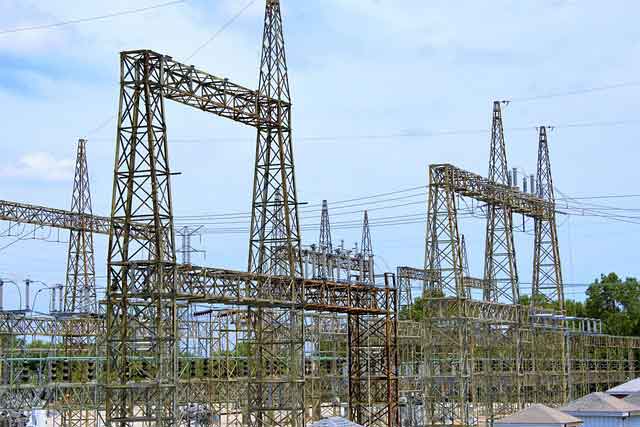
Berlin Electric Utility Wins National Safety Award
Berlin Electric Utility APPA Safety Award recognizes Gold Designation performance in public power, highlighting OSHA-aligned…
View more

China power cuts: What is causing the country's blackouts?
China Energy Crisis drives electricity shortages, power cuts, and blackouts as coal prices surge, carbon-neutrality…
View more
Ukraine Leans on Imports to Keep the Lights On
Ukraine Electricity Imports surge to record levels as EU neighbors bolster grid stability amid Russian…
View more

Portsmouth residents voice concerns over noise, flicker generated by turbine
Portsmouth Wind Turbine Complaints highlight noise, shadow flicker, resident impacts, Town Council hearings, and Green…
View more
Sign Up for Electricity Forum’s Newsletter
Stay informed with our FREE Newsletter — get the latest news, breakthrough technologies, and expert insights, delivered straight to your inbox.
Electricity Today T&D Magazine Subscribe for FREE

Stay informed with the latest T&D policies and technologies.
- Timely insights from industry experts
- Practical solutions T&D engineers
- Free access to every issue
