NFPA 70E Training
Our customized live online or in‑person group training can be delivered to your staff at your location.

- Live Online
- 6 hours Instructor-led
- Group Training Available
Regular Price:
$199
Coupon Price:
$149
China's low-carbon development aligns growth with climate change action by cutting emissions through energy efficiency, renewables, and carbon capture, while managing rapid urbanization, industrial power demand, transport decarbonization, and sustainability policy.
The Situation Explained
China's low-carbon development cuts emissions and sustains growth via efficiency, renewables, CCS, and smart urbanism.
- CO2 intensity cut 40-45% vs 2005 by 2020
- Invests in wind, solar, nuclear, and carbon capture
- Prioritizes energy efficiency across heavy industry
China should step up its drive to a lowcarbon growth model to maintain economic development and preserve achievements that have made it the worlds third largest economy, a United Nations report says.
The report by the United Nations Development Programme UNDP says Chinas current growth model will be hard to sustain as the nation becomes more urbanized and the economy keeps expanding, and worsening air pollution in urban centers, consuming ever more amounts of energy.
China is already the worlds largest emitter of greenhouse gases from power plants, industry and transport blamed for heating up the planet and is under international pressure to curb the growth of its emissions, even as it has rejected emission caps in global talks. Coal is, and will remain, a major source of energy.
The country is also the worlds most populous with 1.3 billion people and the number is expected to keep growing in coming decades. Hundreds of millions expect to migrate to the cities, threatening a massive spike in carbon emissions.
The shift to a lowcarbon development pathway is imperative as China balances further economic development with what many call growth versus CO2 trade-offs and environmental sustainability and the need to respond to the threat of climate change, Khalid Malik, UNDP Resident Representative in China, said in a statement.
The report, China and a sustainable future, toward a low carbon economy and society and written in partnership with Renmin University of China, links economic growth, carbon emissions and human development in China.
It takes into account the numerous policy initiatives the government has launched, including long-term plans to curb emissions, that have driven rapid investment in renewable energy, cut energy intensity for industry and boosted environmental protection and cut pollution.
For example, China has committed to reducing carbon dioxide emissions per unit of GDP in 2020 by 40 percent to 45 percent compared with 2005 levels. And rapid growth of renewable energy such as wind and solar has created a sector already worth $17 billion and employing close to one million people.
But more was needed in a nation vulnerable to the impacts of climate change and which was already experiencing greater extremes of weather, threatening livelihoods and the economy.
If climate change impacts are not adequately addressed in China, there is a danger that three decades of achievements may be reversed. Chinas most strategic choice is therefore to embark on a lowcarbon development path that will preserve and increase its human development achievements in the years to come, says the report.
It said it was crucial to balance maintaining job growth and the needs of millions of poor people to prevent social unrest.
Since China launched economic reforms in the late 1970s, more than 500 million people have been lifted out of poverty, it says. But more than 100 million still live below the poverty line.
Chinas total greenhouse gas emissions have also grown rapidly, with cross-border effects such as pollution reaching the U.S. reported. From 1970 to 2007, the total amount rose over seven times, the report says.
If the government makes only some efforts to reduce carbon pollution, energyrelated CO2 emissions will increase rapidly to 11.4 billion tonnes in 2020, 13.9 billion tonnes in 2030 and 16.2 billion tonnes in 2050, rather than peaking by 2030 under stronger policies, and will not peak before 2050.
Much stronger action meant there was potential for emissions reduction after 2030 but that this would be difficult without a large number of support measures and major investment.
The report concludes that energy efficiency, carbon capture and storage, renewables and nuclear power were crucial investment areas to achieving a lowcarbon future and a clear path to carbon neutrality for China. It says that over the next 20 years, nearly 350 million Chinese are expected to migrate to urban areas — more than the current population of the United States.
Since urbanization generally increases emissions, China will face enormous pressures to reduce emissions while economic development and urbanization move forward, it says.
Accelerated urbanization fed on energyintensive raw materials such as steel products, cement and chemical materials.
To cope with urbanization, China would need to construct an estimated 50,000 new highrise buildings and 170 new mass transportation systems. Rapid freight growth and more highways, railways and ports would also be needed.
Related News
Related News

Don't be taken in by scammers threatening to shut off electricity: Manitoba Hydro
Manitoba Hydro Phone Scam targets small businesses with disconnection threats, prepaid card payments, caller ID…
View more

No deal Brexit could trigger electricity shock for Northern Ireland
Northern Ireland No-Deal Power Contingency outlines Whitehall plans to deploy thousands of generators on barges…
View more

Criminals posing as Toronto Hydro are sending out fraudulent messages
Toronto Hydro Scam Warning urges customers to spot phishing emails, fraudulent texts, fake bills, and…
View more

Manitoba Hydro seeks unpaid days off to trim costs during pandemic
Manitoba Hydro unpaid leave plan offers unpaid days off to curb workforce costs amid COVID-19,…
View more
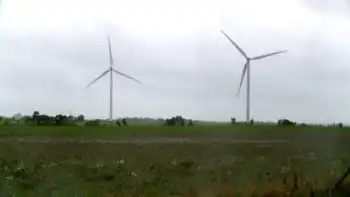
Wind generates more than half of Summerside's electricity in May
Summerside Wind Power reached 61% in May, blending renewable energy, municipal utility operations, and P.E.I.…
View more

Hydro Quebec to increase hydropower capacity to more than 37,000 MW in 2021
Hydro Quebec transmission expansion aims to move surplus hydroelectric capacity from record reservoirs to the…
View more
Sign Up for Electricity Forum’s Newsletter
Stay informed with our FREE Newsletter — get the latest news, breakthrough technologies, and expert insights, delivered straight to your inbox.
Electricity Today T&D Magazine Subscribe for FREE

Stay informed with the latest T&D policies and technologies.
- Timely insights from industry experts
- Practical solutions T&D engineers
- Free access to every issue
