NFPA 70b Training - Electrical Maintenance
Our customized live online or in‑person group training can be delivered to your staff at your location.

- Live Online
- 12 hours Instructor-led
- Group Training Available
Regular Price:
$699
Coupon Price:
$599
Wisconsin Nuclear Moratorium Repeal drives debate over nuclear power, renewables, utility rates, as Wisconsin Energy lobbies amid 2025 renewable mandate, cost per kWh, and Point Beach expansion possibilities to balance low-carbon reliability.
Main Details
A proposal to end Wisconsin's ban on new reactors, enabling base-load planning and integrating nuclear with renewables.
- Ends ban on new Wisconsin reactors if repealed
- Enables base-load planning for utilities
- Potential Point Beach site expansion noted
Wisconsin Energy Corp. is organizing its lobbying corps to press for the repeal of Wisconsin’s moratorium on new nuclear power plants.
Gale Klappa, the Milwaukeebased utility holding company’s chairman, president and chief executive officer, said there are no proposals pending to build new nuclear plants in the foreseeable future, but with the moratorium in place and as state nuclear bans have withstood recent challenges, the company can’t adequately plan for its future base load electricity needs.
In addition to revealing his company’s plans to lobby for a repeal of the nuclear moratorium, as lawmakers draw battle lines over a broader energy bill, Klappa also told more than 300 people at The Business Journal Power Breakfast March 26 that utilities could meet the state mandate to produce 25 percent of Wisconsin’s electricity from renewable sources by 2025.
“Thing is, it’s going to be expensive,” Klappa said, noting the nuclear price tag remains a major concern today.
The construction of more wind, biomass, hydroelectric and solar energy power sources in Wisconsin is one of several factors leading to higher electricity rates in the state, according to Klappa, even as increased energy efficiency investment is urged to curb demand.
At some point in the future, Klappa said nuclear power may be the best option for a lowcarbon solution to future base load energy needs. Plus, nuclear is a lowcost generation source that can be combined with renewables to keep utility rates low. The cost of producing electricity from nuclear generation is 4.5 cents per kilowatt hour compared to 11 cents per kilowatt hour from wind energy.
Currently, coal is the second most costefficient source of electricity at 6 cents per kilowatt hour, said Klappa.
Amid these rate dynamics, Wisconsin utility stocks have posted gains over the past year, market watchers said.
Wisconsin Energy’s utility companies, including We Energies in Wisconsin and Michigan’s Upper Peninsula, are producing 4.25 percent of the company’s overall power, he said.
The Wisconsin Citizens Utility Board, a watchdog group based in Madison, has been a longtime opponent of adding more nuclear power plants in Wisconsin. However, the group reached a compromise to modify the moratorium, as the debate returns to legislatures across the Midwest this session, as part of Gov. Jim Doyle’s Task Force on Global Warming.
Charlie Higley, Citizens Utility Board executive director, said the group would support new nuclear reactors in the state if they are deemed economically advantageous to utility ratepayers.
“We also believe nuclear power is more expensive to build, so utilities will have a hard time winning the economics argument,” Higley said.
Klappa said Wisconsin Energy’s former Point Beach nuclear plant was originally designed for four reactors and there are two operating at the Manitowoc County site. Wisconsin Energy sold Point Beach in 2007 for an estimated $1 billion to Florida Power & Light Group, which is currently managing the plants.
While there are no nuclear power plants under construction in the United States at the present time, improved nuclear power technology with lower construction costs may make nuclear more attractive in the future, said Wisconsin Energy spokesman Brian Manthey.
“Right now, it’s important to get into a position to have a productive discussion about nuclear power in Wisconsin’s future,” he said.
Related News
Related News

DBRS Confirms Ontario Power Generation Inc. at A (low)/R-1 (low), Stable Trends
OPG Credit Rating affirmed by DBRS at A (low) issuer and unsecured debt, R-1 (low)…
View more
Heatwave Sparks Unprecedented Electricity Demand Across Eastern U.S
Eastern U.S. Heatwave Electricity Demand surges to record peak load, straining the power grid, lifting…
View more
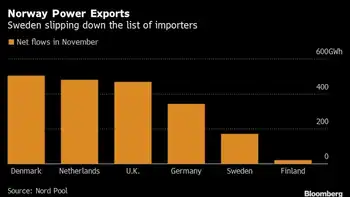
Europe's Thirst for Electricity Spurs Nordic Grid Blockade
Nordic Power Grid Dispute highlights cross-border interconnector congestion, curtailed exports and imports, hydropower priorities, winter…
View more
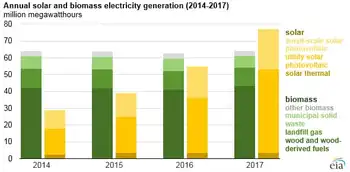
Solar Becomes #3 Renewable Electricity Source In USA
U.S. Solar Generation 2017 surpassed biomass, delivering 77 million MWh versus 64 million MWh, trailing…
View more

Electrifying: New cement makes concrete generate electricity
Cement-Based Conductive Composite transforms concrete into power by energy harvesting via triboelectric nanogenerator action, carbon…
View more

The gloves are off - Alberta suspends electricity purchase talks with B.C.
Alberta-BC Pipeline Dispute centers on Trans Mountain expansion, diluted bitumen shipments, federal approval, spill response…
View more
Sign Up for Electricity Forum’s Newsletter
Stay informed with our FREE Newsletter — get the latest news, breakthrough technologies, and expert insights, delivered straight to your inbox.
Electricity Today T&D Magazine Subscribe for FREE

Stay informed with the latest T&D policies and technologies.
- Timely insights from industry experts
- Practical solutions T&D engineers
- Free access to every issue
