Substation Relay Protection Training
Our customized live online or in‑person group training can be delivered to your staff at your location.
- Live Online
- 12 hours Instructor-led
- Group Training Available
Regular Price:
$699
Coupon Price:
$599
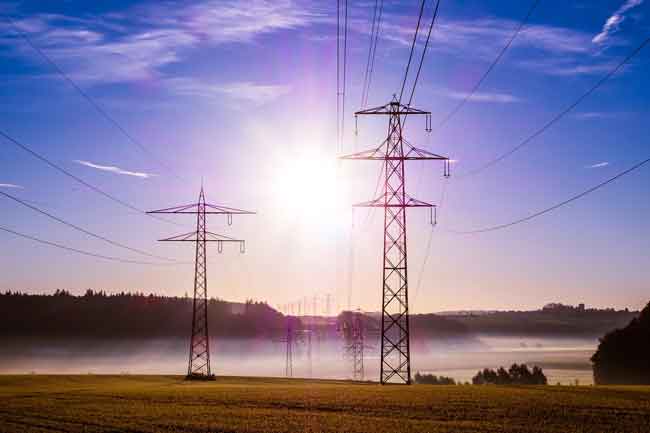
Pennsylvania's electrical transmission grid is reliable but in need of some fine-tuning, and isn't immune to future blackouts like the one that darkened much of the Northeast last summer, according to testimony from the chairman of the state's Public Utility Commission.
There is no perfect electrical generation and delivery system, said PUC Chairman Terrance Fitzgerald, which is why "we need to do everything we reasonably can to prevent [blackouts]," despite the system's overall clean bill of health.
He offered his testimony recently at a Senate consumer protection hearing on blackout prevention and electric service reliability.
Though Pennsylvania's grid is by and large reliable, the PUC this year has opened separate investigations into the service quality offered by the Metropolitan Edison Co., Pennsylvania Power Co. and the Pennsylvania Electric Co., all of which are owned by Ohio-based FirstEnergy Corp., Fitzgerald said.
The ongoing probe will investigate the number and duration of power outages to determine whether FirstEnergy met the PUC's reliability standards.
In November, a joint U.S.-Canadian task force concluded that FirstEnergy was mostly to blame for the August blackout.
Public evidentiary hearings related to the PUC probe are still in progress.
The recent Senate hearing came just a week after the same joint task force released its second-phase recommendations for improving electricity transmission in North America. One of the recommendations calls for greater regional cooperation among electric companies, an area where Pennsylvania is ahead of the game, thanks to PJM Interconnection, a Valley Forge-based regional transmission group.
PJM brokers electricity transactions and runs power grids operating in Pennsylvania, New Jersey, West Virginia, Maryland and elsewhere.
Frank Koza, a manager with PJM, said it's his firm's responsibility to "balance supply second by second" and forecast daily demand.
"Regional planning is essential," Koza said.
Pennsylvania, especially the southwestern part of the state, also has a dense supply of high-voltage transmission lines, meaning the grid isn't as easily overloaded on hot, high-use days.
On the whole, he said, long-range investment into transmission infrastructure -- power lines, transformer substations, computer control centers -- is prudent, but a total overhaul on Pennsylvania's distribution grid is unnecessary.
Some disagree with the more rosy diagnosis, including Nora Mead Brownell, who sits on the Federal Energy Regulatory Commission and is a former PUC board member. She says since 1992, when a federal energy restructuring law was passed, there's been precious little investment in new transmission lines across the United States and in Pennsylvania.
Those lines may hold up for now, but "are not capable of supporting a digital economy over a long period of time," Brownell said.
Related News
Saskatchewan to credit solar panel owners, but not as much as old program did
Saskatchewan Solar Net Metering Program lets rooftop solar users offset at retail rate while earning…
View more
Environmentalist calls for reduction in biomass use to generate electricity
Nova Scotia Biomass Energy faces scrutiny as hydropower from Muskrat Falls via the Maritime Link…
View more
Groups clash over NH hydropower project
Northern Pass Hydropower Project Rehearing faces review by New Hampshire's Site Evaluation Committee as Eversource…
View more
DP Energy Sells 325MW Solar Park to Medicine Hat
Saamis Solar Park advances Medicine Hat's renewable energy strategy, as DP Energy secures AUC approval…
View more
Biden calls for 100 percent clean electricity by 2035. Here’s how far we have to go.
Biden Clean Energy Plan 2035 accelerates carbon-free electricity with renewables, nuclear, hydropower, and biomass, invests…
View more

Can COVID-19 accelerate funding for access to electricity?
Africa Energy Access Funding faces disbursement bottlenecks as SDG 7 goals demand investment in decentralized…
View more
Sign Up for Electricity Forum’s Newsletter
Stay informed with our FREE Newsletter — get the latest news, breakthrough technologies, and expert insights, delivered straight to your inbox.
Electricity Today T&D Magazine Subscribe for FREE

Stay informed with the latest T&D policies and technologies.
- Timely insights from industry experts
- Practical solutions T&D engineers
- Free access to every issue
