Latest Building Automation Articles

Energy Management in Practice
Energy management sits at the intersection of electrical systems, automation, and operational judgment. It is not a single technology, and it is not a program you “install.” It is the ongoing discipline of understanding how energy moves through a facility or system, where it is being misused or wasted, and which decisions actually change long-term performance rather than producing short-lived gains.
In practice, energy management shapes how buildings respond to demand, how industrial systems absorb variability, and how operators balance efficiency, reliability, and cost without compromising performance or safety.
Energy Management as a Systems Discipline
Well-designed energy management begins…
View more
Sign Up for Electricity Forum’s Building Automation Newsletter
Stay informed with our FREE Building Automation Newsletter — get the latest news, breakthrough technologies, and expert insights, delivered straight to your inbox.
Why Building Automation Systems Underperform Even When Equipment Is Correct
Most building automation systems underperform not because the equipment is defective, but because system behavior was never fully understood, validated, or aligned with operational priorities during design, integration, and commissioning.
Modern BAS platforms are technically capable of delivering stable control, energy optimization, and operational insight. Yet many facilities experience persistent comfort complaints, excessive energy use, unreliable alarms, and poor data quality even after major automation investments. In most cases, the problem is not a hardware failure. It is an incomplete system-level understanding. Underperforming BAS systems can waste up to 20–30% of energy due to drift and lack of maintenance.
When automation…
View more
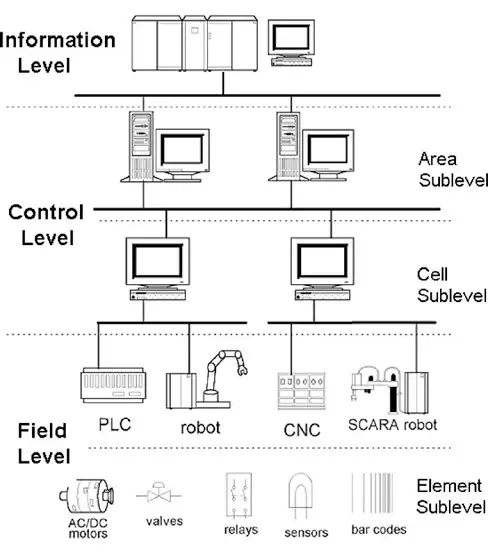
Hierarchical Levels in Industrial Networks
Hierarchical Levels Industrial Networks align device, control, and enterprise layers across PLCs, SCADA, MES, and ERP, using fieldbus, Ethernet/IP, and Profinet to ensure deterministic control, real-time data, cybersecurity, and scalable OT-IT integration.
Hierarchical Levels in Industrial Networks: Overview and Best Practices
The industrial automation systems can be very complex, and it is usually structured into several hierarchical levels. Each of the hierarchical level has an appropriate communication level, which places different requirements on the communication network. Figure 1.1 shows an example of the hierarchy of an industrial automation system. For a broader overview of protocols and trends, industrial automation…
View more
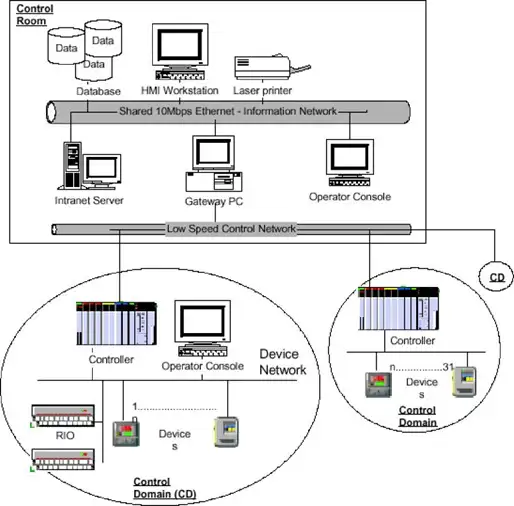
Transmission Methods In Industrial Networks
Transmission Methods Industrial Networks explain Ethernet/IP, PROFINET, Fieldbus, Modbus TCP, and wireless options, covering deterministic control, latency, throughput, topology, and noise immunity for PLC, SCADA, and IIoT connectivity in factory automation.
How Transmission Methods in Industrial Networks Work
The data communication can be analogue or digital. Analogue data takes continuously changing values.For a broader systems perspective, building automation fundamentals explain how communication methods underpin monitoring and control.In digital communication, the data can take only binary 1 or 0 values. The transmission itself can be asynchronous or synchronous, depending on the way data is sent. In asynchronous mode transmission, characters…
View more
PLC Training Courses
PLC training courses build automation skills in ladder logic, SCADA, HMI, and motion control, with hands-on programming on Siemens and Allen-Bradley platforms, diagnostics, IEC 61131-3 standards, safety, and commissioning best practices.
Key Concepts of PLC Training Courses
Our PLC training courses are designed to help students keep abreast of the latest PLC technologies and techniques available for industrial automation. These courses offer an excellent opportunity for students to ask specific questions and exchange ideas relating to their own applications. For context on modern plant connectivity, see the overview of industrial automation communication standards used in training.Our PLC training courses are intended for experienced users and…
View more

Green Energy
Green energy integrates renewable electricity from solar, wind, and hydro into smart grids using power electronics, advanced inverters, energy storage, and grid automation to enhance reliability, power quality, and low-carbon transmission.
Green Energy Fundamentals
Green energy, often synonymous with renewable energy, has gained significant attention in recent years as the world seeks to reduce its reliance on fossil fuels, minimize environmental damage, and promote a more sustainable future. This shift towards clean energy resources helps reduce greenhouse gases and air pollutants and plays a vital role in conserving non-renewable resources and promoting efficiency.There are several green energy sources, each…
View more

Control Sequences in Building Automation
Control sequences determine how building automation systems actually behave under load, change, and imperfect operating conditions, guiding equipment decisions and influencing comfort, energy use, and equipment wear more than most operators ever consciously acknowledge.
Most building automation problems do not announce themselves as logic failures. They show up as rooms that never quite settle, systems that fight themselves during seasonal changeover, or equipment that cycles more than anyone expected. When those symptoms persist, the root cause is almost always found in the control sequences, not in the hardware, sensors, or network diagrams.
At a practical level, control sequences are the…
View more