Building Automation

Why Building Automation Systems Underperform Even When Equipment Is Correct

Most building automation systems underperform not because the equipment is defective, but because system behavior was never fully understood, validated, or aligned with operational priorities during design, integration, and commissioning. Modern BAS platforms are technically capable of delivering stable control, energy optimization, and operational insight. Yet many facilities experience persistent comfort complaints, excessive energy use, unreliable alarms, and poor data quality even after major automation investments. In most cases, the problem is not a hardware failure. It is an incomplete system-level understanding. Underperforming BAS systems can waste up to 20–30% of energy due to drift and lack of maintenance. When automation…
View more

Download Our FREE Building Automation Handbook

Lighting Handbook, Vol. 1

Industrial Lighting Handbook presents a wide array of lighting choices and problems in the industrial, commercial and institutional sectors, from fluorescent to HID lamps, solid state lighting and office lighting scenarios. This handbook covers everything from basic lighting to advanced automation emergency lighting applications.

The Lighting Handbook, Vol. 1 is designed to serve as a comprehensive guide for professionals, designers, engineers, and anyone involved in the planning, implementation, and optimization of lighting systems. In this volume, we explore the core principles of lighting design, technology, and innovation, providing practical insights and strategies to help you harness the full potential of modern lighting solutions.

From understanding the science of light to selecting the right fixtures and technologies, this handbook covers a wide range of topics, including energy-efficient lighting, smart lighting systems, and the latest trends in LED technology. It also delves into the environmental impact of lighting and the growing importance of sustainability in the industry.

Whether you are designing a new space, upgrading an existing system, or simply looking to stay informed about the latest advancements, Lighting Handbook, Vol. 1 equips you with the knowledge and tools needed to create optimal lighting solutions that are both functional and eco-friendly.

Embark on this journey into the world of lighting and discover how thoughtful, well-executed lighting can transform spaces, enhance user experience, and contribute to a more sustainable future.

Latest Building Automation Articles

What is a Certified Energy Manager?

A Certified Energy Manager sits at the intersection of engineering judgment, operational reality, and long-term efficiency strategy. Their value is not defined by a credential alone, but by the responsibility they carry for how energy is measured, interpreted, and acted upon inside real facilities. In practice, a Certified Energy Manager is the professional accountable for translating raw consumption data, equipment behavior, and financial constraints into decisions that reduce waste without compromising reliability. When this role is misunderstood or treated as purely administrative, organizations tend to chase short-term savings while missing deeper structural inefficiencies that quietly compound over time. A Certified…
View more

Why Commissioning Determines Long-Term BAS Performance
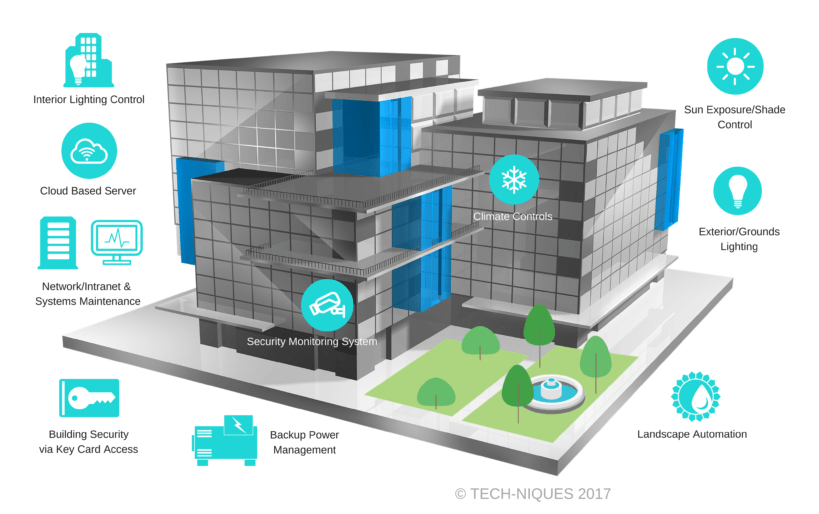
Commissioning in building automation is not a procedural hurdle or a formality at project closeout. It is the point where assumptions meet reality, where control logic is tested against real loads, real schedules, and real human behavior. When done well, commissioning reveals how systems actually behave when no one is watching. When done poorly, it leaves operators managing a building that never quite behaves as promised. Most automation systems function correctly in isolation. Sensors report values, controllers respond, and equipment starts and stops on command. The problems emerge when those components interact across modes, schedules, and operating conditions that were never…
View more

Why Building Automation Failures Usually Begin at Commissioning

Most building automation failures begin at commissioning, where incomplete system understanding, poor coordination between disciplines, and undocumented assumptions embed performance limitations before the system operates under real conditions. Commissioning is the transition point where design intent meets operational reality. It is also where building automation systems are most vulnerable to long-term failure. Decisions made during commissioning often determine how the system behaves for years, yet this phase is frequently treated as a procedural checklist rather than a system-level validation process. Commissioning failures often occur because the full building automation system is never validated as an integrated whole, rather than as…
View more

How Building Automation Systems Succeed or Fail as Integrated Systems
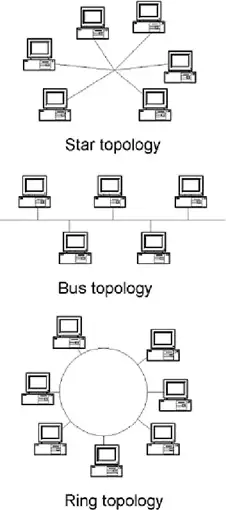
Building automation systems succeed or fail based on how well they are understood, integrated, commissioned, and operated as a whole. Performance outcomes are determined less by individual components and more by the decisions made across the system lifecycle. Modern building automation platforms can deliver reliable control, energy optimization, and operational insights. Yet many facilities experience instability, inefficiency, and declining confidence in their automation systems. These outcomes are rarely caused by defective equipment. They occur when system behavior is misunderstood, and decisions are made in isolation rather than with system awareness. Building automation refers to the coordinated control of building systems…
View more

Industrial Network Components Explained
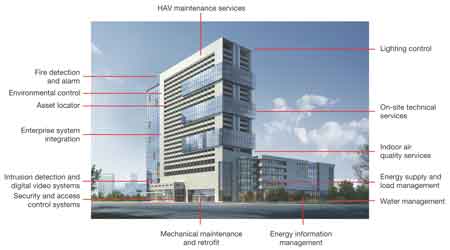
Industrial network components enable reliable Ethernet, fieldbus, and IIoT connectivity across PLCs, HMIs, drives, and sensors, using managed switches, routers, protocol gateways, and cybersecurity firewalls for real-time control, redundancy, and deterministic data.   Key Concepts of Industrial Network Components Industrial Network ComponentsIn larger industrial and factory networks, a single cable is not enough to connect all the network nodes together. We must define network topologies and design networks to provide isolation and meet performance requirements. In many cases, because applications must communicate across dissimilar networks, we need additional network equipment. The following are various types of network components and topologies:For…
View more

Why Superficial BAS Knowledge Fails in Real Buildings

Many building automation systems fail to deliver expected performance not because the technology is insufficient, but because system behavior is misunderstood. Familiarity with devices, software tools, or interfaces is often mistaken for understanding the system, leaving critical interactions unexamined. In practice, building automation is not a collection of independent components. It is a layered system in which electrical infrastructure, mechanical systems, communication protocols, control strategies, and operational priorities continuously interact. When professionals focus on individual components rather than system behavior, performance problems emerge even in well-equipped facilities. Superficial automation knowledge often ignores how data and control traffic move through layered…
View more
Read All Building Automation Articles

Building Automation News


Download the 2026 Electrical Training Catalog

Explore 50+ live, expert-led electrical training courses –

  • Interactive
  • Flexible
  • CEU-cerified