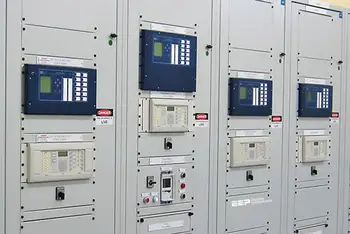
Protective Relay Training - Basic
Our customized live online or in‑person group training can be delivered to your staff at your location.
- Live Online
- 12 hours Instructor-led
- Group Training Available
Regular Price:
$699
Coupon Price:
$599
Vast improvements are needed to extend the life and lower the cost of lithium batteries before they can efficiently power vehicles, a U.S. government official who tracks high-power battery development said.
Lithium-ion batteries are widely predicted to replace nickel metal-hydride batteries currently used in most hybrid vehicles, such as Toyota Co's hot-selling Prius.
But among the challenges to overcome are extending the life of high-power lithium batteries and bringing down their relatively high cost, Tien Duong of the U.S. Department of Energy said on the sidelines of a lithium battery conference held at this government laboratory.
"Life means 10 years, plus. For hybrids we know (their batteries) last 10 years plus. For the PHEV (plug-in electric vehicle), we don't know," Duong said. He did not specify what the costs should be.
"One of the phenomenons that cuts short the life of the battery is power. You may have a lot of energy, but if you run out of power, that's no good," he said.
Soaring costs for gasoline and the effort to cut emissions to stall global climate change have added incentive to produce vehicles powered by electricity.
Duong said it will take time to develop a lithium battery that can meet the Department of Energy's goal: a plug-in electric vehicle with a 40-mile range by the year 2016.
Plug-in vehicles like General Motors Co's Volt - a proposed electric vehicle equipped with a regular gasoline-powered engine to provide backup electricity to the battery - are seen as promising because charging could occur overnight when power costs less.
"The beauty of the plug-in is charging overnight at lower rates," Argonne Labs' engineer-economist Danilo Santini told the conference. "And slower charging is cost-effective as well."
Attendees at the three-day conference at the government research laboratory outside Chicago included automakers, battery makers, investors and scientists.
Lithium batteries that deliver low power have been used for years to power laptop computers and similar devices, but prismatic lithium batteries that deliver more power in a smaller package, and hold a bigger charge safely without overheating, are seen as the next generation to power cars.
A presenter from Toyota, Noboru Kikuchi, implored the assembled scientists to scale the technological barriers and build a safe, commercially viable lithium battery.
In the meantime, he said, Toyota aims to increase sales of its hybrid line, which employs metal hydride batteries, to 1 million vehicles annually by 2020. There are 1.5 million hybrids on the road currently, since the Prius was launched in 1997.
"Toyota is making quite an effort to build a lithium-ion battery... but simply giving up nickel metal hydride batteries seems like a bad idea," Kikuchi said.
South Korea has been aggressive, with three large manufacturers - LG Chem, Samsung, and SK Energy - aiming to produce a viable lithium battery for vehicles. The goal is to produce a lithium-powered plug-in vehicle by 2013, three years before the United States' target, Yung Myun Yoo of the Korea Automotive Technology Institute told the conference.
"That's fine," Duong said, when asked about South Korea's progress.
Asked whether the United States was falling behind in building electric or hybrid cars, Duong said: "We're losing the race in manufacturing, but not in R and D (research and development)."
He said there is a lot of discussion in Washington of funding a Department of Defense $1 billion battery project.
Related News

German official says nuclear would do little to solve gas issue
Germany Nuclear Phase-Out drives policy amid gas supply risks, Nord Stream 1 shutdown fears, Russia…
View more
Fixing California's electric grid is like repairing a car while driving
CAISO Clean Energy Transition outlines California's path to 100% carbon-free power by 2045, scaling renewables,…
View more
The crisis in numbers: How COVID-19 has reshaped Saskatchewan
Saskatchewan COVID-19 economic impact: real-time data shows drops in electricity demand, oil well licensing, traffic…
View more

Duke Energy Florida's smart-thinking grid improves response, power restoration for customers during Hurricane Ian
Self-healing grid technology automatically reroutes power to reduce outages, speed restoration, and boost reliability during…
View more

Minnesota bill mandating 100% carbon-free electricity by 2040
Minnesota 100% Carbon-Free Electricity advances renewable energy: wind, solar, hydropower, hydrogen, biogas from landfill gas…
View more

France Demonstrates the Role of Nuclear Power Plants
France Nuclear Power Strategy illustrates a low-carbon, reliable baseload complementing renewables in the energy transition,…
View more
Sign Up for Electricity Forum’s Newsletter
Stay informed with our FREE Newsletter — get the latest news, breakthrough technologies, and expert insights, delivered straight to your inbox.
Electricity Today T&D Magazine Subscribe for FREE
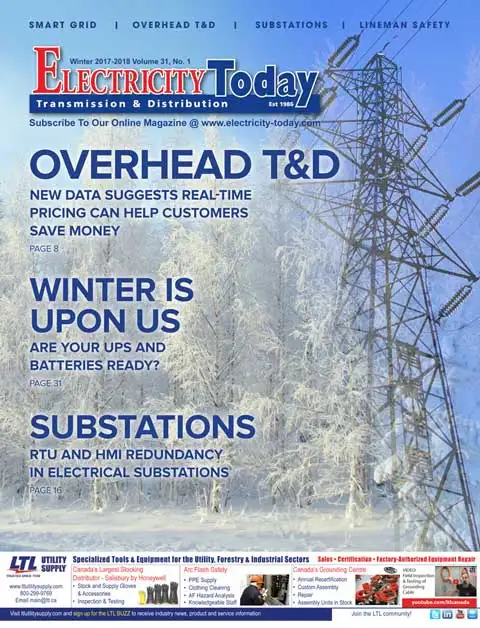
Stay informed with the latest T&D policies and technologies.
- Timely insights from industry experts
- Practical solutions T&D engineers
- Free access to every issue
