CSA Z463 Electrical Maintenance -
Our customized live online or in‑person group training can be delivered to your staff at your location.

- Live Online
- 6 hours Instructor-led
- Group Training Available
Regular Price:
$249
Coupon Price:
$199
Saying it's only fair, Michigan lawmakers plan to raise residential electricity bills and drop business rates so all customers are charged the true cost of their power.
But when it comes to figuring out who should pay what for new renewable energy requirements, the playing field wouldn't be even.
Though residents account for one-third of Detroit Edison's electric sales, they would contribute nearly two-thirds of what Michigan's largest utility could collect from customers for wind and other sources of alternative power under bills that have passed the House and Senate.
Residential customers of Consumers Energy account for just over one-third of sales yet would pay nearly half the maximum amount charged by the state's second-biggest utility for renewable energy.
Negotiators are ironing out differences in the wide-ranging legislation, with pressure building to send something to Gov. Jennifer Granholm in early September.
"Why are residential ratepayers paying more than their fair share if this is all about them paying their fair share?" asked Paul Stankewitz with the Michigan Catholic Conference, which opposes rate increases on the poor.
Residents would pay no more than $3 a month extra for green power, but the fees would come on top of costs such as shifting overall electric bills by raising residential rates up to 15 percent over five years.
Michigan's domestic automakers and other companies have paid more than their share since the 1970s energy crisis squeezed people's pocketbooks. But the sour economy has made subsidizing residential rates a bigger burden.
Giving few specific reasons for allocating the renewable fees the way they have, supporters of the legislation said people are willing to pay for green energy and would be protected by cost caps. Because renewable power can be more expensive than traditional coal or nuclear energy — at least in the short run — residents would be charged up to $2 a month over 20 years under a Senate bill. The House set a $3 cap for residents.
Smaller businesses would pay no more than $11.05 a month under the Senate plan and $16.58 under the House version. Industrial businesses would pay no more than $125 to $187.50 monthly. Senate Republicans are proposing tax credits to offset costs.
"Many folks like to look at elements of the package in a micro sense. But looking at it from a macro sense, the costs of doing nothing are going to be much more," said Rep. Jeff Mayes, a Bay City Democrat whose bill includes the revenue caps.
Detroit Edison spokesman Len Singer said focusing on only part of the legislation can expose provisions that aren't always "absolutely fair," but he added there's a desire to keep businesses' electric rates reasonable in Michigan's sluggish economic climate.
The support of large companies has been crucial to moving the bills through the Legislature.
It's probably no coincidence that industrial businesses would benefit — big companies in Detroit Edison's area account for 28 percent of electric sales but would kick in just 2 percent of the utility's revenue to buy or generate alternative energy. Small- and medium-sized companies would pay roughly their fair share for green power.
Critics said there's no reason one customer class should pay twice as much as others.
"If you look at the type of use — how many hours per day the energy is taken — some difference might be justified but not a factor of two," said Eric Schneidewind, a former Michigan Public Service Commission chairman who's an attorney for alternative power suppliers opposing the legislation.
It doesn't appear the skewing of renewable fees has been a big issue in talks in recent weeks, however.
Skip Pruss, Gov. Jennifer Granholm's special adviser on renewable energy, said the fee structure originated in the House. The Senate reduced the fees by decreasing how much energy would have to be renewable but didn't change the proportion of revenue coming from residents and businesses.
"They are what they are," Pruss said. "All I can say is the amounts paid by various rate classes vary in a number of complex ways. The general thrust has been to try to have rate parity."
Though residents as a group would contribute the most money toward the development of renewable power, he said they ultimately would save because the legislation would lead to fewer coal or nuclear plants being built and help customers become more energy-efficient.
Another negotiator, Republican Sen. Patricia Birkholz of Saugatuck, said she plans to look further into what the cost caps would look like.
"We're looking at all aspects and trying to make it as fair as possible," Birkholz said.
Related News
How utilities are using AI to adapt to electricity demands
AI Load Forecasting for Utilities leverages machine learning, smart meters, and predictive analytics to balance…
View more
Portland General Electric Program Will Transform Hundreds of Homes Into a Virtual Power Plant
PGE Residential Energy Storage Pilot aggregates 525 home batteries into a virtual power plant, enabling…
View more
Will Iraq have enough electricity for coming hot summer days?
Iraq Electricity Crisis intensifies as summer heat drives demand; households face power outages, reliance on…
View more

Renewables surpass coal in US energy generation for first time in 130 years
Renewables Overtake Coal in the US, as solar, wind, and hydro expand grid share; EIA…
View more

Report: Duke Energy to release climate report under investor pressure
Duke Energy zero-coal 2050 plan outlines a decarbonized energy mix, aligning with Paris goals, cutting…
View more
Heat Waves Push U.S. Grid Under Stress as Transmission Faces Limits
US Grid Resilience faces real-time tests as extreme heat collides with rising AI and data…
View more
Sign Up for Electricity Forum’s Newsletter
Stay informed with our FREE Newsletter — get the latest news, breakthrough technologies, and expert insights, delivered straight to your inbox.
Electricity Today T&D Magazine Subscribe for FREE
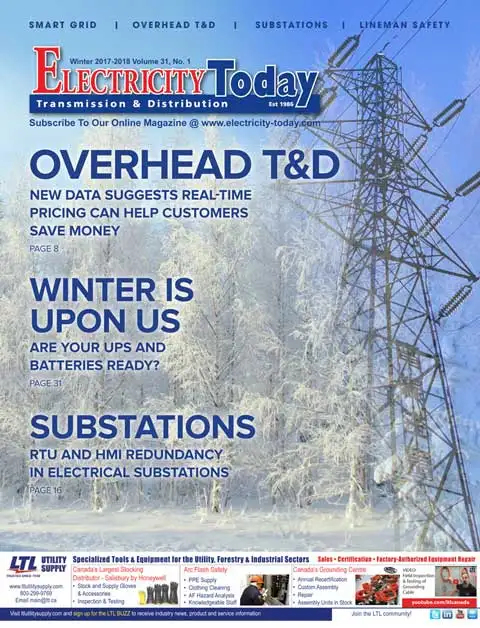
Stay informed with the latest T&D policies and technologies.
- Timely insights from industry experts
- Practical solutions T&D engineers
- Free access to every issue
