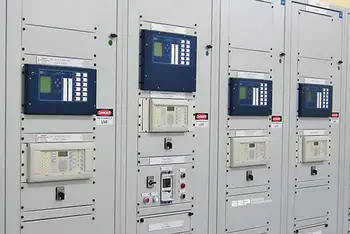
Protective Relay Training - Basic
Our customized live online or in‑person group training can be delivered to your staff at your location.
- Live Online
- 12 hours Instructor-led
- Group Training Available
Regular Price:
$699
Coupon Price:
$599
An alliance of seven western states and four Canadian provinces unveiled a blueprint for the most far-reaching effort in North America to curb emissions linked to climate change.
The draft of the proposal by the alliance, the Western Climate Initiative, is intended to achieve a 15 percent cut in greenhouse-gas emissions by 2020. It cuts emissions from industries across the economy and from transportation and housing; a plan being put into effect by 10 northeastern states covers only the electric utility industry.
But for all the breadth of the groupÂ’s plan, it also reflects the affected industriesÂ’ ability to win significant concessions to ease their entry into a new system, under which, for the first time, they must pay for emissions of heat-trapping gases, like carbon dioxide.
The draft plan, which will not take effect until 2012, sets a mandatory cap on greenhouse-gas emissions that would ratchet down year by year. The industries covered, like electric utilities or petroleum refiners, would be granted allowances and would have to use one allowance to cover every metric ton of heat-trapping gases they emit.
Gov. Arnold Schwarzenegger of California, a Republican, said in a statement, “We’re sending a strong message to our federal governments that states and provinces are moving forward in the absence of federal action, and we’re setting the stage for national programs that are just as aggressive.”
California, which passed its own groundbreaking legislation on combating climate change two years ago, is the largest of the states involved and one of the most experienced in broad-based regulation. The others in the alliance are Arizona, Montana, New Mexico, Oregon, Utah and Washington and the Canadian provinces of British Columbia, Manitoba, Ontario and Quebec.
The political, economic and geographic disparity among the partners has led to strains. Both houses of the Arizona State Legislature passed a measure earlier this year requiring legislative approval for state participation; the bill was vetoed by Gov. Janet Napolitano, a Democrat.
“It’s a very diverse group of states,” said Ned Farquhar, a climate-policy expert with the Albuquerque offices of the Natural Resources Defense Council, an environmental organization. “And it’s biting off a much bigger bite. Naturally there’s going to be a broader range of opinion inside the partners.”
Unlike the final plan of the northeastern states, the western plan, reflecting industry suggestions, requires that only 10 percent of the allowances to emit gases be sold at auction; the rest are given to individual industries. The allowances may be traded in a secondary market, which effectively sets a price for carbon-dioxide emissions.
A similar approach, tried in the first so-called cap-and-trade program in Europe, led to windfall profits for some industries.
The northeastern states are auctioning off more than 90 percent of their allowances; the first auction is set to take place on September 25.
Related News
New Program Set to Fight for 'Electricity Future That Works for People and the Planet'
Energy Justice Program drives a renewables-based transition, challenging utility monopolies with legal action, promoting rooftop…
View more
Energy experts: US electric grid not designed to withstand the impacts of climate change
Summer Power Grid Reliability and Climate Risk drives urgent planning as extreme heat, peak demand,…
View more
"Everything Electric" Returns to Vancouver
Everything Electric Vancouver spotlights EV innovation, electric vehicles, charging infrastructure, battery technology, autonomous driving, and…
View more

Solar power is the red-hot growth area in oil-rich Alberta
Alberta Solar Power is accelerating as renewable energy investment, PPAs, and utility-scale projects expand the…
View more
Hydro-Québec will refund a total of $535 million to customers who were account holders in 2018 or 2019
Hydro-Québec Bill 34 Refund issues $535M customer credits tied to electricity rates, consumption-based rebates, and…
View more
Africa must quadruple power investment to supply electricity for all, IEA says
Africa Energy Investment must quadruple, says IEA, to deliver electricity access via grids, mini-grids, and…
View more
Sign Up for Electricity Forum’s Newsletter
Stay informed with our FREE Newsletter — get the latest news, breakthrough technologies, and expert insights, delivered straight to your inbox.
Electricity Today T&D Magazine Subscribe for FREE

Stay informed with the latest T&D policies and technologies.
- Timely insights from industry experts
- Practical solutions T&D engineers
- Free access to every issue

