Substation Relay Protection Training
Our customized live online or in‑person group training can be delivered to your staff at your location.
- Live Online
- 12 hours Instructor-led
- Group Training Available
Regular Price:
$699
Coupon Price:
$599
Alstom has been carrying out an intensive research and development programme for the past years to meet the technological and economic challenges of capturing the CO2 created in fossil-fuel-based electricity production.
As early as 2014, the company will be able to offer fossil-fuel-based power plants that respect the environmental constraints linked with climate change. Several technologies will be tested in six pilot projects already under way in Germany, the U.S., Norway, Sweden and France. Other projects are being studied and will be announced shortly.
Being aware of the urgency of the climate change problem and various regulations in preparation in the world, Alstom has launched, in parallel, the development of several technologies so that it can offer CO2 capture solutions that give the best energy efficiency for an acceptable cost of installation and maintenance for the operator.
Of the three main technology paths for the capture of CO2 emitted by a power station burning fossil fuels, Alstom Power is concentrating on post combustion technologies and oxy-combustion. The main reason for this choice is that capture technologies must be able to be used on existing power stations as well as the numerous power stations, mainly coal, that will be built by 2030 to meet the growing demand of developing countries. The solutions chosen by Alstom correspond to this.
Post-combustion technology is the most advanced technology today and can be adapted easily to the large installed base of coal-fired power stations. It consists of separating the CO2 from the exhaust gases using a solvent (amine or chilled ammonia). The latest results from our bench test show that the chilled ammonia capture method developed by Alstom can remove up to 90% of CO2 from the combustion gases. This technology can also by applied to both coal-fired power stations and to combined cycle gas-fired power stations.
The various pilot projects and industrial demonstrations that will begin at the end of this year will verify the energy use of this technology and should confirm its economic advantages over other technologies.
The oxy-combustion method consists of burning a fuel in oxygen instead of air. The gases produced by this oxy-combustion are mainly water and CO2, which is easy to capture at the end of the process. The main challenge of oxy-combustion technology today is reducing the cost of large-scale oxygen production. This path has been chosen by Alstom because it presents the least technological risk.
The oxy-combustion should also be retrofitable to existing power stations and the conditions for doing so are currently being studied. Also, important technological breakthroughs are being prepared, such as chemical looping, a new and promising form of oxy-combustion currently undergoing bench tests at Alstom. This process will allow to avoid the costly use of cryogenic oxygen.
The third path, called pre-combustion, consists of transforming by gasification a fuel rich in carbon (coal or petrol derivatives) into a synthetic gas made up of carbon monoxide and hydrogen. Several stages of transformation and purification are then needed to transform the gas, remove the CO2 and obtain a stream of pure hydrogen that can then be burned in a combined cycle power station.
Although gasification is a well-known industrial process, producing electricity from hydrogen on a large scale remains to be fully tested. Alstom has not gone down this technological road because it cannot be used in existing power stations, would be a costly investment and is difficult to put into operation to give reliable electricity production.
Alstom has already signed six deals with utilities and oil companies for the pilot CO2 capture plants using both oxy-combustion and post-combustion methods.
Related News

Let’s make post-COVID Canada a manufacturing hub again
Canada Manufacturing Policy prioritizes affordable energy, trims carbon taxes, aligns with Buy America, and supports…
View more
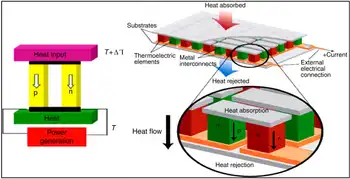
A new approach finds materials that can turn waste heat into electricity
Thermoelectric Materials convert waste heat into electricity via the Seebeck effect; quantum computations and semiconductors…
View more

Elon Musk could help rebuild Puerto Rico with solar-powered electricity grid
Puerto Rico Tesla Solar Power enables resilient microgrids using batteries, renewable energy, and energy storage…
View more
Europe's grid backlog stalls clean-energy rollout, costing billions
European Grid Backlog is delaying connection queues across the EU, stranding renewable energy and battery…
View more

Advocates call for change after $2.9 million surplus revealed for BC Hydro fund
BC Hydro Customer Crisis Fund Surplus highlights unused grants, pilot program imbalance, and calls to…
View more
Clean-energy generation powers economy, environment
Atlin Hydro and Transmission Project delivers First Nation-led clean energy via hydropower to the Yukon…
View more
Sign Up for Electricity Forum’s Newsletter
Stay informed with our FREE Newsletter — get the latest news, breakthrough technologies, and expert insights, delivered straight to your inbox.
Electricity Today T&D Magazine Subscribe for FREE

Stay informed with the latest T&D policies and technologies.
- Timely insights from industry experts
- Practical solutions T&D engineers
- Free access to every issue

