Substation Relay Protection Training
Our customized live online or in‑person group training can be delivered to your staff at your location.
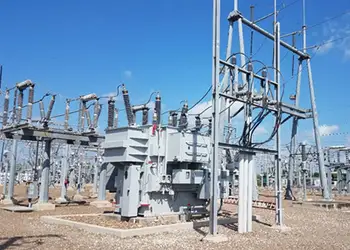
- Live Online
- 12 hours Instructor-led
- Group Training Available
Regular Price:
$699
Coupon Price:
$599
Enron Seeks Millions from Sierra Pacific
The Enron Corporation collapsed into bankruptcy proceedings after revealing that it had reported earnings that never really existed. Now, a major Nevada utility stands on the brink of a bankruptcy filing because Enron is demanding hundreds of millions of dollars of payments for electricity that it never really delivered.
And so far, the courts say Enron is right.
The dispute between two electric utility units of Sierra Pacific Resources has been bubbling along for several months, as Sierra and Enron battled in bankruptcy court about whether the amount of money owed by Sierra was nothing — or what is now more than $330 million. After having lost there, Sierra is expected today to file an emergency request with the Federal Energy Regulatory Commission, asking it to take charge of the controversy and invalidate the payment requirement.
At issue are a series of long-term energy contracts entered into in 2000 and 2001 by the Sierra units, through a broker, with Enron Power Marketing. Under the contracts, Enron committed to delivering power to the Sierra utilities, known as the Nevada Power Company and the Sierra Pacific Power Company, in future months and years.
By the time Enron collapsed into bankruptcy proceedings in December 2001, Sierra was struggling with its own financial problems. The contracts were entered into during the electricity crisis in the West that led to blackouts in California and huge increases in the price of power. Under the rules governing western utilities, Sierra was restricted from passing on the costs of energy to ratepayers, and its financial position was weakened. Soon, credit agencies, concerned about the situation, downgraded Sierra's debt.
That action set in motion a series of outcomes, which now result in Sierra being responsible for hundreds of millions of dollars worth of power that Enron never delivered.
In response to the credit downgrade, in April 2002, Enron demanded that Sierra post more than $300 million in collateral to protect its position in the contract — a demand that Sierra refused. In response, Enron terminated the contracts with Sierra, relying on terms contained under what is known as the Western Systems Power Pool Agreement — a standard tariff filed with the regulatory commission that was incorporated as part of the contracts between Sierra and Enron. That tariff contains terms protecting both sides of the transaction, to ensure that if one party's financial condition changes, the other party can protect itself.
Under the terms of the termination clause of the tariff, Enron demanded the full value of the contract as of that date, which is allowed to ensure that one side of the contract does not walk away from its obligations for little reason.
Why didn't Sierra simply terminate the contract? Because, under the rules of bankruptcy, it did not have the authority to do so. Enron would have had to release Sierra from the contract, or a bankruptcy court judge would have had to declare it invalid. Instead, Enron invoked the termination clause of the agreement, a move upheld on Aug. 28 by the Federal Bankruptcy Court in New York that is hearing the Enron case.
"The filed rate must be collected despite its sometimes harsh consequences because it incorporates the policy which Congress has adopted in regulating interstate commerce," Federal Bankruptcy Judge Arthur Gonzalez wrote in his decision.
In the end, Sierra will have to pay for power that it never really received.
"This whole experience is Kafkaesque. It really is," said Stephen Ryan, a lawyer representing Sierra. "Enron is gaming the system."
In truth, though, the rules afford Enron few options. After all, the charge to its current management, under the bankruptcy laws, is to maximize total payments to its creditors. And few creditors would willingly allow a bankrupt estate to walk away from an asset — in this case, a contract — worth what is now $336 million.
Indeed, Enron maintains that Sierra is in its difficult financial position because of its own maneuverings.
"If they had posted the collateral, we simply would have performed under the contract," said Brandon Wax, a vice president of Enron Power Marketing. "We knew if we terminated, it was going to turn into a legal fight, and a much longer, more painful row to hoe."
Related News
Reload.Land 2025: Berlin's Premier Electric Motorcycle Festival Returns
Reload.Land 2025 returns to Berlin with electric motorcycles, e-scooters, test rides, a conference on sustainability,…
View more

FortisAlberta Takes Necessary Precautions to Provide Electricity Service for Alberta
FortisAlberta COVID-19 response delivers safe electricity distribution across Alberta, with remote monitoring, 24/7 support, outage…
View more
South Australia rides renewables boom to become electricity exporter
Australia electricity grid transition is accelerating as renewables, wind, solar, and storage drive decentralised generation,…
View more
California's Next Electricity Headache Is a Looming Shortage
California Electricity Reserve Mandate requires 3.3 GW of new capacity to bolster grid reliability amid…
View more
B.C. Streamlines Regulatory Process for Clean Energy Projects
BCER Renewable Energy Permitting streamlines single-window approvals for wind, solar, and transmission projects in BC,…
View more

Calgary's electricity use soars in frigid February, Enmax says
Calgary Winter Energy Usage Surge highlights soaring electricity demand, added megawatt-hours, and grid reliability challenges…
View more
Sign Up for Electricity Forum’s Newsletter
Stay informed with our FREE Newsletter — get the latest news, breakthrough technologies, and expert insights, delivered straight to your inbox.
Electricity Today T&D Magazine Subscribe for FREE

Stay informed with the latest T&D policies and technologies.
- Timely insights from industry experts
- Practical solutions T&D engineers
- Free access to every issue
