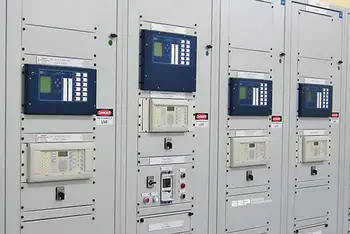
Protective Relay Training - Basic
Our customized live online or in‑person group training can be delivered to your staff at your location.
- Live Online
- 12 hours Instructor-led
- Group Training Available
Regular Price:
$699
Coupon Price:
$599
U.S. Fusion Energy Strategy aligns ITER, ORNL, and tokamak research with magnetic confinement and inertial fusion, aiming for clean energy, reduced greenhouse gases, robust materials science, and cost-effective, scalable power.
Main Details
A plan linking ITER and domestic R&D to advance tokamak and inertial fusion toward safe, economical, low-carbon power.
- Integrates ITER access with domestic fusion R&D
- Focus on tokamak, magnetic confinement, inertial fusion
- Addresses plasma control, materials, and economics
- Targets clean, low-carbon, reliable baseload power
- Enables U.S. industry roles in high-tech components
The House Science subcommittee on energy and environment hosted a hearing on fusion research. It attracted attention to a future energy source that tends to take a backseat these days to wind and solar and just about anything else with a green connotation.
It was reportedly the first congressional hearing on fusion in 13 years, and Oak Ridge National Laboratory Director Thom Mason, following seven steps at ORNL discussions, was among the witnesses.
Following the hearing, here's what the subcommittee chairman, U.S. Rep. Brian Baird, D-Wash., had to say:
"Fusion energy has successfully powered the sun and the stars for billions of years, so it's no surprise that man would try to recreate and harness this energy source here on earth. However, we all know that a working fusion reactor has been much more difficult to achieve than our atomic-age scientists initially expected. Over the years, there were also some overly optimistic or even fraudulent proclamations by self-identified fusion researchers who skipped the peer review process and went straight to the media, further complicating the popular and political assessment for the nuclear lobby of the extent to which the federal government should continue to support this research."
The subcommittee noted the potential benefits of fusion, which could be a virtually inexhaustible energy source with no threat of catastrophic failure and no release of greenhouse gases, making it environmental friendly and aligned with a clean energy standard many advocates support.
However, the congressional panel also noted there are challenging issues that must be overcome for fusion to be successful:
• Can we adequately control the charged gas in a fusion system?
• What materials should be used in a fusion reactor?
• When compared to other energy sources, how economical can a fusion reactor be if nuclear demand on hold trends persist?
• For inertial fusion energy, is it possible for us to build a system that can perfectly implode a pellet of fusion fuel and recover energy at the necessary rate to produce significant net energy?
Mason discussed ORNL's decades-long involvement in fusion research, as well as its current role heading the U.S. contribution to the International Thermonuclear Experimental Reactor being built in France. The international experiment - expected to be twice the size of any previous experiment - is supposed to demonstrate the scientific and technological feasibility of fusion energy, with fusion project work drawing endorsements along the way.
Besides the United States, other partners are Russia, European Union, Japan, China, South Korea and India.
The ORNL director acknowledged there had been some "teething" pains associated with the project, but he emphasized the importance of ITER. By contributing 9 percent of the cost of the multi-billion project, amid debates over safety and cost controls, the U.S. will have access to all the scientific data and the right to propose and carry out experiments, Mason said. Also, U.S. companies will have opportunities to manufacture some of the project's high-tech components, he said.
While ITER is important in moving fusion forward, Mason said it's not the whole enchilada when it comes to developing nuclear fusion as an energy source.
"Our investment in ITER should be complemented by a vibrant domestic fusion program and broader nuclear innovation efforts to ensure that the United States is positioned to exploit ITER for research, capitalize on the knowledge gained from ITER, and move forward along the way to commercial fusion power," he said in his prepared testimony. "While ITER represents a path-breaking advance toward the goal of practical magnetic fusion energy, it cannot address all of the questions that must be answered before we can proceed with a fusion power plant."
Related News
Related News
OPG, TVA Partner on New Nuclear Technology Development
OPG-TVA SMR Partnership advances advanced nuclear technology and small modular reactors for 24/7 carbon-free baseload…
View more
Will Israeli power supply competition bring cheaper electricity?
Israel Electricity Reform Competition opens the supply segment to private suppliers, challenges IEC price controls,…
View more
Britain Prepares for High Winter Heating and Electricity Costs
UK Energy Price Cap drives household electricity bills and gas prices, as Ofgem adjusts unit…
View more
Electric cars will challenge state power grids
Electric Vehicle Grid Integration aligns EV charging with grid capacity using smart charging, time-of-use rates,…
View more

UK net zero policies: What do changes mean?
UK Net Zero Policy Delay shifts EV sales ban to 2035, eases boiler phase-outs, keeps…
View more
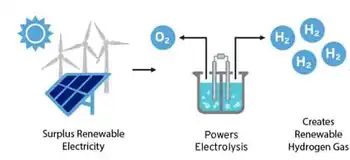
Updated Germany hydrogen strategy sees heavy reliance on imported fuel
Germany Hydrogen Import Strategy outlines reliance on green hydrogen imports, expanded electrolysis capacity, IPCEI-funded pipelines,…
View more
Sign Up for Electricity Forum’s Newsletter
Stay informed with our FREE Newsletter — get the latest news, breakthrough technologies, and expert insights, delivered straight to your inbox.
Electricity Today T&D Magazine Subscribe for FREE

Stay informed with the latest T&D policies and technologies.
- Timely insights from industry experts
- Practical solutions T&D engineers
- Free access to every issue
