Substation Relay Protection Training
Our customized live online or in‑person group training can be delivered to your staff at your location.
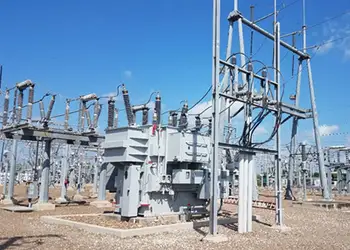
- Live Online
- 12 hours Instructor-led
- Group Training Available
Regular Price:
$699
Coupon Price:
$599
In what could be a massive review of power companies' storm performance, the staff of the Public Service Commission is calling for an in-depth study on whether the utilities need to redesign their facilities to better withstand hurricane winds.
In a memo, the staffers wondered whether higher construction standards should be required. If so, the expenses of upgrading the system will be paid for by customers, they suggested.
FPL spokesman Mayco Villafana said, "We would certainly be willing to participate in such a study group or workshop if the commission chooses to initiate such an effort."
The proposal was greeted with skeptical approval by Linda Quick, president of the South Florida Hospital and Healthcare Association, whose members spent $52.6 million on electricity last year.
After Andrew in 1992, Quick said, state regulators, without any hearings, insisted hospitals be "hardened" to withstand strong hurricanes. "Those costs were shouldered by the hospitals. We couldn't pass them along to Medicare or Medicaid or private insurers.
"We have no objection that the power industry do the same thing," Quick said, "but they ought to understand they will have to do it at their expense, not ours."
Among the areas of major concern: A renewed examination of burying lines in areas most prone to outages and questions about substations, whose failure during Wilma was a prime cause of the outages that darkened 3.2 million homes and businesses.
The PSC staff is urging the look because of experts' expectation that "Florida is likely to experience many more years of multiple hurricane seasons like 2004 and 2005," two staffers wrote in a memo to Executive Director Mary Andrews Bane.
"Staff recommends that the commission initiate a proceeding to explore options for designing and building electric facilities which will minimize long term outages and reduce restoration costs," wrote Robert Trapp, deputy director of the division of economic regulation, and Connie S. Kummer, chief of certification and tariffs.
The two recommended first a workshop to examine the issues and then, if warranted, a full-blown hearing in front of the commission.
A major question is whether to require higher wind resistance standards, perhaps in all new construction, perhaps in those areas most likely to get damaging winds.
If that standard were to be raised, the staff suggested the costs could be paid by "a general surcharge on all customers" or a regional surcharge, based either on facilities installed or based on those areas most likely to be damaged.
Among other possible discussion subjects:
- What did the power companies learn from the four 2004 hurricanes that hit Florida and to what extent did they did they make changes in their construction practices in 2005?
- What studies have utilities conducted to protect substations from not only wind, but also water and flying debris?
During Wilma, FPL saw 241 substations go down, including virtually all of them in Broward and more than half in Miami-Dade. FPL officials attributed their outages to flying debris, which sailed into the complex structures, most of which are protected only by metal-mesh fences.
While burying lines has come up repeatedly after past storms, the staff now is asking specific questions: How did areas with underground lines do compared to those with overhead service?
During Wilma, for example, FPL reported that Weston, where most lines were underground, was without electricity only briefly. But utility officials pointed out that Wilma was a relatively dry hurricane and underground lines can be a problem when there is heavy rain and flooding.
The memo also asked whether the utilities should be required to identify "underground zones" that might be best protected from storms if lines were buried.
Another possibility: Whether FPL should pay for burying lines and then recover the cost by a surcharge applied to customers' bills.
As it stands now, FPL will bury a neighborhood's lines, but each homeowner must pay for the process up front - a cost that could run $7,000 to $15,000.
In another development, the Stanford Washington Research Group reported a "prevailing consensus" in the U.S. Senate that private utilities should get tax relief for hurricane damages.
The Senate bill, expected to be enacted by Christmas, concentrates on Entergy, which has declared bankruptcy at its New Orleans facility. Stanford analyst Christine Tezak said she hadn't seen any support for outright grants of money to utilities, but many senators were leaning toward some kind of tax relief.
FPL spokesman Villafana said, "We are not asking for hurricane relief. However, if the federal government decides to provide recovery costs to the Gulf Coast utilities damaged by Katrina and Wilma, we feel that Florida utilities should be provided the same consideration."
Related News
Construction starts on disputed $1B electricity corridor
New England Clean Energy Connect advances despite court delays, installing steel poles on a Maine…
View more
Ontario to seek new wind, solar power to help ease coming electricity supply crunch
Ontario Clean Grid Plan outlines emissions-free electricity growth, renewable energy procurement, nuclear expansion at Bruce…
View more
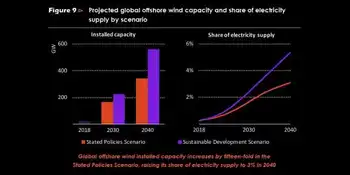
Offshore wind is set to become a $1 trillion business
Offshore wind power accelerates low-carbon electrification, leveraging floating turbines, high capacity factors, HVDC transmission, and…
View more
IEA praises Modi govt for taking electricity to every village; calls India 'star performer'
India Village Electrification hailed by the IEA in World Energy Outlook 2018 showcases rapid energy…
View more
BC Hydro activates "winter payment plan"
BC Hydro Winter Payment Plan lets customers spread electricity bills over six months during cold…
View more
US NRC issues final safety evaluation for NuScale SMR
NuScale SMR Design Certification marks NRC Phase 6 FSER approval, validating small modular reactor safety…
View more
Sign Up for Electricity Forum’s Newsletter
Stay informed with our FREE Newsletter — get the latest news, breakthrough technologies, and expert insights, delivered straight to your inbox.
Electricity Today T&D Magazine Subscribe for FREE

Stay informed with the latest T&D policies and technologies.
- Timely insights from industry experts
- Practical solutions T&D engineers
- Free access to every issue
