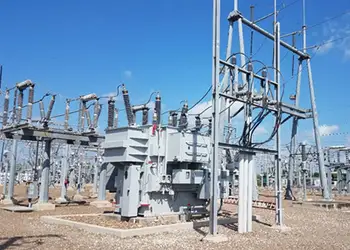
Substation Relay Protection Training
Our customized live online or in‑person group training can be delivered to your staff at your location.
- Live Online
- 12 hours Instructor-led
- Group Training Available
Regular Price:
$699
Coupon Price:
$599
Freezing the price of electricity at 4.3 cents a kilowatt hour for householders and small businesses cost $100 million more during the first year than originally estimated, according to new figures from the Independent Electricity Market Operator.
The IMO had originally said the price freeze cost $614 million in the first year. Recently, the IMO said the cost was $730 million to April 30 this year, and has increased since then.
The figures came on the same day that Ontario's new energy minister, Dwight Duncan, repeated the Liberal pledge of bringing in a regulated power price, but one "that will have to adapt to reflect market reality."
The Liberals promised during the election campaign to maintain the price freeze until 2006. Now they say it's too expensive.
Former provincial auditor Erik Peters pointed to the cost of the electricity price freeze as a factor in Ontario's ballooning budget deficit, projected to hit $5.6 billion.
Former Conservative premier Ernie Eves froze the price of power for consumers and small businesses at 4.3 cents a kilowatt hour, effective May 1, 2002. Generators continued to receive the full price of power set by the wholesale market, however. That price averaged 6.2 cents a kilowatt hour, and taxpayers were left on the hook to make up the difference.
Duncan also acknowledged recently that all parts of the electricity bill are being reviewed, and could increase. The frozen energy price makes up only half the total hydro bill. The rest is composed of rates charged by Hydro One and local hydro utilities, plus administrative charges.
Most of those costs are regulated by the energy board, but their rates were frozen by Eves.
IMO spokesperson Terry Young said the difference came from more refined calculations on a rebate paid by Ontario Power Generation, which produces more than 60 per cent of the province's power. Because of its market dominance, OPG is required to refund a portion of the revenue it collects.
That rebate offsets the cost of the price freeze, but Young said the rebate turned out to be somewhat lower than anticipated when the final, detailed calculations were made based on a complicated formula.
The cost of the price freeze to taxpayers had risen to $830 million by the end of July, Young said. Final figures aren't in, but it could well be more than $900 million as of Oct. 31.
Premier Dalton McGuinty has given Duncan a month to come up with an alternative to the current freeze.
Recently, Duncan outlined some vague principles, but wouldn't reveal specifics.
The price will "better reflect the true cost" of power, but will be stable, predictable and regulated, Duncan said.
That means prices will almost certainly rise, but Duncan said the province can't afford to spend so much on electricity when it needs the money for health care and schools.
The regulator will be an "independent body," but Duncan wouldn't say what it would be. Duncan also axed Peter Budd as chair of a task force on electricity supply and conservation. Budd, an energy lawyer, had been quoted saying at a Calgary conference the province needs to reconsider plans to shut coal-fired generating stations.
The Liberals have promised to close the coal plants by 2007, though they've recently hedged their position by saying they'll close the plants only when replacements are up and running. Budd couldn't be reached for comment.
Related News

Electricity blackouts spark protests in Iranian cities
Iran Power Outage Protests surge as electricity blackouts, drought, and a looming heat wave spark…
View more

EPA Policy to limit telework emerges during pandemic
EPA Telework Policy restricts remote work, balancing work-from-home guidance during the COVID-19 pandemic with flexible…
View more

Ontario introduces new fixed COVID-19 hydro rate
Ontario Electricity COVID-19 Recovery Rate sets a fixed price of 12.8 cents/kWh, replacing time-of-use billing…
View more

Europe's largest shore power plant opens
AIDAsol shore power Rostock-Warnemfcnde delivers cold ironing for cruise ships, up to 20 MVA at…
View more
Westinghouse AP1000 Nuclear Plant Breaks A First Refueling Outage Record
AP1000 Refueling Outage Record showcases Westinghouse nuclear power excellence as Sanmen Unit 2 completes its…
View more

How Alberta’s lithium-laced oil fields can fuel the electric vehicle revolution
Alberta Lithium Brine can power EV batteries via direct lithium extraction, leveraging oilfield infrastructure and…
View more
Sign Up for Electricity Forum’s Newsletter
Stay informed with our FREE Newsletter — get the latest news, breakthrough technologies, and expert insights, delivered straight to your inbox.
Electricity Today T&D Magazine Subscribe for FREE

Stay informed with the latest T&D policies and technologies.
- Timely insights from industry experts
- Practical solutions T&D engineers
- Free access to every issue
