NFPA 70E Training
Our customized live online or in‑person group training can be delivered to your staff at your location.

- Live Online
- 6 hours Instructor-led
- Group Training Available
Regular Price:
$199
Coupon Price:
$149
Welland Hydro is scrambling to respond to the decision by Premier Ernie Eves to issue hydro rebates and cap the kilowatt-per-hour cost of lighting Ontario homes.
Ross Peever, president and CEO of Welland Hydro Electric Corp., said the rate cap is good news for ratepayers who have been reeling from increased bills caused by a deregulated energy market that opened May 1, 2002.
Eves announced plans to cap wholesale electricity costs at 4.3 cents per kilowatt hour and issue $75 rebates to hydro customers by the end of 2002. Distribution rates will also be frozen until 2006.
The announcement will create "transition costs" borne by the utility, Peever said.
The cost of deregulation has already cost Welland Hydro $1.6 million in legal fees, computer upgrades and other associated costs.
"This has created a lot more work and cost us money we won't be able to recover," he said.
"Capital programs can't help but be impacted by all the extra costs."
Since deregulation, Welland Hydro has had to borrow from its reserves to pay for electricity. Distribution companies pay the Independent Market Operator (IMO) for all energy distributed in the area and receive payment from the customers 50 to 60 days later.
Wholesale power bills paid to the IMO were $3.2 million in August 2001 and $2.7 million in September 2001.
In August and September of this year -- the same billing period -- the cost of hydro from the IMO was $4.5 million and $5 million, respectively. Earned interest dropped by $40,000 in four months.
"We lose money that would have been earned in interest," Peever said.
He said rebates being offered to customers will provide some relief, but the larger concern is that generating capacity will not be there in the short-term.
The rate cap and rebate does little to wrestle down the province's "stranded debt" of about $3.8 billion, Peever said.
"I'm pleased the rate is frozen at 4.3 cents per kilowatt/hour because it provides some stability to customers. These spikes in power costs have really been hard on them."
Peever said "reliability" and system integrity are part of the complex hydro equation. As for distribution rates, Peever said Welland's $18.13 per 1,000 kilowatt/hours remains the lowest in the region. Being a not-for-profit supplier means no dividends are paid out to shareholders.
Related News
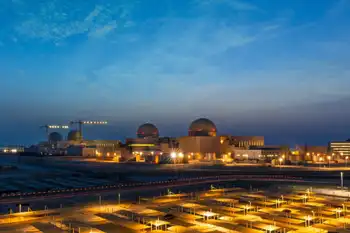
U.A.E. Becomes First Arab Nation to Open a Nuclear Power Plant
UAE Nuclear Power Plant launches the Barakah facility, delivering clean electricity to the Middle East…
View more
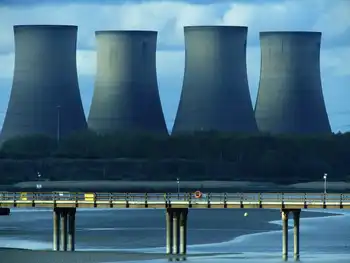
Germany - A needed nuclear option for climate change
Germany Nuclear Debate Amid Energy Crisis highlights nuclear power vs coal and natural gas, renewables…
View more
Hydro One shares jump 5.7 per cent after U.S. regulators reject $6.7B takeover
Hydro One Avista takeover rejection signals Washington regulators blocking a utility acquisition over governance risk,…
View more

California avoids widespread rolling blackouts as heat strains power grid
California Heat Wave Grid Emergency sees CAISO issue Stage 3 alerts as record demand, extreme…
View more
Closure of 3 Southern California power plants likely to be postponed
California Gas Plant Extensions keep Ormond Beach, AES Alamitos, and Huntington Beach on standby for…
View more

Shocking scam: fraudster pretending to be from BC Hydro attempts to extort business
BC Hydro Bitcoin Scam targets small businesses with utility impersonation, call spoofing, and disconnection threats,…
View more
Sign Up for Electricity Forum’s Newsletter
Stay informed with our FREE Newsletter — get the latest news, breakthrough technologies, and expert insights, delivered straight to your inbox.
Electricity Today T&D Magazine Subscribe for FREE

Stay informed with the latest T&D policies and technologies.
- Timely insights from industry experts
- Practical solutions T&D engineers
- Free access to every issue
