Protective Relay Training - Basic
Our customized live online or in‑person group training can be delivered to your staff at your location.

- Live Online
- 12 hours Instructor-led
- Group Training Available
Regular Price:
$699
Coupon Price:
$599
The nuclear industry took steps to head off a growing public relations - if not health - problem, promising to closely monitor leaks of slightly radioactive water into groundwater at power plants.
The issue has become particularly troublesome in Illinois where three power plants reported leaks of tritium into groundwater, including one case where 6 million gallons was released into soil outside the plant boundary.
While the levels of contamination have been well below the health standards, the Nuclear Regulatory Commission has formed a task force to examine the extent of such releases and why they are happening.
In a meeting with NRC staff, the Nuclear Energy Institute, the industry's trade group, said it was beginning a voluntary program to closely monitor such leaks and inform state and local officials as well as the NRC when they occur even within plant boundaries.
The industry is required to make such notifications only when there are offsite releases.
"The objectives of the initiative are one to improve the management of inadvertent radiological releases into groundwater and two to enhance trust and confidence on the part of local communities, states, the NRC and the public," said Ralph Andersen, the NEI's chief health physicist.
There have been releases of water containing tritium into groundwater at a half dozen plants over the last decade, including the three in Illinois, where the state has sued Exelon Corp., for violating state environmental laws because of the releases.
Groundwater contamination on plant sites also has been reported at reactors in Arizona, California, Connecticut, Florida and New York, according to the Union of Concerned Scientists, a nuclear industry watchdog group.
Tritium, which can cause cancer with significant exposure, is a normal product of a nuclear reactor. The releases - except for one at Exelon's Braidwood reactor in Illinois - have been kept within plant boundaries. All are reported to have been below the federal health standard of 4 millirems for groundwater.
Some of the leaks went undetected for as long as 12 years. They generally have occurred because of leaks in pipes or in some cases from pools in which spent reactor fuel rods are kept.
Sen. Barack Obama, D-Ill., called the industry action "encouraging" but said such monitoring and informing the state and local officials as well as the public "shouldn't just be a courtesy. It should be the law."
He said he was pursuing legislation that would require disclosure of tritium leaks into groundwater and impose penalties on plant operators that fail to do so.
Andersen said that while the industry initiative is voluntary, all owners of power plants agreed to "a binding commitment" to participate in the program.
Under the new policy, plant operators will establish an action plan "to assure timely detection" of such releases, submit reports to the NRC on groundwater samples within plant boundaries and inform state and local officials groundwater leaks if they exceed certain levels.
"Even though radioisotopes have not been detected off site at levels that would jeopardize public health, the industry should adopt a higher standard of excellence in radiation protection that goes beyond what NRC regulations required," said Andersen.
"When inadvertent radiological releases in groundwater occur at levels that do not require formal reporting, we should inform local and state leaders and the public as a matter of openness and transparency."
David Lochbaum, director of the nuclear safety project at the Union of Concerned Scientists, praised the industry's commitment to look more closely for leaks, including possibly drilling wells within site boundaries to test groundwater.
He said the reporting was important, but, "if you're not looking for problems, you don't have anything to tell anybody."
Before the creation of the recent NRC task force, the agency "has been treating the leaks as isolated events. But seven events in 10 years suggests a trend rather than a series of isolated events," said Lochbaum.
Related News
BC Hydro electricity demand down 10% amid COVID-19 pandemic
BC Hydro electricity demand decline reflects COVID-19 impacts across British Columbia, with reduced industrial load,…
View more
TotalEnergies to Acquire German Renewables Developer VSB for US$1.65 Billion
TotalEnergies VSB Acquisition accelerates renewable energy growth, expanding wind and solar portfolios across Germany and…
View more
Tornadoes and More: What Spring Can Bring to the Power Grid
Spring Storm Grid Risks highlight tornado outbreaks, flooding, power outages, and transmission disruptions, with NOAA…
View more
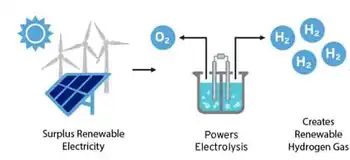
Updated Germany hydrogen strategy sees heavy reliance on imported fuel
Germany Hydrogen Import Strategy outlines reliance on green hydrogen imports, expanded electrolysis capacity, IPCEI-funded pipelines,…
View more
Attacks on power substations are growing. Why is the electric grid so hard to protect?
Power Grid Attacks surge across substations and transmission lines, straining critical infrastructure as DHS and…
View more

City of Vancouver named Clean Energy Champion for Bloedel upgrades
BC Hydro Clean Energy Champions highlights Vancouver's Bloedel Conservatory electrification with a massive heat pump,…
View more
Sign Up for Electricity Forum’s Newsletter
Stay informed with our FREE Newsletter — get the latest news, breakthrough technologies, and expert insights, delivered straight to your inbox.
Electricity Today T&D Magazine Subscribe for FREE

Stay informed with the latest T&D policies and technologies.
- Timely insights from industry experts
- Practical solutions T&D engineers
- Free access to every issue

