NFPA 70b Training - Electrical Maintenance
Our customized live online or in‑person group training can be delivered to your staff at your location.

- Live Online
- 12 hours Instructor-led
- Group Training Available
Regular Price:
$699
Coupon Price:
$599
A national study released today found that in the absence of federal leadership, 19 states have acted to increase the nation's supply of wind, solar and other renewable energy resources, but that only five states account for 80 percent of the projected gains. California and Nevada led the nation with grades of A- for committing to increase the amount of electricity generated from clean, renewable energy sources. However, 34 states received a failing grade for failing to tap-into the jobs, public health gains and reduced air and water pollution that homegrown renewable electricity could provide.
"Renewable electricity can provide future generations with safe and cost-effective domestic energy sources," said Jeff Deyette, UCS analyst and co-author of the new report, Plugging in Renewable Energy: Grading the States. "But only five states are carrying the ball for the entire nation. It is time for the federal government to enact a fair national standard to improve our country's energy security and environment."
The nation's electricity generation is dominated by large fossil-fuel burning power plants that put public health and safety at risk. More than 90 percent of electricity generated in the United States comes from fossil fuel and nuclear power -- energy sources that also endanger our environment through mining, refining, waste disposal and vulnerable delivery systems.
The new UCS study assigns grades to each of the 50 states based on the individual states' commitment to renewable electricity through the projected results of renewable electricity standards for electric companies and dedicated renewable electricity funds. Current state renewable energy generation is also considered. The report finds that California, Nevada, Texas, Massachusetts and New Mexico account for nearly 80 percent of the nation's projected renewable gains.
"By neglecting renewable electricity, most states are missing out on jobs and economic development, cleaner air and water, and a more secure energy supply," Deyette said. "But the nation is the biggest loser, by leaving renewable electricity development to states and voluntary utility programs. Fortunately, the federal government has a chance to catch up with leading states as the Senate begins debating national energy legislation."
UCS projects that the 19 states that have enacted renewable electricity standards or funds will increase total U.S. renewable energy capacity by 113 percent by 2017. This increase will provide enough electricity for 10.4 million typical homes and eliminate as much carbon dioxide -- the main heat-trapping gas causing global warming -- as taking 7.4 million cars off the road.
The tremendous disparity in state programs and failing grades for 34 states illustrates the need for a national renewable electricity standard. By setting a minimum requirement on which state standards and voluntary programs could build, a national standard would prove more equitable and would lead to much higher, cost-effective levels of renewable electricity generation. Studies by the federal government and UCS have shown that a national standard of 20 percent by 2020 is feasible and affordable. Senators James Jeffords (I-VT) and Jeff Bingaman (D-NM) are expected to introduce amendments establishing a national renewable electricity standard as part of the energy bill. For a copy of the full report, see www.ucsusa.org.
Related News

Kenney holds the power as electricity sector faces profound change
Alberta Electricity Market Reform reshapes policy under the UCP, weighing a capacity market versus energy-only…
View more
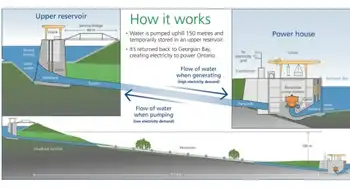
Multi-billion-dollar hydro generation project proposed for Meaford military base
Meaford Pumped Storage Project aims to balance the grid with hydro-electric generation, a hilltop reservoir,…
View more
Electricity prices rise more than double EU average in first half of 2021
Estonia energy prices 2021 show sharp electricity hikes versus the EU average, mixed natural gas…
View more

UK Renewable Energy Auction: Boost for Wind and Tidal Power
UK Wind and Tidal Power Auction signals strong CfD support for offshore wind, tidal stream…
View more
Brenmiller Energy and New York Power Authority Showcase Thermal Storage Success
bGen Thermal Energy Storage stores high-temperature heat in crushed rocks, enabling on-demand steam, hot water,…
View more
Ontario Breaks Ground on First Small Modular Nuclear Reactor
Ontario SMR BWRX-300 leads Canada in next-gen nuclear energy at Darlington, with GE Vernova and…
View more
Sign Up for Electricity Forum’s Newsletter
Stay informed with our FREE Newsletter — get the latest news, breakthrough technologies, and expert insights, delivered straight to your inbox.
Electricity Today T&D Magazine Subscribe for FREE

Stay informed with the latest T&D policies and technologies.
- Timely insights from industry experts
- Practical solutions T&D engineers
- Free access to every issue

