Hydro-Quebec impact spurs Maine debate

By istock Analyst


Electrical Testing & Commissioning of Power Systems

Our customized live online or in‑person group training can be delivered to your staff at your location.
  • Live Online
  • 12 hours Instructor-led
  • Group Training Available
Regular Price:
$599
Coupon Price:
$499
Reserve Your Seat Today
A massive energy source in Canada is casting a long shadow over legislation in Maine to determine the future course of power transmission through the state.

The source is Hydro-Quebec, a utility owned by the provincial government, which is trying to obtain the generation capacity of its counterpart provincial utility in New Brunswick, New Brunswick Power.

Hydro-Quebec's purchase has lingered over discussion during legislative hearings on L.D. 1786, a bill that would steer energy transmission corridors to designated state-owned land, giving the state oversight to ensure how the projects would benefit Maine.

With access to New Brunswick's grid, Hydro-Quebec could be poised to build a corridor across the border into Maine and flood the state and regional U.S. markets with subsidized hydroelectric power, several lawmakers have said.

Hydro-Quebec now produces 41,000 megawatts of energy, even before considering the capacity of New Brunswick power, which produces 4,000 megawatts from nuclear, hydroelectric, coal, oil and diesel sources. This production dwarfs Maine's current energy demand of 2,200 megawatts and production capacity of about 3,400 megawatts.

By 2015, 4,000 megawatts of Hydro-Quebec's capacity will come from wind power. New Brunswick Power is also expanding its wind capacity.

During hearings on the corridor bill, Rep. Ken Fletcher, R-Winslow, raised concerns that Hydro-Quebec's current energy exports — which were only 8 percent of its production in 2008 — produced almost one-third of its profits that year.

"Isn't it reasonable for them to expect that they could send their 4,000 megawatts of wind and combine it with their hydro, and probably control the market?" said Fletcher, a member of the Legislature's Utilities and Energy Committee.

Some state officials, however, don't see Hydro-Quebec's growing capacity as a problem — they see it as a solution.

John Kerry, the director of the Office of Energy Independence and Security, said steady Canadian hydroelectric capacity could balance Maine's production of wind energy.

"I think we should work collaboratively with our Canadian neighbors," Kerry said in an interview. "I underscore that we should do it at arm's length and be prudent, but we should see it as an opportunity."

For its part, Hydro-Quebec said that its wind capacity, aside from about 150 megawatts for Massachusetts and Connecticut, is for Quebec consumption, and hydroelectric power like that in Hydro-Quebec's portfolio does not qualify for valuable renewable energy certificates, or RECs, traded in New England.

"The wind developers or the solar developers in New England should not fear the presence of Hydro-Quebec in the market, because we are not going after the REC market," said Christian Brosseau, president of Hydro-Quebec US.

Furthermore, Brosseau said, Hydro-Quebec would not undercut the electricity market in the northeastern U.S. with cheap hydroelectricity, because it would sell at the marginal wholesale rate.

The corridor bill being considered, however, would allow the company to tap into the Maine grid and potentially the larger, lucrative regional market if it entered into a long-term contract favorable to Maine ratepayers and industry.

"Anything that makes sense we'll look at seriously but there's no commitment that yes we will be building certainly in the next 10 years in Maine," Brosseau said. "But we will be looking at it."

Lawmakers are again scheduled to review the corridor legislation in a work session at Burton M. Cross building in Augusta, across from the State House.

Related News

Seattle Apartment Fire Caused by Overheated Power Strip

Seattle Capitol Hill Apartment Fire highlights an electrical fire from an overheated power strip, a two-alarm response by 70 firefighters, safe evacuation, displaced resident aid, and prevention tips like smoke detectors and load limits.


Key Points

Two-alarm early-morning blaze in Seattle traced to an overheated power strip, displacing one resident and injuring none.

✅ Origin: overheated power strip ignited nearby combustibles

✅ Response: 70 firefighters, two-alarm, rapid containment

✅ Safety: avoid overloads; inspect cords; use smoke detectors


An early-morning fire in Seattle’s Capitol Hill neighborhood severely damaged a three-story apartment building, displacing one resident. The blaze, which broke out around 4:34 a.m. on a Friday, drew more than 70 firefighters to the scene, as other critical sectors have implemented on-site staffing during outbreaks to maintain operations, and was later traced to an overheated power strip.

The Fire Incident

The Seattle Fire Department responded to the fire, which had started on the second floor of the building in the 1800 block of 12th Avenue. Upon arrival, crews were met with heavy smoke and flames coming from one unit. The fire quickly spread to a unit on the third floor, prompting the Seattle Fire Department to escalate their response to a two-alarm fire due to its size and the potential threat to nearby structures.

Firefighters initially attempted to contain the blaze from the exterior before they moved inside the building to fully extinguish the fire. Thankfully, the fire was contained to the two affected units, preventing the destruction of the remaining seven apartments in the building.

All residents safely evacuated the building on their own. Despite the substantial damage to the two apartments, no injuries were reported. One resident was displaced by the fire and was assisted by the Red Cross in finding temporary accommodation.

Cause of the Fire

Investigators later determined that the fire was accidental, most likely caused by an overheated electrical power strip. The power strip had reportedly ignited nearby combustible materials, sparking the flames that quickly spread throughout the unit. Although the exact details are still under investigation, the fire serves as a stark reminder of the potential risks associated with overloaded or damaged electrical equipment and how electrical safety knowledge gaps can contribute to incidents.

The Risks of Power Strips

Power strips, while essential for providing multiple outlets, can pose a serious fire hazard if used improperly, and specialized arc flash training in Vancouver underscores the importance of understanding electrical hazards across settings.

This fire in Seattle highlights the importance of maintaining electrical devices and following proper usage guidelines. According to experts, it is crucial to regularly inspect power strips for any visible damage, such as frayed cords or scorch marks, and to replace them if necessary. It's also advisable to avoid using power strips with high-power appliances like space heaters, microwaves, or refrigerators.

Impact and Community Response

The fire has raised awareness about the dangers of electrical hazards in residential buildings, especially in older apartment complexes where wiring systems may not be up to modern standards. Local authorities and fire safety experts are urging residents to review safety guidelines and ensure that their living spaces are free from potential fire hazards and to avoid dangerous stunts at dams and towers that can lead to serious injuries.

Seattle's fire department, which responded to this incident, continues to emphasize fire prevention and safety education. This event also highlights the importance of having working smoke detectors and clear escape routes in apartment buildings, and ongoing fire alarm training can improve system reliability. The Seattle Fire Department recommends that all tenants know the locations of fire exits and practice safe evacuation procedures, especially in high-rise or multi-unit buildings.

Additionally, the Red Cross has stepped in to assist the displaced resident. The organization provides temporary shelter, food, and financial aid for those affected by disasters like fires. The fire underscores the importance of having emergency preparedness plans in place and the need for immediate relief for those who lose their homes in such incidents.

The Seattle apartment fire, which displaced one resident and caused significant damage to two units, serves as a reminder of the potential dangers associated with improperly maintained or overloaded electrical devices, especially power strips, and how industry recognition, such as a utility safety award, reinforces best practices. While the cause of this fire was linked to an overheated power strip, it could have easily been prevented with regular inspections and safer practices.

As fire departments continue to respond to similar incidents, it is critical for residents to stay informed about fire safety, particularly regarding electrical equipment and outdoor hazards like safety near downed power lines in storm conditions. Awareness, proper maintenance, and following safety protocols can significantly reduce the risk of electrical fires and help protect residents from harm.


Related News

View more

Electrifying Manitoba: How hydro power 'absolutely revolutionized' the province

Manitoba Electrification History charts arc lights, hydroelectric dams, Winnipeg utilities, transmission lines, rural electrification, and Manitoba Hydro to today's wind, solar, and EV transition across the provincial power grid, driving modernization and reliability.


Key Points

Manitoba's power evolution from arc lights to hydro and rural electrification, advancing wind and solar on a modern grid.

✅ 1873 Winnipeg arc light predates Edison and Bell.

✅ 1919 Act built transmission lines, rural electrification.

✅ Hydroelectric dams reshaped lands and affected First Nations.


The first electric light in Manitoba was turned on in Winnipeg in 1873, but it was a century ago this year that the switch was flipped on a decision that would bring power to the fingertips of people across the province.

On March 12, 1873, Robert Davis — who owned the Davis House hotel on Main Street, about a block from Portage Avenue — used an electric arc light to illuminate the front of his building, according to A History of Electric Power in Manitoba, published by Manitoba Hydro.

That type of light used an an inert gas in a glass container to create an electric arc between two metal electrodes.

"The lamp in front of the Davis Hotel is quite an institution," a Manitoba Free Press report from the day said. "It looks well and guides the weary traveller to a haven of rest, billiards and hot drinks."

A ladder crew from the Winnipeg Electric Street Railway Company working on an electric trolley line in 1905. (I.F. Allen/Manitoba Hydro archives)

The event took place six years before Thomas Edison's first incandescent lamp was invented and three years before the first complete sentence was spoken over the telephone by Alexander Graham Bell.

"Electrification probably had a bigger influence on the lives of Manitobans than virtually anything else," said Gordon Goldsborough, head researcher with the Manitoba Historical Society.

"It's one of the most significant changes in the lives of Manitobans ever, because basically it transformed so many aspects of their lives. It wasn't just one thing — it touched pretty much every aspect of life."


Winnipeg gets its 1st street lamps

In the pioneer days of lighting and street railway transportation in Winnipeg, multiple companies formed in an effort to take advantage of the new utility: Winnipeg Gas Company, Winnipeg General Power Company, Manitoba Electric and Gas Light Company, and The North West Electric Light and Power Company.

In October 1882, the first four street lamps, using electric arc lights, were turned on along Main Street from Broadway to the CPR crossing over the Assiniboine River.

They were installed privately by P.V. Carroll, who came from New York to establish the Manitoba Electric Light & Power Company and try to win a contract for illuminating the rest of the city's streets.

He didn't get it. Newspaper reports from the time noted many outages and other problems and general disappointment in the quality of the light.

Instead, the North West Electric Light and Power Company won that contract and in June 1883 it lit up the streets.

Workers erect a wooden hydro pole beside the Belmont Hotel in 1936. Belmont is a small community southeast of Brandon. (Manitoba Hydro archives)

Over the years, other companies would bring power to the city as it became more reliable, including the Winnipeg Electric Street Railway Company (WERCo), which built the streetcar system and sold electric heat, light and power.

But it was the Brandon Electric Light Company that first tapped into a new source of power — hydro. In 1900, a dam was built across the Minnedosa River (now known as the Little Saskatchewan River) in western Manitoba, and the province's first hydroelectric generating station was created.

The first transmission line was also built, connecting the station with Brandon.

By 1906, WERCo had taken over the Winnipeg General Power Company and the Manitoba Electric and Gas Light Company, and changed its name to the Winnipeg Electric Railway Company. Later, it became the Winnipeg Electric Company, or WECo.

It also took a cue from Brandon, building a hydroelectric plant to provide more power. The Pinawa dam site operated until 1951 and is now a provincial park.

The Minnedosa River plant was the first hydroelectric generating station in Manitoba. (Manitoba Hydro archives)

The City of Winnipeg Hydroelectric System was also formed in 1906 as a public utility to combat the growing power monopoly held by WECo, and to get cheaper power. The city had been buying its supply from the private company "and the City of Winnipeg didn't quite like that price," said Bruce Owen, spokesman for Manitoba Hydro.

So the city funded and built its own dam and generating station site on the Winnipeg River in Pointe du Bois — about 125 kilometres northeast of Winnipeg — which is still in operation today.

"All of a sudden, not only did we have street lights … businesses had lights, power was supplied to homes, people no longer had to cook on wood stoves or walk around with kerosene lanterns. This city took off," said Owen.

"It helped industry grow in the city of Winnipeg. Within a few short years, a second plant had to be built, at Slave Falls."


Lighting up rural Manitoba

While the province's two biggest cities enjoyed the luxury of electricity and the conveniences it brought, the patchwork of power suppliers had also created a jumble of contracts with differing rates and terms, spurring periodic calls for a western Canadian electricity grid to improve coordination.

Meanwhile, most of rural Manitoba remained in the dark.

The Pinawa Dam was built by the Winnipeg Electric Street Railway Company in 1906 and operated until 1951. (Manitoba Hydro archives)

The Pinawa Dam site now, looking like some old Roman ruins. (Darren Bernhardt/CBC)

That began to change in 1919 when the Manitoba government passed the Electric Power Transmission Act, with the aim of supplying rural Manitoba with electrical power. The act enabled the construction of transmission lines to carry electricity from the Winnipeg River generating stations to communities all over southern Manitoba.

It also created the Manitoba Power Commission, predecessor to today's Manitoba Hydro, to purchase power from the City of Winnipeg — and later WECo — to supply to those other communities.

The first transmission line, a 97-kilometre link between Winnipeg and Portage la Prairie, opened in late 1919, and modern interprovincial projects like Manitoba-Saskatchewan power line funding continue that legacy today. The power came from Pointe du Bois to a Winnipeg converter station that still stands at the corner of Stafford Street and Scotland Avenue, then went on to Portage la Prairie.

"That's the remarkable thing that started in 1919," said Goldsborough.

Every year after that, the list of towns connected to the power grid became longer "and gradually, over the early 20th century, the province became electrified," Goldsborough said.

"You'd see these maps that would spider out across the province showing the [lines] that connected each of these communities — a precursor to ideas like macrogrids — to each other, and it was really quite remarkable."

By 1928, 33 towns were connected to the Manitoba Power Commission grid. That rose to 44 by 1930 and 140 by 1939, according to the Manitoba Historical Society.


Power on the farm

Still, one group who could greatly use electricity for their operations — farmers — were still using lanterns, steam and coal for light, heat and power.

"The power that came to the [nearest] town didn't extend to them," said Goldsborough.

It was during the Second World War, as manual labour was hard to come by on farms, that the Manitoba Power Commission recognized the gap in its grid.

It met with farmers to explain the benefits electricity could bring and surveyed their interest. When the war ended in 1945, the farm electrification process got underway.

Employees, their spouses, and children pose for a photo outside of Great Falls generating station in 1923. (Manitoba Hydro archives)

Farmers were taught wiring techniques and about the use of motors for farm equipment, as well as about electric appliances and other devices to ease the burden of domestic life.

"The electrification of the 1940s and '50s absolutely revolutionized rural life," said Goldsborough.

"Farmers had to provide water for all those animals and in a lot of cases [prior to electrification] they would just use a hand pump, or sometimes they'd have a windmill. But these were devices that weren't especially reliable and they weren't high capacity."

Electric motors changed everything, from pumping water to handling grain, while electric heat provided comfort to both people and animals.

Workers build a hydro transmission line tower in an undated photo from Manitoba Hydro. (Manitoba Hydro archives)

"Now you could have heat lamps for your baby chickens. They would lose a lot of chickens normally, because they would simply be too cold," Goldsborough said.

Keeping things warm was important, but so too was refrigeration. In addition to being able to store meat in summer, it was "something to prolong the life of dairy products, eggs, anything," said Manitoba Hydro's Owen.

"It's all the things we take for granted — a flick of a switch to turn the lights on instead of walking around with a lantern, being able to have maybe a bit longer day to do routine work because you have light."

Agriculture was the backbone of the province but it was limited without electricity, said Owen.

Connecting it to the grid "brought it into the modern age and truly kick-started it to make it a viable part of our economy," he said. "And we still see that today."

In 1954, when the farm electrification program ended, Manitoba was the most wired of the western provinces, with 75 per cent of farms and 100,000 customers connected.

The success of the farm electrification program, combined with the post-war boom, brought new challenges, as the existing power generation could not support the new demand.

The three largest players — City Hydro, WECo and the Manitoba Power Commission, along with the provincial government  — created the Manitoba Hydro-Electric Board in 1949 to co-ordinate generation and distribution of power.

A float in a Second World War victory parade represents a hydroelectric dam and the electricity it generates to power cities. (Manitoba Hydro archives)

More hydroelectric generating stations were built and more reorganizations took place. WECo was absorbed by the board and its assets split into separate companies — Greater Winnipeg Gas and Greater Winnipeg Transit.

Its electricity distribution properties were sold to City Hydro, which became the sole distributor in central Winnipeg. The Manitoba Power Commission became sole distributor of electricity in the suburbs and the rest of Manitoba.


Impacts on First Nations

Even as the lives of many people in the province were made easier by the supply of electricity, many others suffered from negative impacts in the rush of progress.

Many First Nations were displaced by hydro dams, which flooded their ancestral lands and destroyed their traditional ways of life.

"And we hear stories about the potential abuses that occurred," said Goldsborough. "So you know, there are there pluses but there are definitely minuses."

In the late 1950s, the Manitoba Power Commission continued to grow and expand its reach, this time moving into the north by buying up private utilities in The Pas and Cranberry Portage.

In 1961, the provincial government merged the commission with the Manitoba Hydro-Electric Board to create Manitoba Hydro.

In 1973, 100 years after the first light went on at that Main Street hotel, the last of the independent power utilities in the province — the Northern Manitoba Power Company Ltd. — was taken over by Hydro.

Winnipeg Hydro, previously called City Hydro, joined the fold in 2002.

Today, Manitoba Hydro operates 15 generating stations and serves 580,262 electric power customers in the province, as well as 281,990 natural gas customers.


New era

And now, as happened in 1919, a new era in electricity distribution is emerging as alternative sources of power — wind and solar — grow in popularity, and as communities like Fort Frances explore integrated microgrids for resilience.

"There's a bit of a clean energy shift happening," said Owen, adding use of biomass energy — energy production from plant or animal material — is also expanding.

"And there's a technological change going on and that's the electrification of vehicles. There are only really several hundred [electric vehicles] in Manitoba on the streets right now. But we know at some point, with affordability and reliability, there'll be a switch over and the gas-powered internal combustion engine will start to disappear."

'We're just a little behind here': Manitoba electric vehicle owners call for more charging stations

That means electrical utilities around the world are re-examining their capabilities, as climate change increasingly stresses grids, said Owen.

"It's coming [and we need to know], are we in a position to meet it? What will be the demands on the system on a path to a net-zero grid by 2050 nationwide?" he said.

"It may not come in my lifetime, but it is coming."


Related News

View more

Alberta's Path to Clean Electricity

Alberta Clean Electricity Regulations face federal mandates and provincial autonomy, balancing greenhouse gas cuts, net-zero 2050 goals, and renewable energy adoption across wind, solar, and hydro, while protecting jobs and economic stability in energy communities.


Key Points

Rules to cut power emissions, boost renewables, and align Alberta with federal net-zero goals under federal mandates.

✅ Phases out coal and curbs greenhouse gas emissions

✅ Expands wind, solar, and hydro to diversify the grid

✅ Balances provincial autonomy with national climate targets


In a recent development, Alberta finds itself at a crossroads between provincial autonomy and federal mandates concerning federal clean electricity regulations that shape long-term planning. The province, known for its significant oil and gas industry, faces increasing pressure to align its energy policies with federal climate goals set by Ottawa.

The federal government, under the leadership of Environment Minister Steven Guilbeault, has proposed regulations aimed at reducing greenhouse gas emissions and transitioning towards a cleaner energy future that prioritizes clean grids and batteries across provinces. These regulations are part of Canada's broader commitment to combat climate change and achieve net-zero emissions by 2050.

The Federal Perspective

From Ottawa's standpoint, stringent regulations on Alberta's electricity sector are necessary to meet national climate targets. This includes measures to phase out coal-fired power plants and increase reliance on renewable energy sources such as wind, solar, and hydroelectric power. Minister Guilbeault emphasizes the importance of these regulations in mitigating Canada's carbon footprint and fostering sustainable development.

Alberta's Response

In contrast, Alberta has historically championed provincial autonomy in energy policy, leveraging its vast fossil fuel resources to drive economic growth. The province remains cautious about federal interventions that could potentially disrupt its energy sector, a cornerstone of its economy, especially amid changes to how electricity is produced and paid for now under discussion.

Premier Jason Kenney has expressed concerns over federal overreach, and his influence over electricity policy has shaped proposals in the legislature. He emphasizes the province's efforts in adopting cleaner technologies while balancing economic stability and environmental sustainability.

The Balancing Act

The challenge lies in finding a middle ground between federal imperatives and provincial priorities, as interprovincial disputes like B.C.'s export-restriction challenge complicate coordination. Alberta acknowledges the need to diversify its energy portfolio and reduce emissions but insists on preserving its jurisdiction over energy policy. The province has already made strides in renewable energy development, including investing in wind and solar projects alongside traditional energy sources.

Economic Implications

For Alberta, the transition to cleaner electricity carries significant economic implications as the electricity market heads for a reshuffle in the coming years. It entails navigating the complexities of energy transition, ensuring job retention, and fostering innovation in sustainable technologies. Critics argue that abrupt federal regulations could exacerbate economic hardships, particularly in communities reliant on the fossil fuel industry.

Moving Forward

As discussions continue between Alberta and Ottawa, finding common ground, including consideration of recent market change proposals from the province, remains essential. Collaborative efforts are necessary to develop tailored solutions that accommodate both environmental responsibilities and economic realities. This includes exploring incentives for renewable energy investment, supporting energy sector workers in transitioning to new industries, and leveraging Alberta's expertise in energy innovation.

Conclusion

Alberta's journey towards clean electricity regulation exemplifies the delicate balance between regional autonomy and federal oversight in Canada's complex federal system. While tensions persist between provincial and federal priorities, both levels of government share a common commitment to addressing climate change and advancing sustainable energy solutions.

The outcome of these negotiations will not only shape Alberta's energy landscape but also influence Canada's overall progress towards a greener future. Finding equitable solutions that respect provincial autonomy while achieving national environmental goals remains paramount in navigating this evolving policy landscape.


Related News

View more

New Orleans Levees Withstood Hurricane Ida as Electricity Failed

Hurricane Ida New Orleans Infrastructure faced a split outcome: levees and pumps protected against storm surge, while the power grid collapsed as transmission lines failed, prompting large-scale restoration efforts across Louisiana and Mississippi.


Key Points

It summarizes Ida's impact: levees and pumps held, but the power grid failed, causing outages and slow restoration.

✅ Levees and pumps mitigated flooding and storm surge impacts.

✅ All transmission lines failed, crippling the power grid.

✅ Crews and drones assess damage; restoration may take weeks.


Infrastructure in the city of New Orleans turned in a mixed performance against the fury of Hurricane Ida, with the levees and pumps warding off catastrophic flooding even as the electrical grid, part of the broader Louisiana power grid, failed spectacularly.

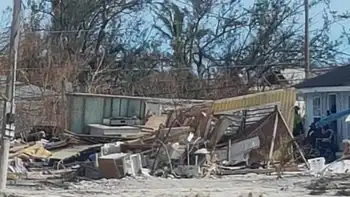
Ida’s high winds, measuring 150 miles (240 kilometers) an hour at landfall, took out all eight transmissions lines that deliver power into New Orleans, ripped power poles in half and crumpled at least one steel transmission tower into a twisted metal heap, knocking out electricity to all of the city. A total of more than 1.2 million homes and businesses in Louisiana and Mississippi lost power. While about 90,000 customers were reconnected by Monday afternoon, many could face days without electricity, and frustration can mount as seen during the Houston outage after major storms.

In contrast, the New Orleans area’s elaborate flood defenses seem to have held up, a vindication of the Army Corps of Engineers’ $14.5 billion project to rebuild levees, flood gates and pumps in the wake of the devastation wrought by Hurricane Katrina in 2005. While there were reports of scattered deaths tied to Ida, the city escaped the kind of flooding that destroyed entire neighborhoods in Katrina’s wake, left parts of the city uninhabitable for months and claimed 1,800 lives. 

“The situation in New Orleans, as bad as it is today with the power, could be so much worse,” Louisiana Governor John Bel Edwards said Monday on the Today Show, praising the levee system’s performance. “All you have to do is go back 16 years to get a glimpse of what that would have been like.”

While the levees’ resiliency is no doubt due to the rebuilding effort that followed Katrina, the starkly different outcomes also stems from the storms’ different characteristics. Katrina slammed the coast with a 30-foot storm surge of ocean water, while preliminary estimates from Ida put its surge far lower. 


Ida’s winds, however, were stronger than Katrina’s, and that’s what ultimately took out so many power lines, a dynamic that also saw Texas utilities struggle during Harvey. Deanna Rodriguez, the chief executive officer of power provider Entergy New Orleans, declined to comment on when service would be restored, saying the company was using helicopters and drones to help assess the damage.

Michael Webber, an energy and engineering professor at the University of Texas at Austin, estimated power restoration will take days and possibly weeks, a pattern seen in Florida restoration timelines after major hurricanes, based on the initial damage reports from the storm. More than 25,000 workers from at least 32 states and Washington are mobilized to assist with power restoration efforts, similar to FPL's massive response after Irma, according to the Edison Electric Institute.

“The question is, how long will it take to rebuild these lines,” Webber said. The utilities will first need to complete their damage assessments before they can get a sense of repair timelines, a step that Gulf Power crews have highlighted in past recoveries, he said. “You can imagine that will take days at least, possibly weeks.”

The loss of electricity will have other affects as well, and even though grid resilience during the pandemic was strong, local systems face immediate constraints. Sewer substations, for example, need electricity to keep wastewater moving, said Ghassan Korban, executive director of the New Orleans Sewerage & Water Board. The storm knocked out power to about 80 of the city’s 84 pumping stations, he said at a Monday press conference. “Without electricity, wastewater backs up and can cause overflows,” he said, adding that residents should conserve water to lessen stress on the system.


Related News

View more

Updated Germany hydrogen strategy sees heavy reliance on imported fuel

Germany Hydrogen Import Strategy outlines reliance on green hydrogen imports, expanded electrolysis capacity, IPCEI-funded pipelines, and industrial decarbonization for steel and chemicals to reach climate-neutral goals by 2045, meeting 2030 demand of 95-130 TWh.


Key Points

A plan to import 50-70% of hydrogen by 2030, backing green hydrogen, electrolysis, pipelines, and decarbonization.

✅ Imports cover 50-70% of 2030 hydrogen demand

✅ 10 GW electrolysis target with state aid and IPCEI

✅ 1,800 km H2 pipelines to link hubs by 2030


Germany will have to import up to 70% of its hydrogen demand in the future as Europe's largest economy aims to become climate-neutral by 2045, an updated government strategy published on Wednesday showed.

The German cabinet approved a new hydrogen strategy, setting guidelines for hydrogen production, transport infrastructure and market plans.

Germany is seeking to expand reliance on hydrogen as a future energy source to bolster energy resilience and cut greenhouse emissions for highly polluting industrial sectors that cannot be electrified such as steel and chemicals and cut dependency on imported fossil fuel.

Produced using solar and wind power, green hydrogen is a pillar of Berlin's plan to build a sustainable electric planet and transition away from fossil fuels.

But even with doubling the country's domestic electrolysis capacity target for 2030 to at least 10 gigawatts (GW), Germany will need to import around 50% to 70% of its hydrogen demand, forecast at 95 to 130 TWh in 2030, the strategy showed.

"A domestic supply that fully covers demand does not make economic sense or serve the transformation processes resulting from the energy transition and the broader global energy transition overall," the document said.

The strategy underscores the importance of diversifying future hydrogen sources, including potential partners such as Canada's clean hydrogen sector, but the government is working on a separate strategy for hydrogen imports whose exact date is not clear, a spokesperson for the economy ministry said.

"Instead of relying on domestic potential for the production of green hydrogen, the federal government's strategy is primarily aimed at imports by ship," Simone Peter, the head of Germany's renewable energy association, said.

Under the strategy, state aid is expected to be approved for around 2.5 GW of electrolysis projects in Germany this year and the government will earmark 700 million euros ($775 million) for hydrogen research to optimise production methods, research minister Bettina Stark-Watzinger said.

But Germany's limited renewable energy space will make it heavily dependent on imported hydrogen from emerging export hubs such as Abu Dhabi hydrogen exports gaining scale, experts say.

"Germany is a densely populated country. We simply need space for wind and photovoltaic to be able to produce the hydrogen," Philipp Heilmaier, an energy transition researcher at Germany energy agency, told Reuters.

The strategy allows the usage of hydrogen produced through fossil energy sources preferably if the carbon is split off, but said direct government subsidies would be limited to green hydrogen.

Funds for launching a hydrogen network with more than 1,800 km of pipelines in Germany are expected to flow by 2027/2028 through the bloc's Important Projects of Common European Interest (IPCEI) financing scheme, as the EU plans to double electricity use by 2050 could raise future demand, with the goal of connecting all major generation, import and storage centres to customers by 2030.

Transport Minister Volker Wissing said his ministry was working on plans for a network of hydrogen filling stations and for renewable fuel subsidies.

Environmental groups said the strategy lacked binding sustainability criteria and restriction on using hydrogen for sectors that cannot be electrified instead of using it for private heating or in cars, calling for a plan to eventually phase-out blue hydrogen which is produced from natural gas.

Germany has already signed several hydrogen cooperation agreements with countries such as clean energy partnership with Canada and Norway, United Arab Emirates and Australia.


Related News

View more

China to build 525-MW hydropower station on Yangtze tributary

Baima Hydropower Station advances China renewable energy on the Wujiang River, a Yangtze tributary in Chongqing; a 525 MW cascade project approved by NDRC, delivering 1.76 billion kWh and improving river shipping.


Key Points

An NDRC-approved 525 MW project on Chongqing's Wujiang River, producing 1.76 billion kWh and improving navigation.

✅ 10.2 billion yuan investment; final cascade plant on Wujiang in Chongqing

✅ Expected output: 1.76 billion kWh; capacity 525 MW; NDRC approval

✅ Improves river shipping; relocation of 5,000 residents in Wulong


China plans to build a 525-MW hydropower station on the Wujiang River, a tributary of the Yangtze River, in Southwest China's Chongqing municipality, aligning with projects like the Lawa hydropower station elsewhere in the Yangtze basin.

The Baima project, the last of a cascade of hydropower stations on the section of the Wujiang River in Chongqing, has gotten the green light from the National Development and Reform Commission, China's state planning agency, even as some independent power projects elsewhere face uncertainty, such as the Siwash Creek project in British Columbia, the Chongqing Municipal Commission of Development and Reform said Monday.

The project, in Baima township of Wulong district, is expected to involve an investment of 10.2 billion yuan ($1.6 billion), as China explores compressed air generation to bolster grid flexibility, it said.

#google#

With a power-generating capacity of 525 MW, it is expected to generate 1.76 billion kwh of electricity a year, supporting efforts to reduce coal power production nationwide, and help improve the shipping service along the Wujiang River.

More than 5,000 local residents will be relocated to make room for the project, which forms part of a broader energy mix alongside advances in nuclear energy in China.


Related News

View more

Sign Up for Electricity Forum’s Newsletter

Stay informed with our FREE Newsletter — get the latest news, breakthrough technologies, and expert insights, delivered straight to your inbox.

Electricity Today T&D Magazine Subscribe for FREE

Stay informed with the latest T&D policies and technologies.
  • Timely insights from industry experts
  • Practical solutions T&D engineers
  • Free access to every issue

Live Online & In-person Group Training

Advantages To Instructor-Led Training – Instructor-Led Course, Customized Training, Multiple Locations, Economical, CEU Credits, Course Discounts.

Request For Quotation

Whether you would prefer Live Online or In-Person instruction, our electrical training courses can be tailored to meet your company's specific requirements and delivered to your employees in one location or at various locations.