CSA Z462 Arc Flash Training - Electrical Safety Compliance
Our customized live online or in‑person group training can be delivered to your staff at your location.

- Live Online
- 6 hours Instructor-led
- Group Training Available
Regular Price:
$249
Coupon Price:
$199
North Dakota's oil fields, coal mines and power plants produce a lot of carbon dioxide but the state also has plenty of underground room to store the heat-trapping gas, a researcher says.
John Harju, an associate research director at the University of North Dakota's Energy and Environmental Research Center (EERC), said drilling data from western North Dakota's oil wells provides crucial information about porous rock types capable of storing carbon dioxide, and harder "cap" rocks that make sure it stays there.
"We have a bounty of data," Harju said during a House Natural Resources Committee hearing on legislation that would help state regulation of carbon dioxide storage.
"North Dakota is actually very much blessed, relative to many of the other portions of the country, in that we know where every exploration well has been, because of the relatively recent history of oil and gas in this state," Harju said.
Lynn Helms, director of the state Department of Natural Resources, said the carbon dioxide could be used to boost oil output in some fields while production areas also could be used for long-term storage.
Carbon dioxide is thought to influence global warming, and proposals to cut down its output are being debated in Congress and elsewhere.
The state House Natural Resources Committee is considering two bills, both of which were drafted by a group that included representatives of state agencies, North Dakota's lignite and oil industries and the EERC.
One bill names the state Industrial Commission, which already is in charge of oil and gas regulation, as the lead agency in licensing and regulating carbon dioxide storage projects.
The legislation gives the commission authority to set storage fees and establishes two funds intended to pay for site monitoring and cleanup of any accidents.
The second measure declares that underground spaces that could be used for carbon dioxide storage belong to the owner of the land's surface rights. Those "pore spaces" may not be sold separately from the land itself, the measure says.
Helms said the pair of bills will allow underground storage units to be established and regulated much like oil unitization projects. An oil unit combines the interests of several property owners, with the intent of managing their interests jointly.
The EERC is beginning a carbon-storage experiment in Burke County soon. Basin Electric Power Cooperative will be conducting an experiment in retaining up to 1 million tons of carbon dioxide produced at its Antelope Valley power station near Beulah.
In a statement to the committee, Curtis Jabs, a Basin Electric lobbyist, said the two bills provide the framework for regulation of carbon dioxide storage "with appropriate oversight by the state."
Related News
Duke Energy Florida to build its largest battery storage projects yet
Duke Energy Florida battery storage will add 22 MW across Trenton, Cape San Blas and…
View more
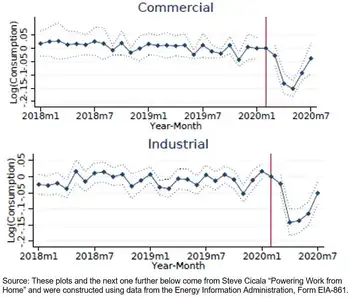
Four Facts about Covid and U.S. Electricity Consumption
COVID-19 Impact on U.S. Electricity Consumption shows commercial and industrial demand dropped as residential use…
View more
Told "no" 37 times, this Indigenous-owned company brought electricity to James Bay anyway
Five Nations Energy Transmission Line connects remote First Nations to the Ontario power grid, delivering…
View more
Questions abound about New Brunswick's embrace of small nuclear reactors
New Brunswick Small Modular Reactors promise clean energy, jobs, and economic growth, say NB Power,…
View more
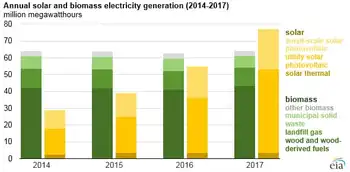
Solar Becomes #3 Renewable Electricity Source In USA
U.S. Solar Generation 2017 surpassed biomass, delivering 77 million MWh versus 64 million MWh, trailing…
View more

27 giant parts from China to be transported to wind farm in Saskatchewan
Port of Vancouver Wind Turbine Blades arrive from China for a Saskatchewan wind farm, showcasing…
View more
Sign Up for Electricity Forum’s Newsletter
Stay informed with our FREE Newsletter — get the latest news, breakthrough technologies, and expert insights, delivered straight to your inbox.
Electricity Today T&D Magazine Subscribe for FREE
Stay informed with the latest T&D policies and technologies.
- Timely insights from industry experts
- Practical solutions T&D engineers
- Free access to every issue
