Substation Relay Protection Training
Our customized live online or in‑person group training can be delivered to your staff at your location.
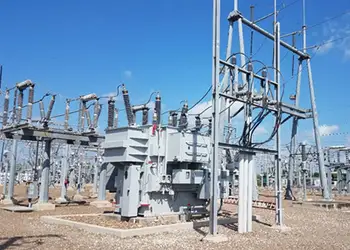
- Live Online
- 12 hours Instructor-led
- Group Training Available
Regular Price:
$699
Coupon Price:
$599
Power utilities and their customers scored a victory earlier today when the Ontario Energy Board (OEB) announced its decision to set rates for utility pole use. The decision is welcomed by the Canadian Electricity Association (CEA) and its members who have been fighting for over eight years to recover from cable television companies a fair share of the costs of the power poles on which cable companies hang their wires.
"CEA's members do not seek to make a profit from cable companies' use of power poles - only to recover a fair share of their costs," stated Kelly Staudt, Vice-President Transmission and Distribution for SaskPower and Chair of the CEA's Joint Use Structures and Strategic Telecommunications Task Group. "As a result of the OEB's decision, cable companies in Ontario will have to pay their fair share of the costs of the power poles they use."
The OEB decision will allow power utilities in Ontario to charge cable companies $22.35, with a right for power utilities to return to the Board to seek more specific charges based on local conditions. The increased charges will result in an inconsequential increase in cable companies' overall costs; particularly in the context of the hundreds of millions of dollars of increased annual revenues they have obtained over the last five years from their use of utility poles to sell high-speed Internet services.
Most notable is the Ontario Energy Board's decision to adopt the method proposed by Canada's power utilities for calculating the charge and to reject the approach proposed by the cable companies, the CRTC and many regulators in the United States. Power and cable companies have agreed to negotiate the remaining terms of access to power poles. In much of Canada, the use by cable and telecommunication companies of power poles is amicably negotiated, not regulated. "Canadian power utilities are committed to the application of fair and economically efficient models for setting power pole rates," noted Kelly Staudt. "We have shown that through negotiation we can work together toward the common goal of minimizing the number of support structures across the country, with provincial energy regulators well placed to resolve issues requiring regulatory or adjudicative intervention."
Mr. Staudt also noted the value of CEA's efforts in this field: "The Association has provided a national perspective on this issue at the federal and provincial levels, and has assisted with the development of best practices."
In 1997, cable companies sought and received from the CRTC a regulated power pole access rate. However, in 2003, the Supreme Court of Canada ruled that the CRTC had no jurisdiction over power poles. In 2004, cable companies asked that the Ontario Energy Board impose the same rate and rate methodology applied by the CRTC and overturned by the courts. It is this request that the Ontario Energy Board has rejected.
Founded in 1891, CEA is the national association of the Canadian electricity industry. Its members ensure reliable electricity service to Canadians from coast to coast.
Related News

7 steps to make electricity systems more resilient to climate risks
Electricity System Climate Resilience underpins grid reliability amid heatwaves and drought, integrating solar, wind, hydropower,…
View more
Smart grid and system improvements help avoid more than 500,000 outages over the summer
ComEd Smart Grid Reliability drives outage reduction across Illinois, leveraging smart switches, grid modernization, and…
View more
Ontario Energy Board prohibiting electricity shutoffs during latest stay-at-home order
OEB Disconnection Ban shields Ontario residential customers under the stay-at-home order, pausing electricity distributor shutoffs…
View more

Tariffs on Chinese Electric Vehicles
Canada EV Tariffs weigh protectionism, import duties, and trade policy against affordable electric vehicles, climate…
View more
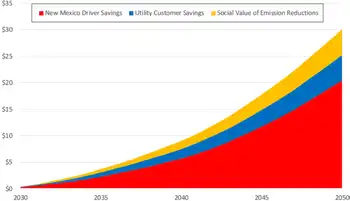
New Mexico Could Reap $30 Billion Driving on Electricity
New Mexico EV Benefits highlight cheaper fuel, lower maintenance, cleaner air, and smarter charging, cutting…
View more

McMaster Training Next Gen Nuclear Professionals
McMaster University is expanding its nuclear training programs to prepare engineers, researchers, and medical specialists…
View more
Sign Up for Electricity Forum’s Newsletter
Stay informed with our FREE Newsletter — get the latest news, breakthrough technologies, and expert insights, delivered straight to your inbox.
Electricity Today T&D Magazine Subscribe for FREE

Stay informed with the latest T&D policies and technologies.
- Timely insights from industry experts
- Practical solutions T&D engineers
- Free access to every issue

